Table Seating Capacity: How Many People Fit at Your Table?
When you’re planning a dinner, arranging a restaurant layout, or just buying a new dining table, table seating capacity, the maximum number of people comfortably seated around a table. Also known as table occupancy, it’s not just about fitting bodies—it’s about letting everyone eat, talk, and move without bumping elbows. Most people guess wrong. A 6-foot table doesn’t mean six people. A round table that looks big might only fit four in comfort. It all comes down to space per person, not just table length.
For a standard dining table, you need at least 24 inches of width per person, the minimum space needed for a chair and elbow room. This is the golden rule for home dining tables and small restaurants. If you’re using a 72-inch long rectangular table, that’s 72 divided by 24 = 3 people per side, plus one at each end—so six total. But if you add armrests or bulky chairs, that number drops fast. In commercial spaces like cafés or pubs, they often squeeze in 18 inches per person to maximize revenue, but that’s not comfortable for long meals.
Chair spacing, the distance between the edge of one chair and the next. Also known as clearance width, it’s what keeps people from scraping knees when they stand up. You need at least 12 inches behind each chair for someone to pull out and sit down without knocking over the next person. That’s why a 90-inch table with 4 chairs on each side might look full—but if the walkway behind is too narrow, it’s a nightmare during service. Restaurants that get this right keep customers coming back. Homes that ignore it end up with chairs stuck under the table and angry guests.
Round tables change the math. A 48-inch round table fits four people easily. A 60-inch one can handle six. But once you hit 72 inches, you’re pushing seven or eight—and that’s only if everyone leans in. The corners of rectangular tables are the worst spots for seating. People there can’t reach the middle without stretching, and they’re stuck with the least legroom. That’s why many modern dining sets use oval or extendable tables—they give flexibility without sacrificing comfort.
Don’t forget the room around the table. You need at least 36 inches of walking space on all sides. That’s not just for aesthetics—it’s for service. If you can’t fit a waiter with a tray behind the chairs, your table is too close to the wall. This matters whether you’re designing a kitchen nook or a 50-seat bistro. The best tables don’t just seat people—they make the whole space work.
What you’ll find below are real, tested guides on how to pick the right table size, how to arrange seating in small spaces, what restaurants get right (and wrong), and how to avoid the common mistakes that turn dinner into a game of Tetris. No theory. No fluff. Just the numbers and tricks that actually work in homes and businesses across the UK.
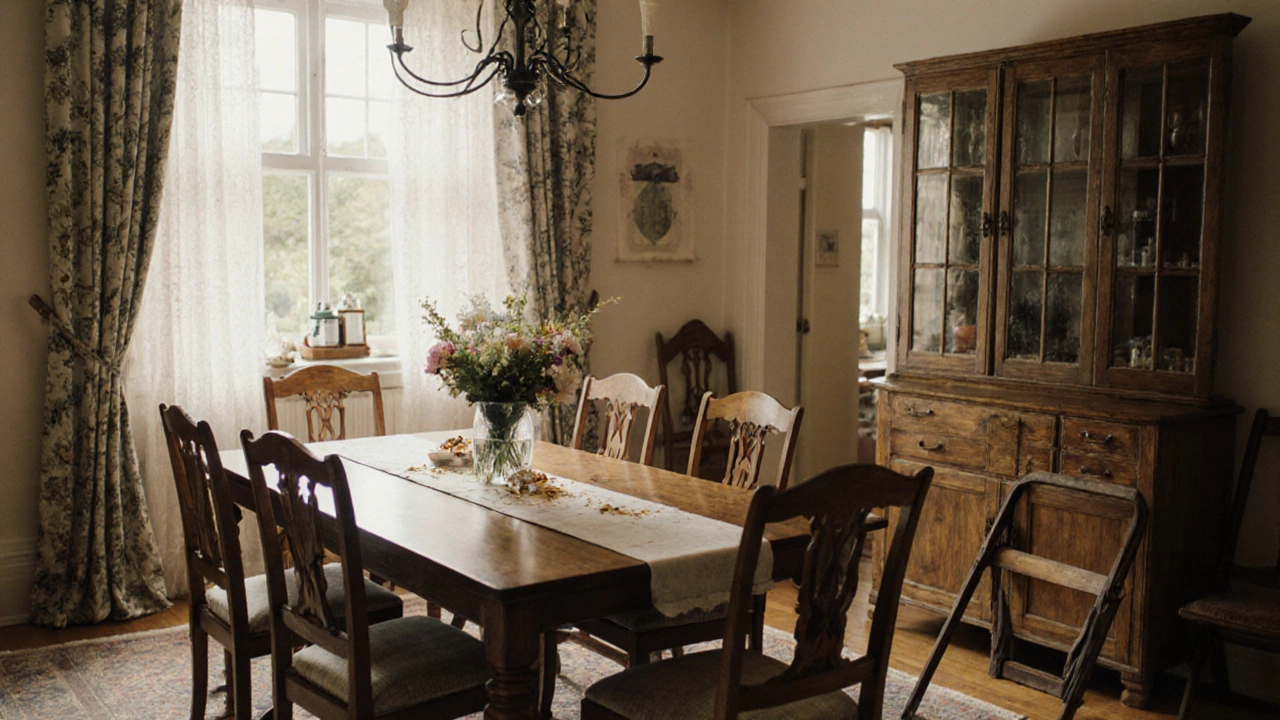
How Many Chairs Should a Dining Room Table Have? Practical Guide for 2025
- Gavin Whitaker
- |
- |
- 0
Learn how to choose the right number of chairs for your dining table based on size, room layout, and how you actually use the space. Practical advice for 2025.
View more