Dining Chair Calculator
Your Dining Setup
Recommendation
Recommended Chairs
chairs
Space Analysis:
There’s no one-size-fits-all answer to how many chairs a dining room table should have. It’s not about matching the table’s length to a magic number-it’s about how you live. Do you host big Sunday dinners? Do you eat alone most nights? Are you squeezing chairs into a tiny apartment or stretching out in a spacious farmhouse kitchen? The right number of chairs isn’t decided by design magazines. It’s decided by your life.
Start with the table size
Before you buy chairs, measure your table. A standard rectangular dining table that’s 72 inches long can comfortably fit six chairs-three on each side. Add another 12 inches of length, and you can fit eight. But don’t just go by length. Width matters too. If your table is only 30 inches wide, you won’t fit bulky armchairs without people bumping elbows. Most dining chairs need at least 24 inches of space per person, measured from center to center. That’s the bare minimum for comfort. For more breathing room, aim for 30 inches per chair.
Round tables are trickier. A 48-inch round table fits four chairs snugly. A 60-inch round table works for six. Go bigger than 72 inches, and you can squeeze in eight, but only if your guests aren’t all wearing wide coats or carrying plates piled high. The key is to leave at least 18 inches between the edge of the table and the wall or other furniture so people can pull out chairs without knocking over vases or tripping over rugs.
Think about how you use the space
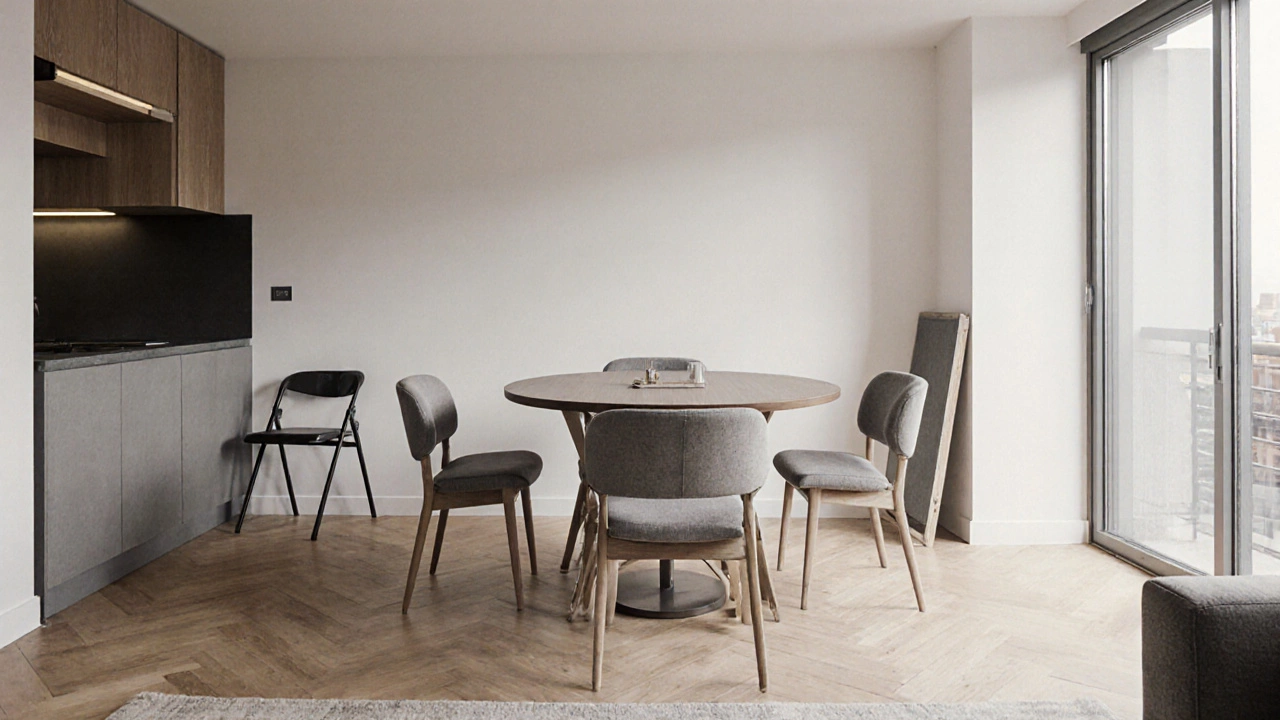
Most people assume they need six chairs because that’s what’s shown in catalogs. But if you rarely have more than two people over, why buy six? You’ll just end up storing two chairs in the garage. A table for four is often more practical for everyday meals. You can always add two folding chairs when guests come. They’re cheap, easy to store, and they don’t ruin your aesthetic.
On the flip side, if you host holiday dinners, weekly game nights, or have a big family, you’ll want seating that can expand. Extendable tables are the smartest move here. A 6-foot table that pulls out to 9 feet can go from six to ten seats. Look for models with butterfly leaves or drop-in leaves-no bulky additions, no extra chairs to store. Some extendable tables even come with hidden chairs tucked under the table, so you never lose space.
Don’t forget the room layout
A 10-foot by 12-foot dining room can handle a 72-inch table with six chairs, but only if you leave 36 inches of walking space all around. If your table is pushed against a wall, you still need 24 inches behind the chairs for people to sit and stand. If you have a narrow hallway leading into the dining area, you’ll need even more clearance. Measure your doorways, your kitchen entrance, and your traffic paths. You don’t want guests stuck in a corner because the chairs won’t pull out.
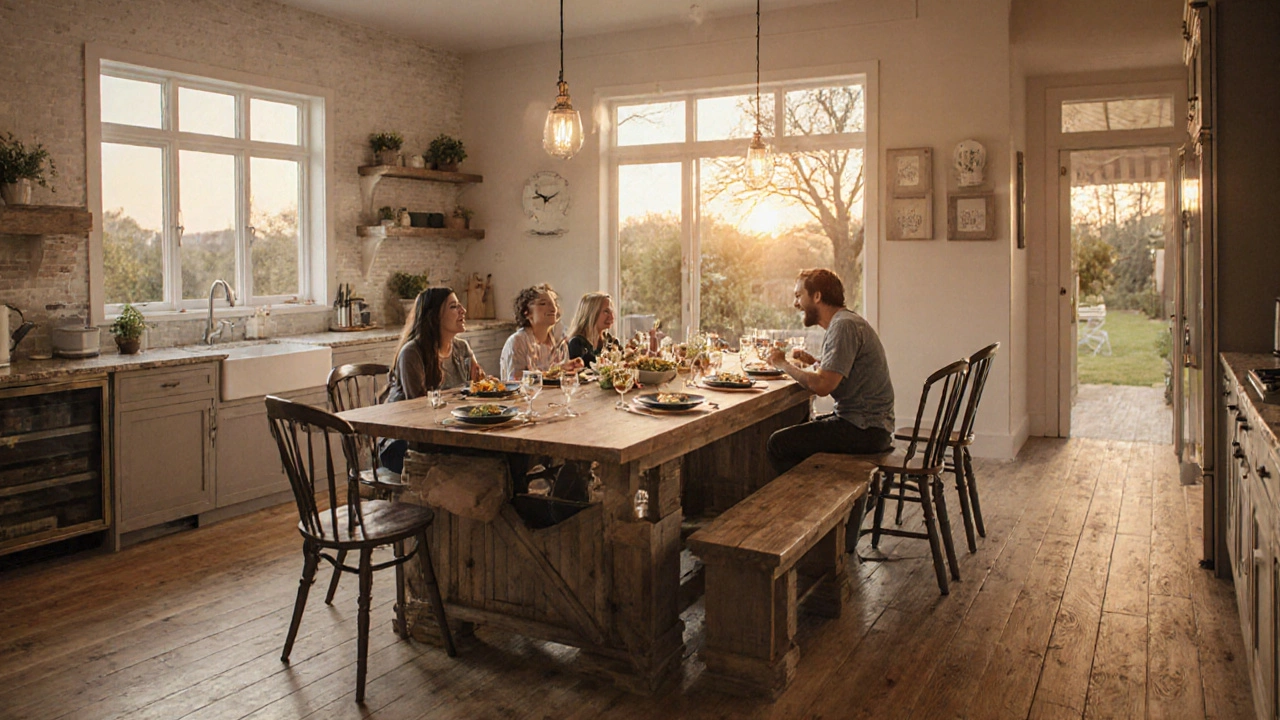
Corner tables or island dining setups change the game. If your table is in the middle of the room or attached to a kitchen island, you can use bench seating on one or two sides. Benches save space, allow for extra seating, and are great for kids. You can fit five or six people with two benches and two chairs. It’s flexible, modern, and works well in open-plan homes.
Chairs aren’t all the same
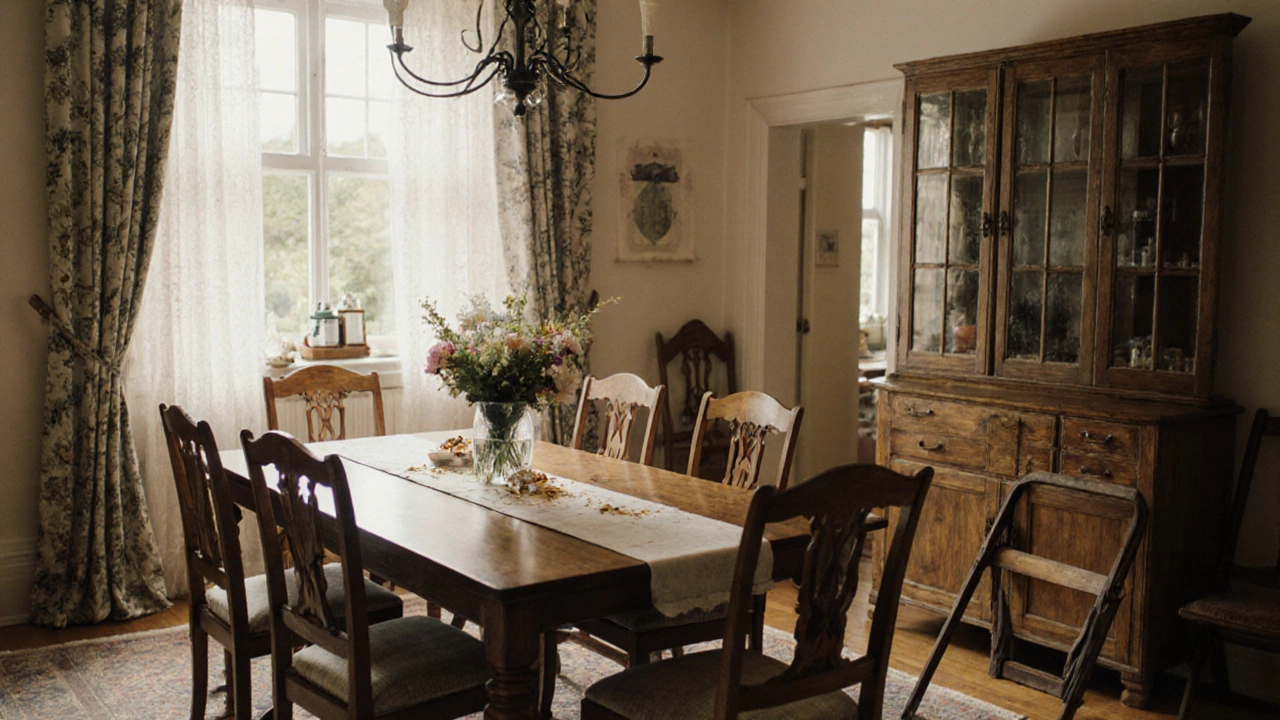
Not all dining chairs take up the same amount of space. A sleek metal chair with no arms might need only 22 inches. A traditional wooden chair with arms and cushioning could need 30 inches or more. Measure your chairs before you buy them. Bring a tape measure to the store. Sit in them. Pull them out. See how much room they take when you’re seated. A chair that looks slim in the showroom might stick out awkwardly in your space.
Bar stools are another option. If you have a kitchen island or a high-top table, bar stools can work. But they’re not ideal for long meals. Most people can’t sit comfortably on a bar stool for more than 30 minutes without back pain. Stick to standard dining chairs for daily use. Reserve stools for quick breakfasts or casual snacking.
Real-life examples
Take Sarah, who lives in a London flat with a 5-foot dining table. She lives alone but has her parents over every Sunday. She bought four chairs-two fixed, two foldable. When her parents come, she pulls out the extra two. No clutter, no storage hassle. She uses the same setup for date nights with her partner. Simple, effective.
Then there’s Mark, who runs a home-based business and hosts monthly dinner parties for eight. He has a 96-inch extendable table with eight chairs. But here’s the trick: he uses two benches on the long sides and two chairs at the ends. Benches let him squeeze in extra guests without buying more chairs. He stores the extra two chairs under the bed. When someone cancels, he just leaves the chairs out. He’s never had to buy a new table.
And then there’s the couple who bought a 10-seat table because it looked impressive. They never use more than four chairs. The other six sit in the garage. They regret it every time they try to vacuum around the table.
What to avoid
Don’t buy chairs based on how they look in a photo. That beautiful set of upholstered chairs might be gorgeous, but if they’re too wide, they’ll make your dining room feel cramped. Don’t assume you need a chair for every seat on the table. Some people stand. Some people eat in the kitchen. Some people bring their own folding chairs.
Avoid buying mismatched chairs unless you’re going for a curated, eclectic look. It’s trendy, but it’s hard to get right. If you mix styles, make sure the seat heights are the same. Nothing looks worse than a table where some people are looking down at their plates and others are looking up.
Final rule of thumb
Buy two more chairs than you think you need. Not because you’ll use them every day, but because life changes. A friend moves in. Your parents visit. Your kid brings a friend over for dinner. You host a surprise birthday. You don’t want to scramble for folding chairs the night before. Keep two extra chairs in the closet or under the bed. They’re cheap insurance.
And if you’re still unsure? Start small. Buy four chairs. Test them. Live with them for a month. See how many people actually sit down when you eat. Then decide if you need more. You can always add later. But once you buy a big table with eight chairs, you’re stuck with them. And they’ll take up space you didn’t realize you needed.
Quick summary
- Standard 72-inch table = 6 chairs comfortably
- Allow 24-30 inches per person for comfort
- Extendable tables are the best solution for variable needs
- Benches save space and add flexibility
- Always measure your room and chairs before buying
- Start with fewer chairs-you can always add more
- Keep two extra chairs stored away for guests
Can I mix different types of chairs around my dining table?
Yes, but only if the seat heights are consistent. Mixing styles can look intentional and stylish if done right-like two armchairs at the head of the table with simpler chairs on the sides. But if one chair is 2 inches taller than the others, it’ll look off and feel uncomfortable. Stick to one base style and vary the upholstery or finish for cohesion.
Is a bench better than chairs for a dining table?
Benches are great for saving space and adding extra seating, especially in small rooms or for kids. They work well on one or two sides of a table. But they’re not ideal for long meals unless they have good back support. A bench with a cushion and a backrest can be just as comfortable as a chair. The downside? You can’t tuck them under the table, so they take up floor space even when not in use.
How many chairs do I need for a 48-inch round table?
A 48-inch round table fits four chairs comfortably. You can squeeze in five if the chairs are narrow and you don’t mind people being close. But five is tight. For a more relaxed feel, stick with four. If you need more seating, consider a larger table or use a combination of chairs and benches.
Should I buy chairs before or after the table?
Always buy the table first. Tables come in fixed sizes, but chairs vary widely in width, depth, and style. Once you know your table’s dimensions, you can pick chairs that fit. Buying chairs first often leads to mismatched sets or tables that are too small. The table sets the foundation-chairs just fill the space.
What if my dining room is really small?
Go for a drop-leaf table or a wall-mounted fold-down table. Pair it with two stackable chairs or a single bench. You can eat for two every day and still have room to walk. When guests come, unfold the table and add two folding chairs. It’s not glamorous, but it’s functional. Many London flats use this setup successfully. The goal isn’t to match a magazine spread-it’s to make meals possible without blocking the kitchen.