New Build Walls: What You Need to Know Before You Build
When you’re building a new home, new build walls, the structural and insulating barriers that define rooms and protect your home from the elements. Also known as building envelopes, they’re not just drywall and studs—they’re the foundation of comfort, safety, and energy efficiency in any modern home. Too many people think walls are just something you paint, but the truth is, what’s inside those walls affects your heating bills, your indoor air quality, and even how quiet your house feels. A poorly built wall can lead to damp, drafts, and costly repairs down the line.
External walls, the outer layer of your home that shields you from weather and noise need to handle rain, wind, and temperature swings. In the UK, that means materials like brick, block, or timber frame with proper cavity insulation. Internal walls, the partitions that divide rooms are different—they’re mostly about sound control and layout. Some are load-bearing, meaning they hold up floors or roofs. Others are just non-load-bearing partitions, easier to move if you want to open up a space later. Getting this wrong during construction can cost you thousands to fix.
Insulation isn’t optional anymore. Building regulations in the UK now demand high thermal performance in all new builds. That means walls aren’t just filled with cheap fiberglass—they’re layered with rigid foam, mineral wool, or even advanced aerogel in premium builds. The gap between bricks? That’s not empty space—it’s a cavity designed to stop moisture and trap heat. And don’t forget vapour barriers. Skip those, and condensation builds up inside your walls, leading to mould and rot.
Soundproofing matters too. If you’ve ever heard your neighbour’s TV through the wall, you know why. New build walls often include acoustic insulation, resilient channels, or double-layered plasterboard to reduce noise between rooms. It’s not just for apartments—it’s just as important in detached homes if you have kids, home offices, or a media room.
What you’re seeing on the surface is just the tip. Behind it, there’s wiring, plumbing, ventilation ducts, and sometimes underfloor heating pipes running through wall cavities. That’s why builders plan wall layouts early—once the frame’s up, changing anything means tearing it down. The best new builds have everything mapped out before the first stud goes in.
And then there’s the material choice. Timber frame? Blockwork? Steel? Each has trade-offs in cost, speed, thermal performance, and durability. Timber frame is faster to build and easier to insulate, but needs careful detailing to avoid rot. Blockwork is heavy, slow, but very strong and fire-resistant. The right choice depends on your budget, location, and how you plan to use the space.
You’ll find posts below that break down exactly how walls are built, what materials actually work in UK weather, and how to spot a poorly constructed wall before you sign on the dotted line. Whether you’re building from scratch, adding an extension, or just trying to understand why your new home feels drafty, these guides give you the real talk—not the sales pitch.
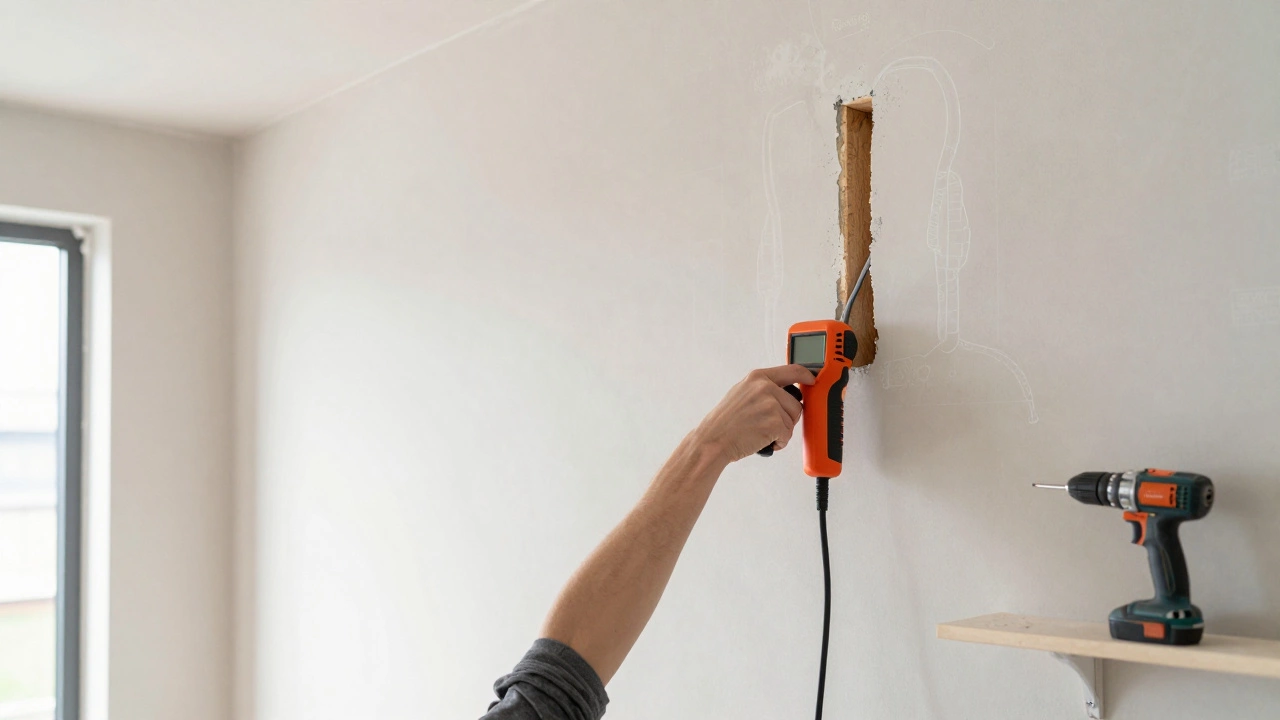
Can You Drill Into New Build Walls? What You Need to Know Before You Start
- Gavin Whitaker
- |
- |
- 0
Drilling into new build walls can be dangerous if you don't know what's inside. Learn how to safely drill into plasterboard walls, avoid hidden pipes and wires, and protect your warranty with the right tools and steps.
View more