Drill into New Build Walls: What You Need to Know Before Starting
When you drill into new build walls, the thin plasterboard and hidden wiring or pipes behind them make this a high-risk task if done wrong. Also known as penetrating new construction walls, it’s not just about making a hole—it’s about understanding what’s hidden behind the surface. New builds in the UK often use lightweight plasterboard over steel or timber frames, with electrical cables, plumbing, and even structural elements packed tightly in tight spaces. Many homeowners assume these walls are simple, but one wrong drill can mean a flooded kitchen, a tripped circuit, or worse—a structural compromise.
Most new builds follow Part P of the UK Building Regulations, which means wiring is often run vertically or horizontally in predictable paths—like along ceiling edges or just above skirting boards. But that doesn’t mean it’s safe to guess. Plumbers typically run pipes behind bathrooms and kitchens, and gas lines may run near boilers or cookers. Even if you’re just hanging a shelf, you’re not just drilling into drywall—you’re working inside a system designed for efficiency, not DIY convenience. Plasterboard, the standard wall covering in UK new builds is easy to drill through, but it hides layers you can’t see. Tools like stud finders and cable detectors aren’t optional—they’re your first line of defense. And don’t trust the ones that only find studs. You need a multi-sensor detector that picks up live wires and water pipes too.
Another thing most people overlook: new build walls settle. Even after the builder says everything’s done, tiny shifts happen over the first 6–12 months. Drilling too early can mean your fixings loosen or crack the plaster around them. Waiting a few months isn’t just smart—it’s often required by warranty terms. And if you’re adding heavy items like TVs or shelves, you need to hit a stud or use proper wall anchors rated for the load. Plastic wall plugs won’t cut it in thin plasterboard. You need toggle bolts, molly bolts, or specialized drywall anchors designed for new build conditions.
There’s also the matter of fire safety. New builds use fire-rated plasterboard in key areas—like around stairwells or near boilers. Drilling through these without knowing it can break the fire barrier. Some walls have intumescent strips or fire-stopping foam inside the cavities. Messing with those can void your home insurance. Always check the building plans if you can get them. Even a basic floor plan from the builder shows where pipes and cables are likely routed.
If you’re unsure, it’s not weakness to call in a professional. Electricians and plumbers can scan walls with thermal imaging or use sonic tools to map what’s inside without drilling a single hole. That’s often cheaper than fixing a flooded floor or a burnt-out circuit. And if you’re planning multiple holes—like for smart home wiring or new lighting—it’s worth having a survey done upfront.
Below, you’ll find real-world guides on what’s behind those walls, how to choose the right drill bits, how to avoid common mistakes, and what to do if you hit something you shouldn’t. These aren’t theory pieces—they’re lessons from people who’ve been there, drilled the wrong spot, and lived to tell the tale.
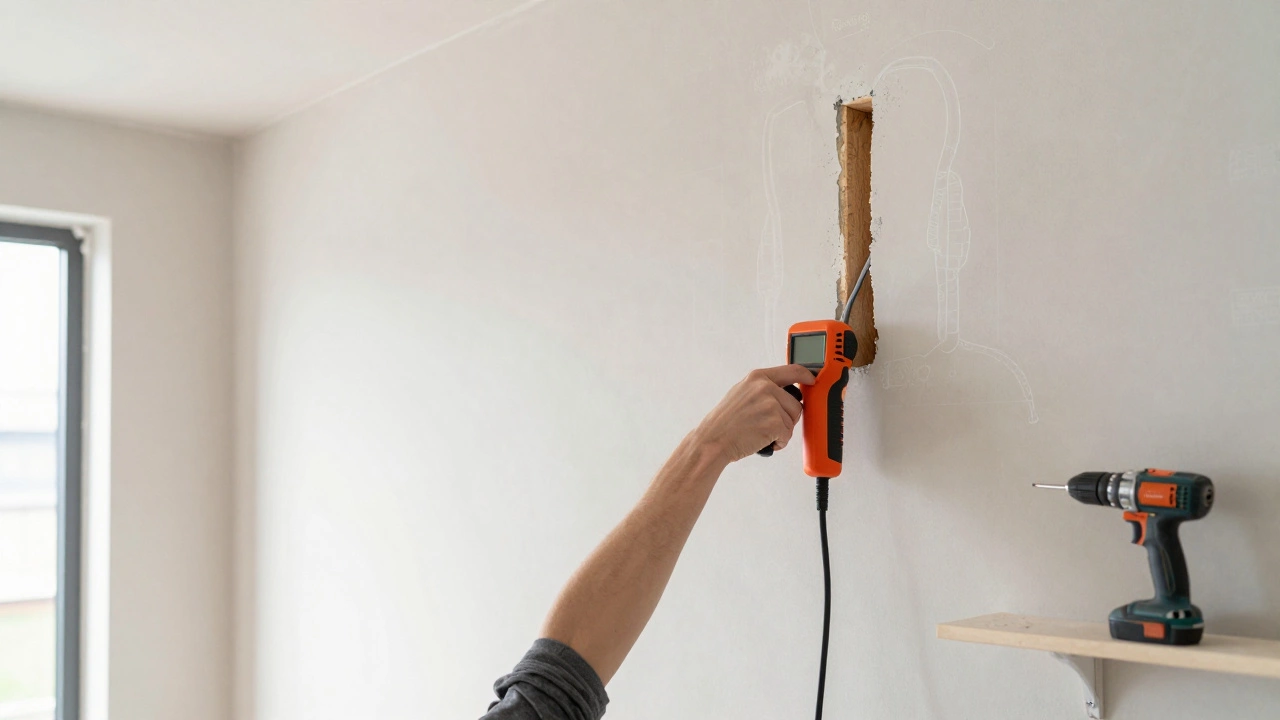
Can You Drill Into New Build Walls? What You Need to Know Before You Start
- Gavin Whitaker
- |
- |
- 0
Drilling into new build walls can be dangerous if you don't know what's inside. Learn how to safely drill into plasterboard walls, avoid hidden pipes and wires, and protect your warranty with the right tools and steps.
View more