Foundation Repair Method Selector & Estimator
Describe Your Issue
Why this fits:
Enter your details to find the right repair method.
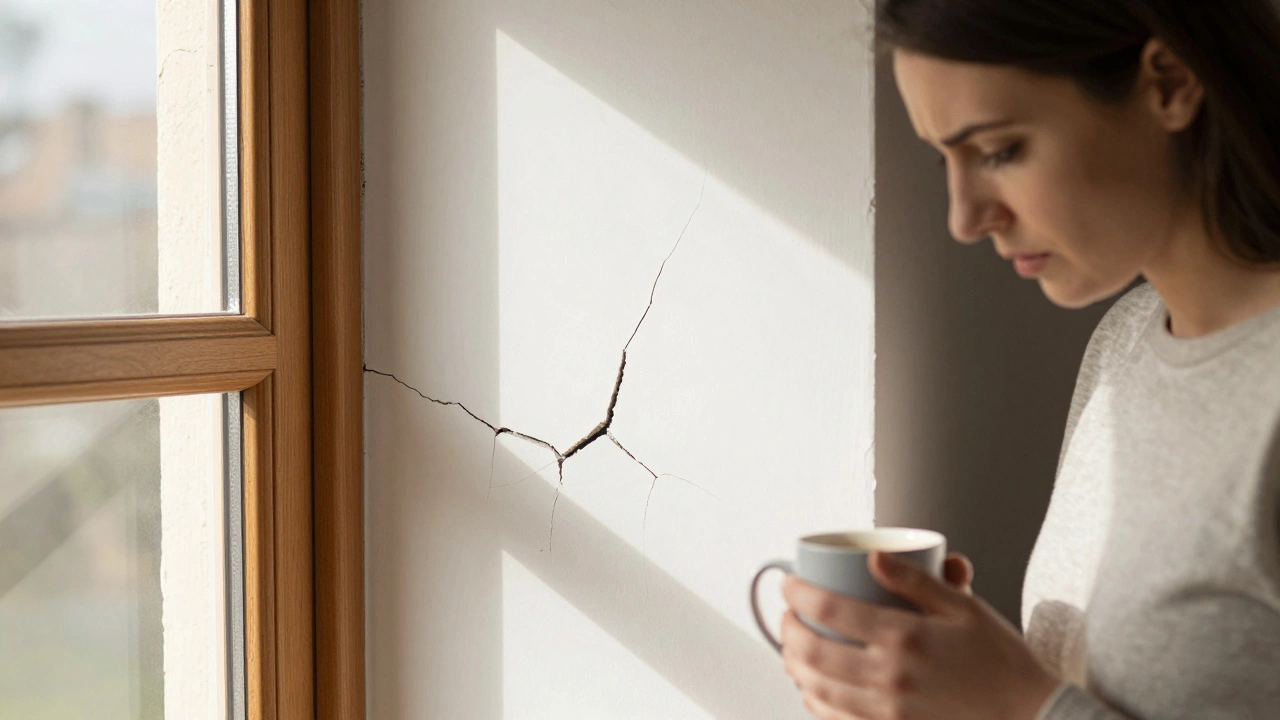
Imagine standing in your kitchen, coffee in hand, when you notice a jagged crack running through the drywall above the doorframe. It’s not just cosmetic; it’s a sign that the ground beneath your home is shifting. The immediate panic sets in: "Do I need to move everything out? Will they lift my entire house on jacks?" The answer, surprisingly, is often no. Modern foundation repair is the process of stabilizing and correcting structural issues in a building's base without necessarily demolishing or fully displacing the structure. You can fix a sinking or cracking foundation without lifting the entire house off its footing.
The old-school method involved massive hydraulic jacks, cranes, and days of disruption. Today, engineers use targeted injections, helical piers, and minimally invasive techniques that stabilize the soil underneath while keeping your daily life intact. This guide breaks down exactly how these methods work, when to use them, and what to expect from the process.
Understanding Why Foundations Fail (Without Moving)
Before fixing anything, you have to understand why the foundation moved in the first place. Most foundation problems aren't caused by the concrete failing; they’re caused by the soil beneath it changing volume. In London and across the UK, clay soils are notorious for this. When it rains heavily, clay expands (swells). During a dry summer, like the ones we’ve seen recently, clay shrinks significantly. This cycle creates voids-empty spaces under your footings where solid support used to be.
When these voids form, gravity takes over. Parts of your house sink into the empty space, causing differential settlement. This is why you see diagonal cracks at window corners. The goal of modern repair isn't always to lift the house back to its original height immediately, but to stop the movement and provide new, stable support deep below the unstable topsoil.
Method 1: Slabjacking (Mudjacking) for Concrete Slabs
If your issue is a sunken concrete driveway, patio, or a basement slab floor, Slabjacking is a technique that involves pumping a cementitious slurry beneath a raised concrete slab to fill voids and level the surface. Also known as mudjacking, this is one of the oldest and most cost-effective ways to fix uneven surfaces without tearing them up.
- Drilling: Workers drill small holes (usually 1-2 inches wide) into the sunken concrete at strategic points.
- Pumping: A mixture of water, cement, sand, and sometimes fly ash is pumped under high pressure through these holes.
- Filling Voids: The slurry fills the voids beneath the slab, compacting loose soil and pushing the concrete back up to its original position.
- Patching: Once the slab is level, the holes are patched with concrete.
This method doesn’t lift the house structure itself, but it restores the integrity of the slab foundation. It’s perfect for driveways, sidewalks, and interior basement floors. However, it adds significant weight to the foundation because the slurry is heavy. If your soil is already weak, adding more weight might not be the best long-term solution.
Method 2: Polyurethane Foam Injection (Polyjacking)
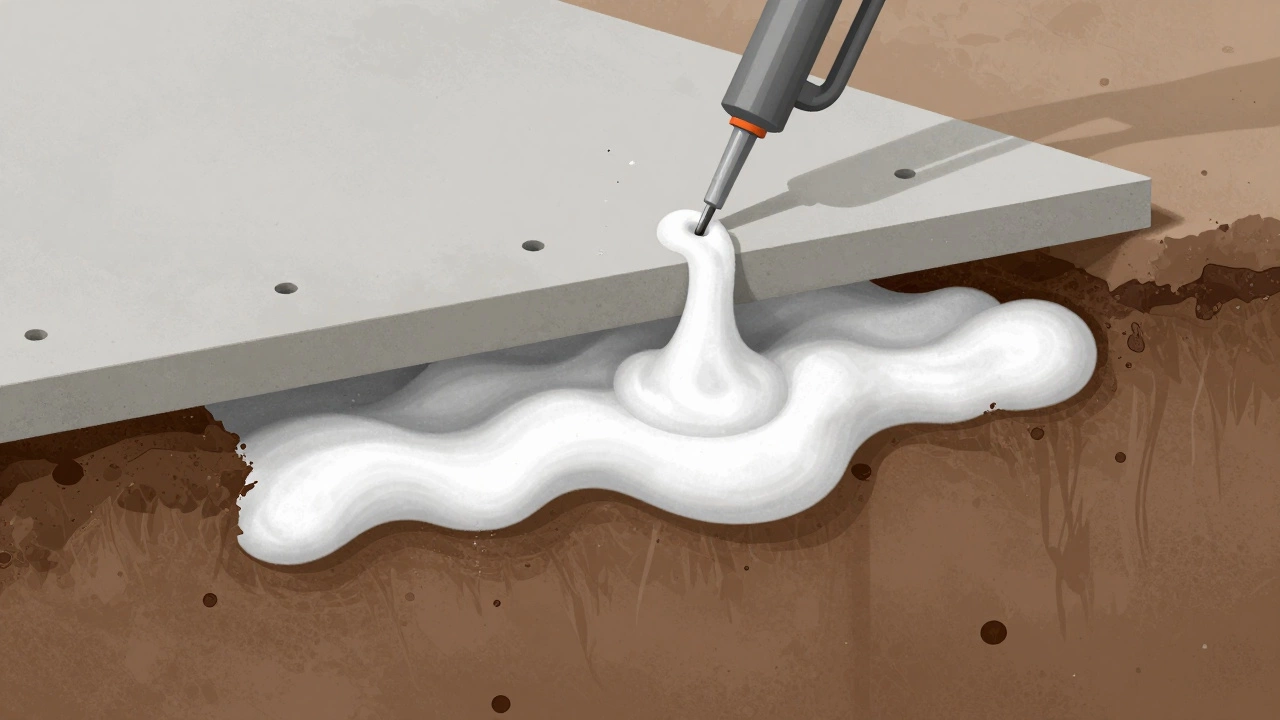
Think of polyjacking as the modern, lighter-weight cousin of slabjacking. Instead of wet cement, contractors inject expanding polyurethane foam is a two-part chemical compound that expands rapidly upon mixing, creating a rigid, waterproof structural filler. This foam cures within minutes, turning into a solid plastic-like material.
Why choose foam over mud?
- Lightweight: The foam weighs less than 2 lbs per cubic foot, compared to 100+ lbs for mudjacking slurry. This puts less stress on the surrounding soil.
- Waterproof: The foam repels water, preventing future erosion in those voids.
- Minimal Invasion: Holes drilled for foam injection are only about 5/8 of an inch wide, making cleanup easier and damage to the surface negligible.
- Speed: You can walk on the repaired area almost immediately after curing.
For homeowners who want a quick fix for a sunken patio or a slight settling of a concrete slab foundation, polyjacking is often the go-to choice. It stabilizes the ground without the mess of wet concrete.
Method 3: Helical Piers and Push Piers for Structural Walls
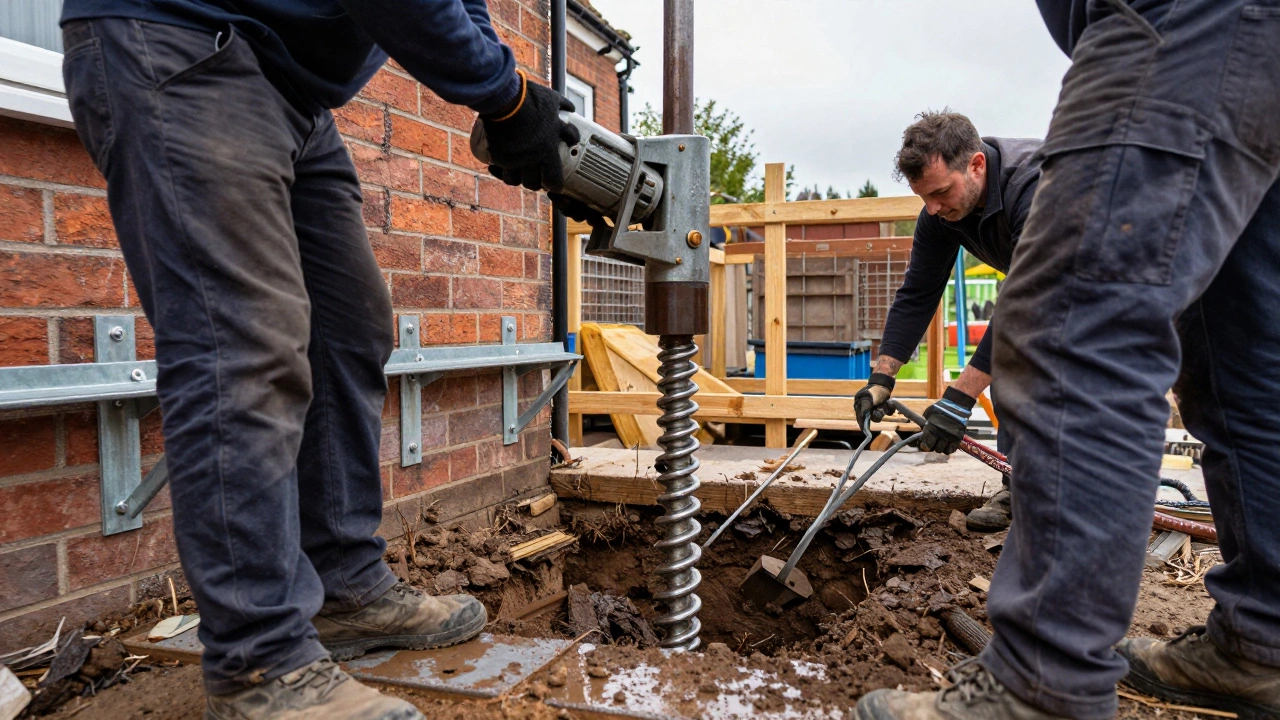
What if your brick walls are cracking and the house is actually tilting? Slabjacking won’t help here. You need to transfer the load of the house from the unstable topsoil to deeper, more stable soil layers or bedrock. This is where Helical Piers are steel shafts with spiral plates that are screwed into the ground to anchor structures to stable soil. come in. Unlike traditional concrete piers that require digging large trenches, helical piers are driven into the ground using hydraulic torque motors.
The process works like this:
- Access Points: Small sections of the exterior soil near the foundation wall are excavated to expose the footing.
- Bracket Installation: A steel bracket is attached to the existing foundation footing.
- Pier Driving: The helical pier is screwed through the bracket into the ground until it reaches refusal (stable soil).
- Loading: Hydraulic jacks apply pressure to the pier, transferring the weight of the house onto the new steel support.
Crucially, the house isn’t “lifted” in the sense of being removed from its site. The structure is stabilized and slightly adjusted if necessary, but the bulk of the work happens underground. For homes on poor soil, this is the gold standard for permanent repair without demolition.
Comparing Repair Methods: Which One Do You Need?
| Feature | Slabjacking (Mudjacking) | Polyurethane Foam Injection | Helical/Push Piers |
|---|---|---|---|
| Best For | Driveways, patios, basement slabs | Interior floors, light commercial slabs | Structural walls, severe settling |
| Invasiveness | High (large holes, messy) | Low (small holes, clean) | Medium (excavation required) |
| Cure Time | 24-48 hours | 15-30 minutes | Immediate load bearing |
| Weight Added | Heavy | Negligible | Steel only (minimal) |
| Cost Range (£) | £5 - £10 per sq ft | £8 - £15 per sq ft | £1,500 - £3,000 per pier |
Signs You Need Professional Help Immediately
You might think you can monitor a crack for a few months. Some signs, however, indicate active failure that requires immediate stabilization to prevent collapse.
- Stair-step cracks in brickwork: If the mortar joints between bricks are cracking in a zig-zag pattern, the foundation is twisting.
- Doors and windows sticking: If previously smooth-operating doors now jam, the frame has shifted out of square.
- Gaps around window frames: Visible daylight around the edges of fixed windows suggests the wall is pulling away from the opening.
- Bowing basement walls: If concrete walls curve inward, hydrostatic pressure from the soil is overwhelming the structure.
Ignoring these signs can lead to catastrophic structural failure. While you don’t need to lift the house, you do need to act fast. Contact a certified structural engineer, not just a general handyman. They will assess whether soil stabilization or pier installation is required.
DIY vs. Professional Repair: Where to Draw the Line
Can you fix a foundation yourself? For minor hairline cracks in drywall or non-structural concrete, yes. You can use epoxy or polyurethane sealants available at hardware stores to stop water infiltration. But for any issue involving structural movement, DIY is dangerous and likely illegal without proper permits.
Foundation repair requires heavy machinery, engineering calculations, and liability insurance. Attempting to install piers or inject foam without understanding soil mechanics can worsen the problem. Always hire a contractor who specializes in geotechnical engineering is the branch of civil engineering concerned with the behavior of earth materials and their application to construction.. Look for certifications from bodies like the British Geotechnical Association or similar local authorities.
Preventing Future Foundation Issues
Fixing the foundation is step one. Keeping it fixed is step two. Since soil moisture is the primary enemy of foundations, managing water is key.
- Gutters and Downspouts: Ensure they direct water at least 6 feet away from the foundation.
- Grading: The ground around your house should slope away from the foundation. Even a slight dip towards the house can channel water into the soil beneath the footings.
- Plumbing Checks: Leaking pipes under the house can wash away soil. Regularly inspect for damp spots or unusual sounds in walls.
- Tree Management: Large trees close to the house suck moisture from the soil. Consider pruning roots or planting smaller species further away.
By controlling the water table around your home, you reduce the swelling and shrinking cycles that cause so much damage. This proactive approach saves thousands in potential future repairs.
Can I live in my house during foundation repair?
Yes, in most cases. Methods like helical pier installation and polyurethane foam injection are minimally invasive. You may hear noise from drilling or hydraulic equipment, and you might need to stay out of certain rooms for a day or two, but you typically do not need to vacate the property. Full house lifting would require evacuation, but since we are discussing non-lifting methods, daily life continues with minor disruptions.
How long does foundation repair take without lifting?
Most non-invasive repairs take between 1 to 3 days. Slabjacking or foam injection can often be completed in a single day for average-sized areas. Pier installation depends on the number of piers needed; a typical home might require 4-8 piers, which can be installed in 2-3 days. Weather conditions can delay exterior work, especially if the ground is too wet or frozen.
Is polyurethane foam safe for indoor use?
Yes, once cured. The liquid components can emit fumes during application, so contractors should ventilate the area. However, the final product is inert, non-toxic, and waterproof. It does not shrink or degrade over time, making it a safe and durable option for basement floors and interior slabs.
Will foundation repair increase my home's value?
Absolutely. A structurally sound foundation is a critical factor in home valuation. Buyers are wary of foundation issues due to the high cost and complexity of repairs. Having professional documentation of a completed repair removes this red flag, potentially increasing marketability and resale value. It also makes securing a mortgage easier for future buyers.
How much does it cost to fix a foundation without lifting?
Costs vary widely based on severity. Slabjacking might cost £500-£1,500 for a driveway. Polyurethane injection ranges from £1,000-£3,000 depending on the area. Helical pier systems are more expensive, typically costing £1,500-£3,000 per pier. A full structural stabilization project could range from £5,000 to £15,000+. Always get multiple quotes and ensure the estimate includes a warranty on both materials and labor.