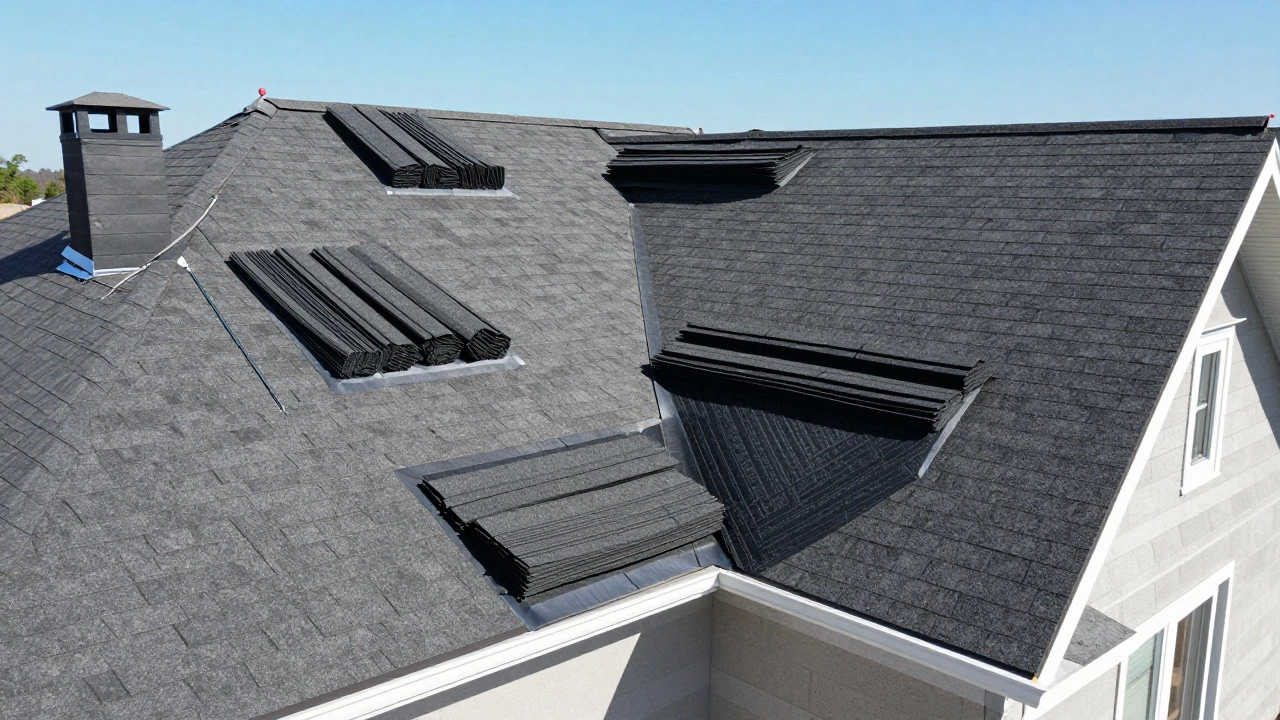
Estimated Cost Breakdown
Quick Summary of Costs
- Materials: Prices vary wildly between basic asphalt and luxury slate.
- Labor: Roofing is physically grueling, dangerous, and requires specialized skill.
- Insurance: High-risk work means expensive premiums for contractors.
- Waste: Tearing off an old roof creates tons of debris that costs money to dump.
- Warranty: You aren't just paying for the roof, but for the guarantee it won't leak.
The Real Cost of Materials
When you look at a hardware store website, you see the price per bundle of shingles. But Roofing Materials is the total sum of all components needed to create a weatherproof barrier, including underlayment, flashing, and ridge vents. You aren't just buying shingles; you're buying a system.
For instance, if you choose Asphalt Shingles, you're getting a budget-friendly option, but you still need Synthetic Underlayment to prevent moisture from hitting the wood. If you move up to Metal Roofing or Slate Tiles, the cost jumps because these materials are heavier and require specialized fastening systems. A slate roof can cost five times more than asphalt because the stone itself is expensive and requires a reinforced roof deck to hold the weight.
| Material Type | Average Lifespan | Cost Level | Installation Complexity |
|---|---|---|---|
| Asphalt Shingles | 15-30 Years | Low | Moderate |
| Metal (Steel/Aluminum) | 40-70 Years | Medium-High | High |
| Clay/Concrete Tile | 50-100 Years | High | Very High |
| Natural Slate | 75-150 Years | Very High | Expert Level |
The Danger Premium: Labor and Safety
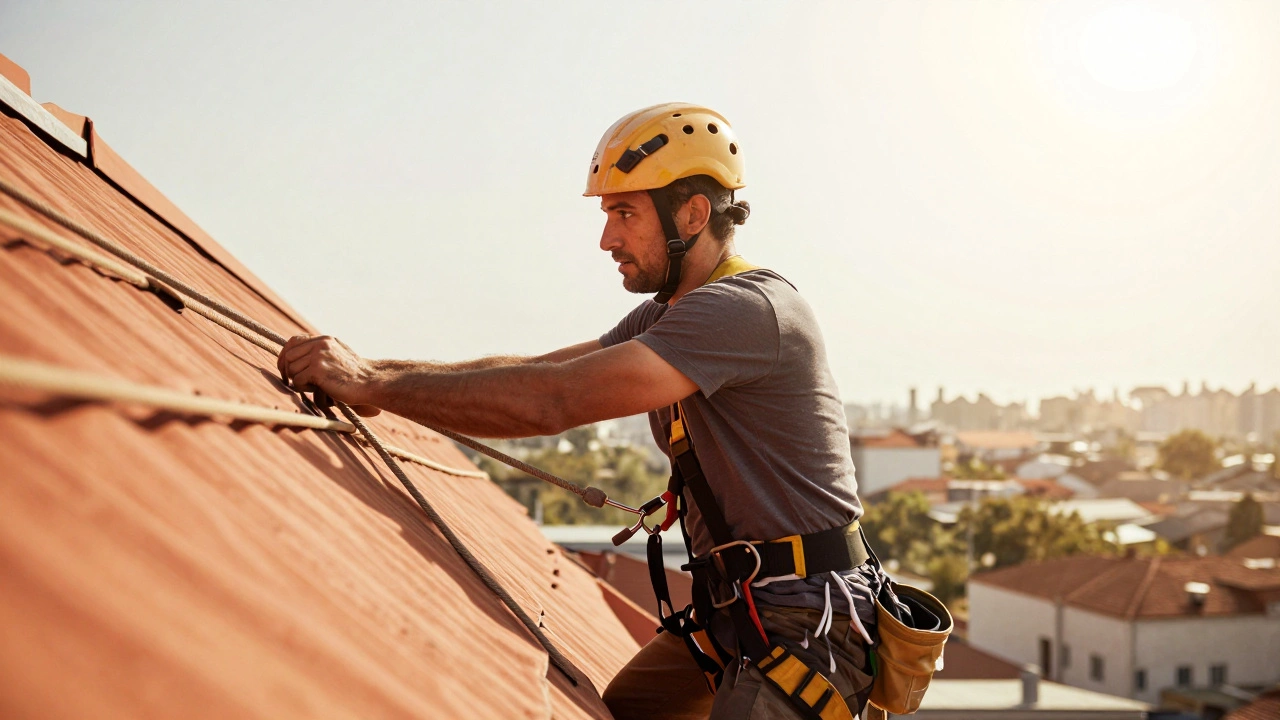
Roofing is one of the most dangerous jobs in construction. Every time a worker steps onto your house, they are risking a fall. Because of this, Roofing Labor is priced higher than interior painting or flooring. Skilled roofers aren't just "guys with hammers"; they are technicians who understand how to divert water away from your home's structure.
Think about the environment they work in. On a July afternoon, a roof can reach temperatures of 150°F (65°C). This heat slows down work and requires more breaks, which means more man-hours. Plus, contractors have to pay for OSHA Compliance safety gear, harnesses, and scaffolding. If a company doesn't charge a premium for labor, they probably aren't paying for the safety equipment that keeps their workers alive-and that's a huge red flag for you as a homeowner.
Hidden Expenses You Don't See
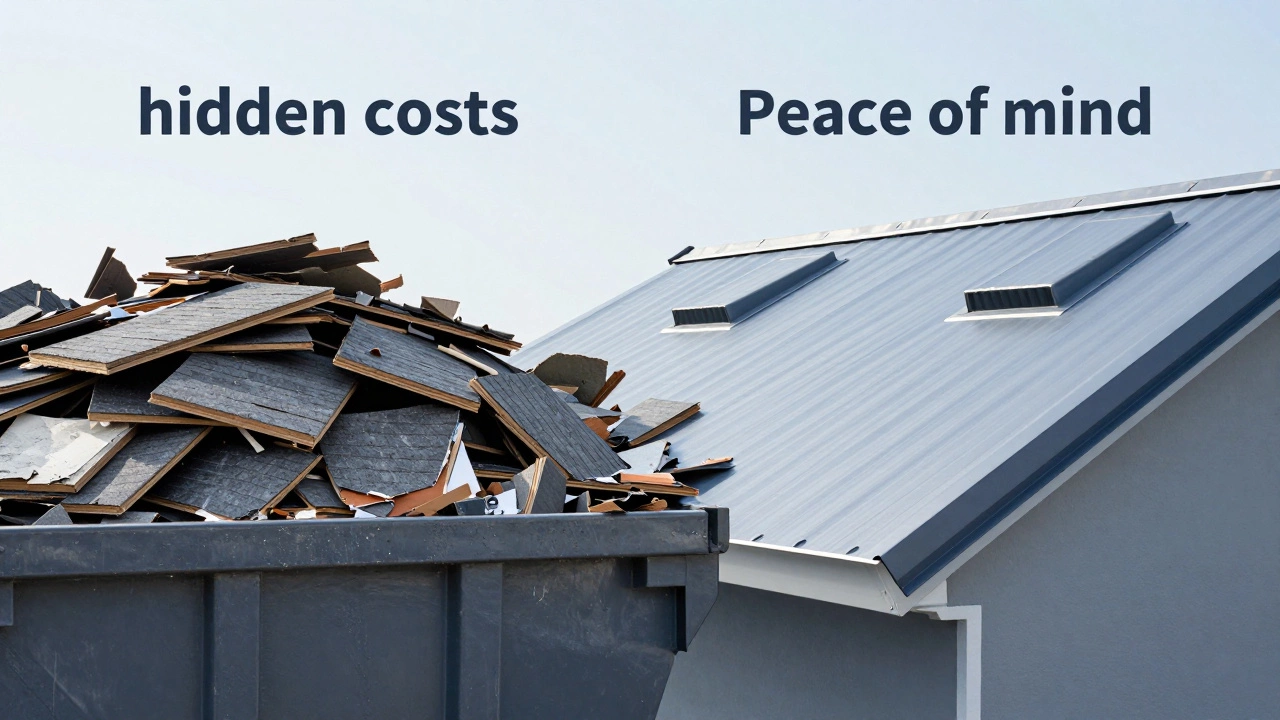
The "invisible" part of roofing costs is often where the budget balloons. First, there is the tear-off. Removing your old roof isn't just peeling back paper; it's a violent process of ripping up nails and old shingles. This creates a massive amount of waste. A typical roof replacement can produce several tons of debris. Landfills charge by the ton, and the contractor has to pay for the dumpster rentals and the hauling fees.
Then there's the surprise factor. You might think your roof deck is fine, but once the shingles are gone, the contractor often finds Dry Rot or water-damaged plywood. Replacing a sheet of rotted plywood costs more than just the wood; it's the time spent cutting it out and fitting a new piece perfectly so the new shingles lay flat. If they ignore the rot, your new roof will sag and leak within a year.
Insurance and the "Peace of Mind" Tax
Why does a licensed company charge 30% more than a guy with a truck and a ladder? Insurance. A professional roofing company carries General Liability Insurance and Workers' Compensation. If a worker falls off your roof, the insurance covers the medical bills. If they don't have insurance and an accident happens, you could be held liable for those costs, which can run into the hundreds of thousands of dollars.
You're also paying for the warranty. A reputable contractor provides a labor warranty (usually 2-10 years) and ensures the material manufacturer's warranty is valid. If the roof leaks in three years, a professional company will come back and fix it for free. The "cheap guy" will likely have changed his phone number and disappeared.
How to Tell if Your Quote is Fair
Don't just look at the bottom line. A fair quote should be itemized. If you see a single lump sum for "Materials and Labor," ask for a breakdown. You want to see the cost of the shingles, the underlayment, the flashing, and the waste removal separately.
Check for these specific details in the quote:
- Ice and Water Shield: Essential for colder climates to prevent leaks at the eaves.
- Drip Edge: A metal strip that keeps water from curling under the shingles and rotting the fascia.
- Ridge Vents: Critical for attic ventilation; without them, your shingles will "bake" from the inside out, shortening their life.
If a contractor tells you that you don't need a drip edge or ventilation to save money, they are essentially selling you a product that will fail faster. It's a classic case of saving a few hundred dollars today to spend thousands on a premature replacement in a decade.
Can I save money by stripping the old roof myself?
While you might save a few hundred dollars in labor, it's rarely worth it. You'll need to rent a commercial-grade dumpster, and if you damage the roof deck during the process, the contractor will charge you more to fix those mistakes. Most importantly, if you injure yourself, your homeowner's insurance may not cover a "professional" task you attempted yourself.
Why is there such a big price difference between contractors?
The gap usually comes down to overhead and insurance. Low-cost contractors often operate as "labor-only" crews without liability insurance or proper licensing. They don't pay for workers' comp, meaning they can underbid professional companies. However, this puts the financial risk of any accidents or poor workmanship entirely on the homeowner.
Is a metal roof actually cheaper in the long run?
Yes, typically. While the upfront cost of metal is 2-3 times higher than asphalt, it can last 50 years compared to asphalt's 20. You avoid the cost of a second (and potentially third) roof replacement over the lifetime of the house. Additionally, metal roofs often lower monthly energy bills by reflecting sunlight, and they can increase the home's resale value.
Does the slope of my roof affect the price?
Absolutely. A "steep pitch" roof is more dangerous and difficult to work on. Roofers have to use more safety equipment and move slower to avoid slipping. This increases the labor hours significantly. A roof with a 12/12 pitch (45 degrees) will be much more expensive to install than a low-slope or flat roof.
What is a "Roof Overlay" and is it cheaper?
A roof overlay is when new shingles are installed directly over the old ones. It is cheaper because there is no tear-off labor or dumpster fee. However, it's generally a bad idea. You can't inspect the decking for rot, you add too much weight to the structure, and most shingle manufacturers won't honor the warranty if there are more than two layers of roofing.
Next Steps for Homeowners
If you're facing a roof replacement, start by getting at least three quotes. Don't just pick the lowest one; look for the most detailed one. If a quote is suspiciously low, ask specifically about their insurance coverage and how they handle waste disposal.
For those on a tight budget, consider a partial repair if the damage is localized to one area. However, if your roof is over 20 years old and showing signs of curling or granular loss, a full replacement is usually the only way to stop the cycle of expensive, temporary patches. Your goal should be to find the balance between a price you can afford and a quality of work that keeps your home dry for the next two decades.