New Build Mold Risk Calculator
Modern homes are built to be airtight for energy efficiency, which can trap construction moisture. Use this tool to assess your current mold risk level and get tailored advice.
Enter Your Home Conditions
Your Mold Risk Assessment
Enter your details and click Calculate to see your risk profile.
Recommended Actions:
💡 Pro Tip: The Hygrometer
A hygrometer costs less than $15. Aim for 40-60% RH. If it stays above 65%, mold risk skyrockets regardless of how clean you keep the house.
🌬️ Trickle Vents
Keep them open year-round. Closing them to save heat often backfires by trapping moisture from cooking and breathing, leading to black spots in corners.
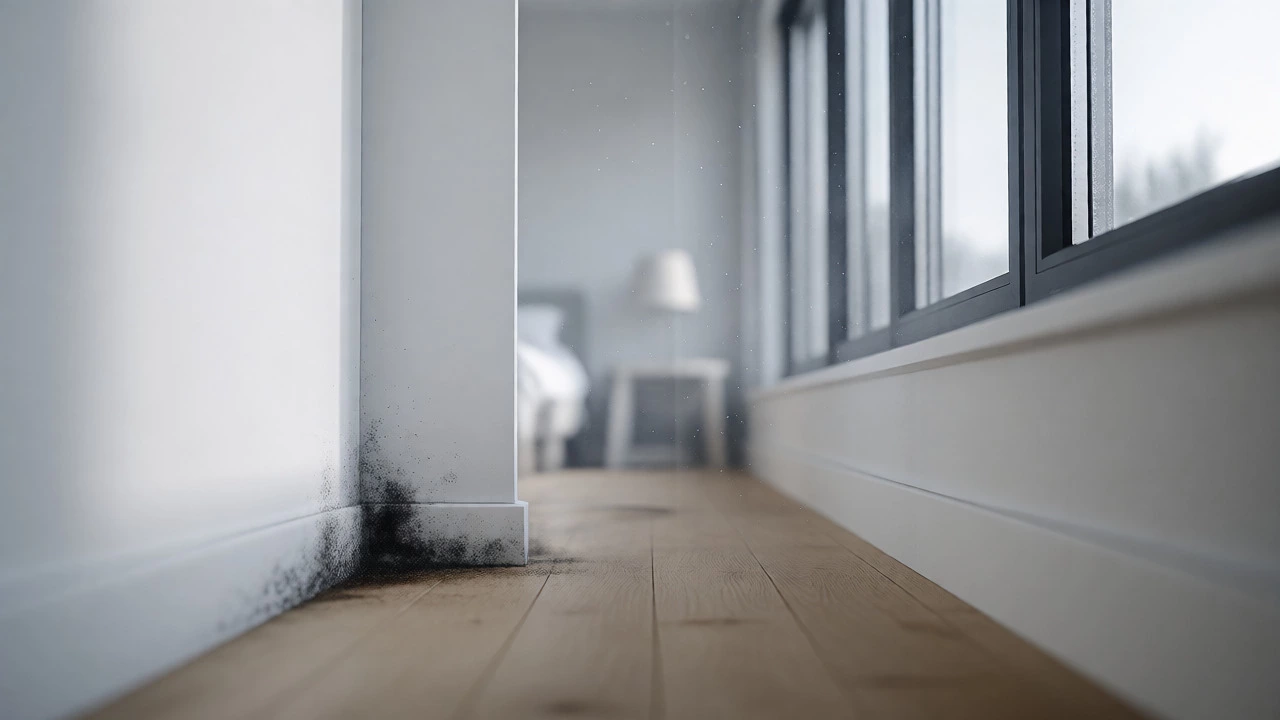
You just signed the papers. The keys are in your hand. The paint is fresh, the carpets smell like nothing (which is suspiciously good), and the house looks pristine. Then, about three months in, you spot it: a fuzzy black patch creeping up the corner of your bedroom wall or a musty smell that won't quit despite your best efforts with air fresheners. You’re confused. This is supposed to be brand new. How can something so young already have an old-house problem?
Here’s the hard truth: mold in new builds is not a defect in most cases; it’s a feature of modern construction speed. It happens because we build houses faster than they can dry. If you’ve ever wondered why your "brand new" home feels damp, this guide breaks down exactly what’s happening inside your walls, why it’s dangerous, and how to fix it without losing your mind.
The Science of Construction Moisture
To understand why mold appears, you first need to understand where the water comes from. It’s not leaking pipes. It’s the building materials themselves. Modern construction relies heavily on concrete, plaster, screed, and timber. These materials hold massive amounts of water during their manufacturing and installation processes.
Consider concrete. A standard cubic meter of mixed concrete contains roughly 150-200 liters of water. Most of that water is needed for hydration-the chemical reaction that turns liquid slurry into solid stone-but only about 25% is actually used in that reaction. The rest? It has to go somewhere. It evaporates into your home over time. In older buildings, builders might wait weeks or months before moving to the next stage. Today, developers often pour foundations, erect frames, and install windows in days, trapping that water inside the envelope.
| Material | Typical Initial Moisture Content (%) | Drying Time Estimate |
|---|---|---|
| Concrete Slab | 4-6% by mass | 3-6 months per inch of thickness |
| Plasterboard | 10-15% | 2-4 weeks in heated space |
| Timber Framing | 18-20% | Varies widely based on treatment |
| Screed | High surface moisture | 1 day/mm up to 50mm, then slower |
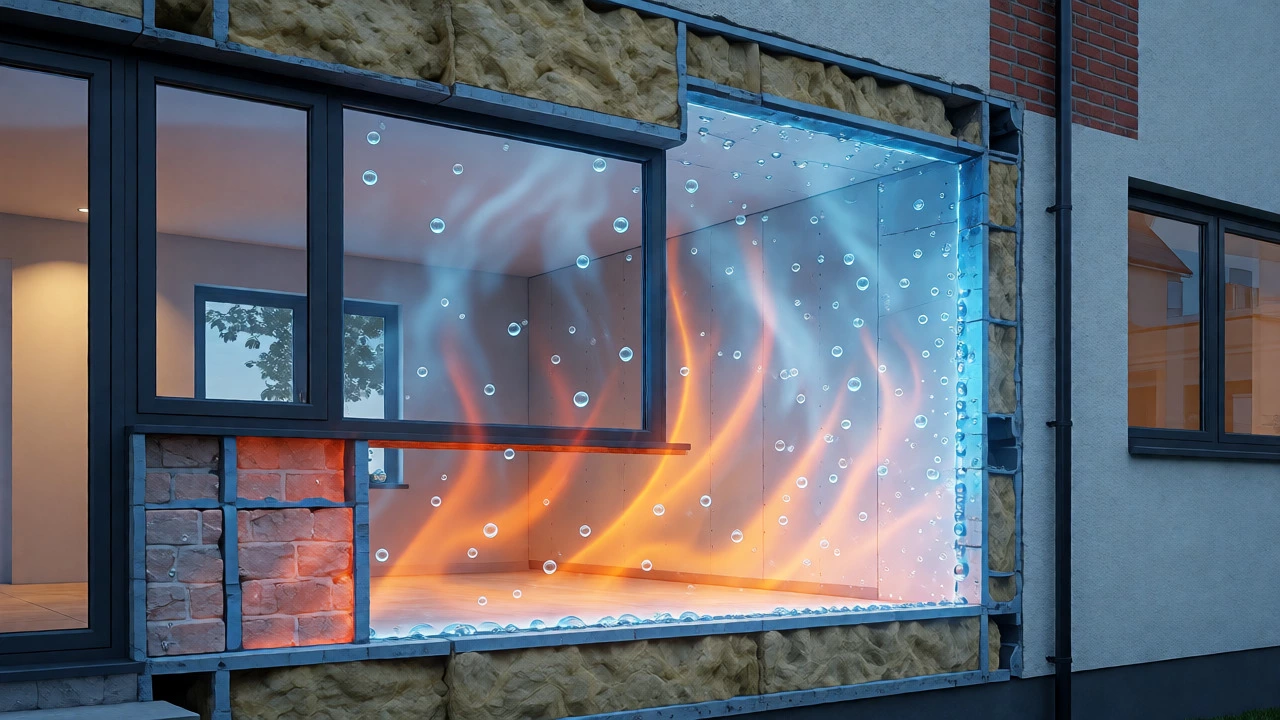
This trapped water creates high humidity levels indoors, often exceeding 70%. When warm, moist air hits a cold surface-like a poorly insulated window frame or a thermal bridge in the wall-it cools down rapidly. Cold air holds less moisture than warm air, so the excess water vapor turns into liquid droplets. That’s condensation. And where there is persistent condensation, mold spores, which are always present in the air, find the perfect environment to grow.
Why Modern Homes Are More Prone to Mold
You might think, "My grandparents' house was drafty and never had mold." They did, but it was different. Older homes leaked heat and moisture freely through gaps in windows, doors, and walls. This natural ventilation kept indoor humidity low, even if the house was cold. Modern energy efficiency standards have changed the game entirely.
Today’s homes are built to be airtight. We use double or triple-glazed windows, tight seals around doors, and continuous insulation layers. While this keeps heating bills down, it traps moisture inside. Without mechanical assistance, that moisture has nowhere to go. This phenomenon is known as the "greenhouse effect" in housing. You’re essentially creating a humid terrarium where humans live.
Furthermore, many new builds utilize Mechanical Ventilation with Heat Recovery (MVHR) systems. These are excellent for energy efficiency but require careful management. If the filters aren’t cleaned, or if residents block vents with furniture, the system fails to extract moist air from bathrooms and kitchens effectively. The result is stagnant, damp air pockets that invite mold growth in corners and behind wardrobes.
Common Hotspots for Mold Growth
Mold doesn’t appear randomly. It targets specific areas where temperature drops and airflow stops. If you’re inspecting your new home, focus on these zones:
- North-facing walls: These receive the least sunlight and stay cooler, making them prime candidates for condensation.
- Corners and junctions: Where two external walls meet, the surface area exposed to outside cold is highest. This creates a "cold bridge," causing local temperatures to drop below the dew point.
- Behind large furniture: Pushing a wardrobe flush against an external wall blocks airflow. The air trapped between the fabric and the wall becomes stagnant and damp.
- Bathrooms and Kitchens: Even with extractor fans, steam from showers and cooking adds liters of water to the air daily. If the fan isn’t running long enough, that moisture settles on tiles and grout.
- Under floorboards: If the subfloor wasn’t properly dried before laying carpet or laminate, moisture can rise upward, attacking the underside of your flooring.
It’s worth noting that not all black spots are mold. Sometimes it’s just dust accumulating on static-charged surfaces. But if the spot spreads after cleaning, or if it smells earthy and damp, it’s likely biological growth.
The Drying-Out Period: What Developers Don’t Tell You
When you move into a new build, you enter the "drying-out period." This is the phase where the residual construction moisture leaves the structure. For a typical UK semi-detached house, this can take anywhere from six to eighteen months. During this time, your heating bills will be higher than usual. Why? Because you’re paying to evaporate hundreds of liters of water trapped in the concrete and plaster.
Many buyers mistake this necessary drying process for a heating fault. They turn the thermostat up to 21°C, expecting warmth. Instead, the heat is being consumed by evaporation. The walls feel cold to the touch because they are still wet internally. This is normal. Fighting it by turning off the heat is counterproductive; cold air holds more moisture relative to its capacity, leading to worse condensation.
A pro tip here: Use a hygrometer. This cheap device measures relative humidity. Aim to keep indoor humidity between 40% and 60%. If it stays above 65% consistently, mold risk skyrockets. Adjust your heating and ventilation habits based on the data, not just how the room feels.

Actionable Steps to Prevent and Treat Mold
If you already have mold, don’t panic. It’s rarely structural damage. Here is a practical workflow to handle it.
- Identify the source: Is it condensation? Check for leaks first. If no leaks exist, assume it’s condensation due to high humidity.
- Clean safely: Wear gloves and a mask. Mix one part bleach with ten parts water, or use a specialized anti-mold spray. Wipe the affected area gently. Do not scrub dry mold spores into the air; wipe wet.
- Improve airflow: Pull furniture at least 5cm away from external walls. Leave internal doors open when heating is on to allow air circulation throughout the house.
- Manage ventilation: Run bathroom extractor fans for at least 20 minutes after showering. Open kitchen windows while cooking. Trickle vents should remain open year-round, even in winter.
- Dehumidify: Consider buying a compressor dehumidifier for the first year. Running it for a few hours a day can significantly reduce the load on your heating system and prevent mold recurrence.
For persistent issues, consider professional assessment. Some companies offer thermal imaging surveys to pinpoint cold bridges. This is especially useful if mold returns despite your best efforts, indicating an insulation gap rather than user error.
Legal Rights and Developer Responsibilities
In the UK, new homes come with a warranty, typically through the National House Building Council (NHBC). The first two years cover non-fatal defects. However, mold caused by condensation is often classified as "lifestyle-related" rather than a construction defect. This means the developer might argue that it’s your responsibility to manage ventilation and heating correctly.
But there’s a nuance. If the mold is caused by poor design-such as inadequate ventilation provision, lack of insulation, or defective windows-you may have a claim. Document everything. Take photos with dates. Keep records of your heating usage and humidity readings. If the issue persists beyond the initial drying period despite correct usage, escalate it formally. You don’t want to accept "it’s just condensation" if the root cause is a missing vapor barrier.
Is mold in a new build covered by warranty?
It depends on the cause. If the mold results from condensation due to improper heating or ventilation by the resident, it is usually not covered. However, if the mold stems from a construction defect like poor insulation, missing vapor barriers, or faulty windows, it falls under the structural warranty (typically the first two years). Always document evidence and consult your warranty provider.
How long does it take for a new build to dry out completely?
Most new builds experience significant drying out within the first 6 to 12 months. Concrete slabs can retain moisture for longer, sometimes up to 18 months depending on thickness and weather conditions. Humidity levels should stabilize once the bulk of construction moisture has evaporated.
Should I leave trickle vents open in winter?
Yes. Trickle vents are designed to provide background ventilation without major heat loss. Closing them traps moisture generated by breathing, cooking, and washing, leading to higher humidity and increased mold risk. Keeping them open helps maintain healthy air quality.
Can I use a dehumidifier instead of heating?
A dehumidifier removes moisture directly from the air, which is highly effective for preventing mold. However, it does not warm the surfaces. Condensation forms when warm air hits cold surfaces, so maintaining a consistent background heat is still recommended to keep wall temperatures above the dew point. Using both together is often the most cost-effective strategy during the first year.
What kind of mold is common in new builds?
The most common types are Aspergillus and Penicillium, which appear as black, green, or blue spots. Stachybotrys chartarum (black mold) is less common but possible in severe, prolonged dampness. These molds thrive on cellulose-rich materials like plasterboard paper backing and wallpaper paste.
Living in a new build is exciting, but it requires a shift in mindset. You are managing a living system that is shedding its construction skin. By understanding the physics of moisture and taking proactive steps, you can enjoy a healthy, mold-free home without sacrificing comfort or breaking the bank on heating.