Couch Cushion Durability Advisor
Find Your Perfect Cushion Match
Answer a few questions about your sofa usage to discover the cushion type that will last longest for your needs.
Your Recommendation
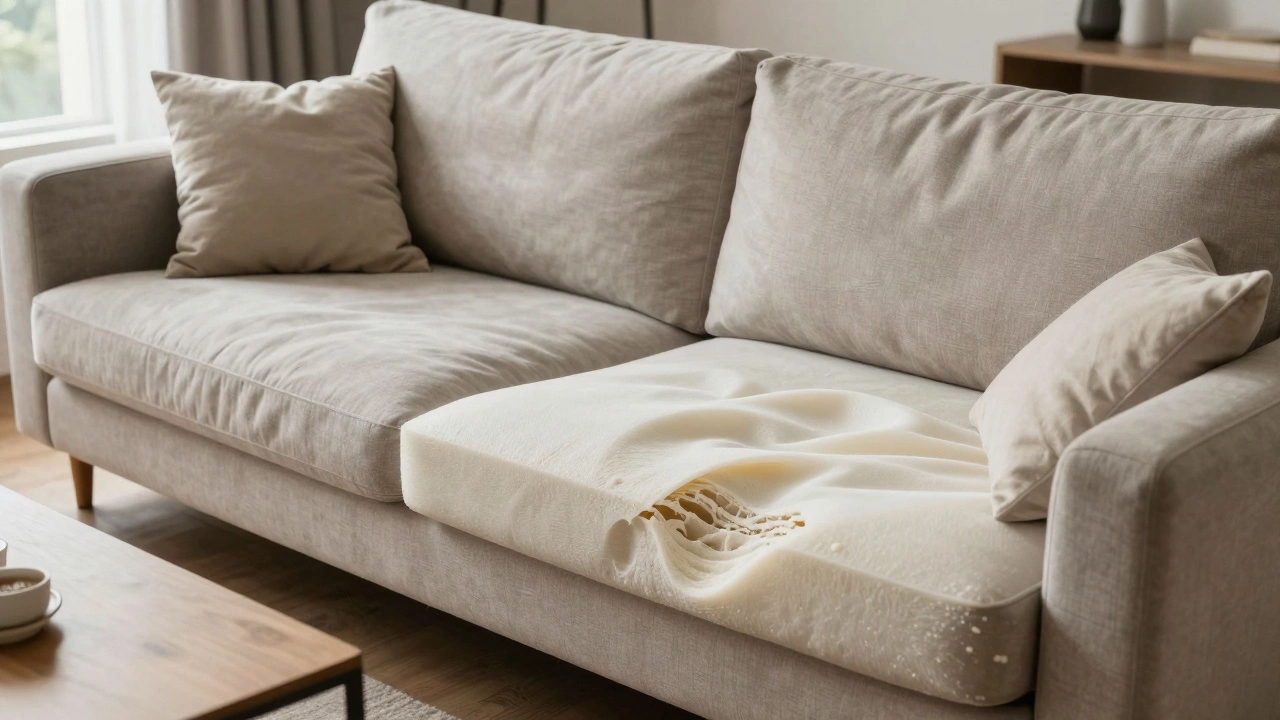
Let’s be real - you bought a new couch because you wanted comfort, style, and something that wouldn’t fall apart in a year. But after just 18 months, the cushions are sagging, lumpy, or flat as a pancake. You’re not alone. Most people don’t realize that couch cushions aren’t created equal. The material inside makes all the difference in how long they last - not just the fabric on top.
Not All Foam Is Created Equal
The most common cushion filling you’ll find in budget and mid-range sofas is standard polyurethane foam. It’s cheap, soft, and feels great at first. But here’s the catch: if it’s under 1.8 pounds per cubic foot (PCF) density, it’ll start collapsing within 12 to 18 months. You can tell by pressing your hand into the cushion. If it springs back slowly or doesn’t return fully, that foam is already breaking down.
High-density foam, on the other hand, starts at 2.0 PCF and goes up to 2.8 PCF. This stuff is dense, springy, and holds its shape for 7 to 10 years. Brands like Tempur-Pedic and High-Resilience (HR) foam are used in high-end furniture for a reason. They don’t just feel better - they last longer. If you’re replacing cushions, ask for at least 2.5 PCF foam. Anything lower is a short-term fix.
Down and Feather Blends: Soft, But Not Forever
Down and feather cushions are luxurious. They sink in just right, feel cloud-like, and are often marketed as "plush" or "luxury." But here’s the truth: they need constant fluffing. And even then, they compress over time. A down blend cushion (usually 50% down, 50% feathers) will lose volume in 2 to 3 years. The feathers shift, clump, and poke through the fabric. You’ll start finding feathers on your clothes.
That doesn’t mean avoid them entirely. If you want that soft, sinking-in feel, go for a down blend with a high-quality ticking fabric (at least 230-thread count) and a zippered cover. But pair it with a foam core. A hybrid cushion - foam on the bottom, down on top - gives you the best of both: support and softness. This combo lasts 5 to 7 years with regular flipping and fluffing.
Memory Foam: Great for Pressure Relief, Not Longevity
Memory foam cushions are popular for their body-contouring feel. They’re great for people with back pain or who sit for long hours. But traditional memory foam has a flaw: it gets softer over time and doesn’t bounce back well. In hot climates, it can even melt slightly. That’s why memory foam cushions on their own rarely last more than 3 to 4 years.
There’s a better option: gel-infused memory foam. The gel helps with airflow and adds structure. It doesn’t sag as fast. Look for cushions with a 4-pound density gel foam. These can last 5 to 6 years, especially if they’re layered over a high-density foam base. But don’t buy a 100% memory foam cushion unless you’re okay replacing it every few years.
Spring-Down Hybrids: The Hidden Gem
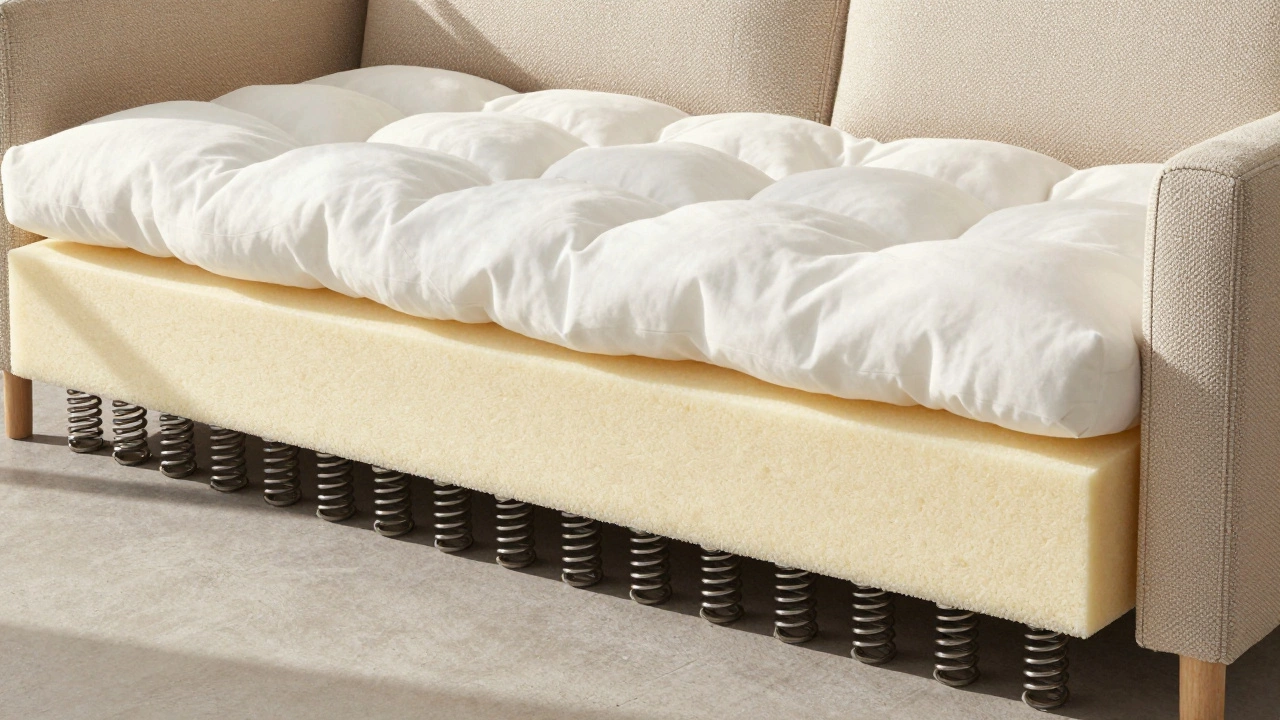
Most people overlook spring-based cushions. But in older, well-made sofas - the kind that lasted 20 years - you’ll often find sinuous steel springs underneath a layer of foam or down. These springs provide natural bounce and don’t compress like foam. They’re used in high-end European and custom-made furniture.
A spring-down hybrid cushion uses a grid of S-shaped steel springs as the base, topped with a 2.5 PCF foam layer, then a down blend. This design resists sagging, retains shape, and feels responsive. You don’t sink into it like a marshmallow - you sit on it. These cushions can last 8 to 12 years with normal use. The downside? They’re heavier and harder to find in mass-market stores. But if you’re investing in a sofa meant to last a decade, this is the gold standard.
What About Fiberfill?
Fiberfill is the cheapest option. It’s polyester batting stuffed into cushions. It’s fluffy at first, but it clumps, flattens, and turns into a lumpy mess within a year. You’ll see it in discount furniture stores and rental sofas. Avoid it unless you’re okay replacing cushions every 12 months. Even then, it’s not worth the hassle.
How to Pick the Right Cushion for Your Lifestyle
Here’s a quick guide based on how you use your couch:
- Heavy daily use (kids, pets, binge-watching) → High-density foam (2.5+ PCF) with a zippered, removable cover. Wash the cover every 3 months.
- Occasional use (guest room, formal living room) → Down blend over foam. Fluff weekly. Replace every 5 years.
- People with back pain or mobility issues → Gel-infused memory foam over high-density foam. Offers support without sinking too deep.
- Wanting a luxury feel that lasts → Spring-down hybrid. Expect to pay more upfront, but you’ll save money long-term.
Signs It’s Time to Replace Your Cushions
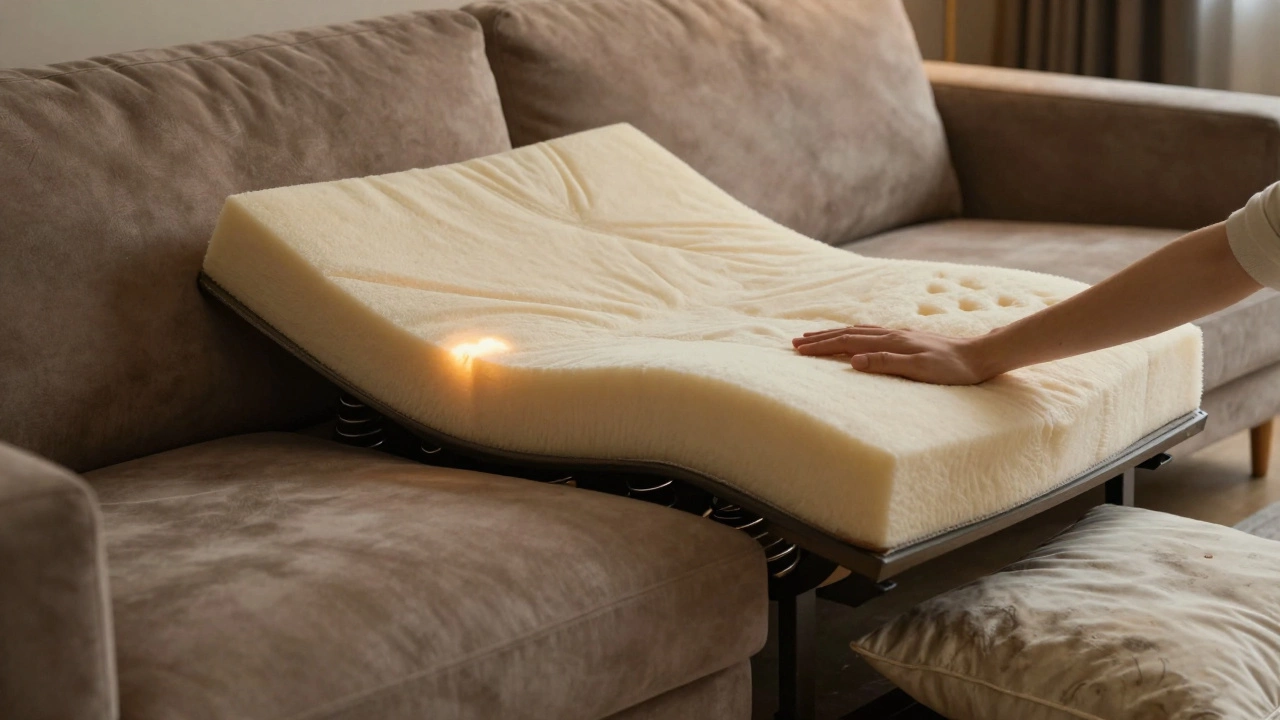
You don’t need to buy a whole new sofa. Just replace the cushions. Watch for these signs:
- Deep indentations that don’t bounce back after 30 seconds
- Cushions that slide around or tilt to one side
- Visible wear on the fabric where you sit most
- Feathers poking through or foam chunks breaking apart
- It takes 3 pillows to sit comfortably
If you see any of these, it’s not your couch that’s broken - it’s the stuffing. Replacing cushions costs between $150 and $400, depending on size and material. That’s a fraction of a new sofa.
Pro Tip: Always Check the Frame First
Before you buy new cushions, make sure the sofa frame is solid. A weak frame will ruin even the best cushions. Shake the couch. If it wobbles or creaks, the frame is compromised. A good frame is made of hardwood (like kiln-dried oak or maple), not particleboard or plywood. Look for corner blocks and eight-way hand-tied springs. If the frame’s good, new cushions can extend the life of your sofa by a decade.
Where to Buy Replacement Cushions
You don’t have to buy from the original brand. Many online retailers specialize in custom cushions. Just measure your old ones (length, width, depth) and note the foam density if you know it. Companies like CushionSource, FoamOrder, and The Upholstery Shop let you pick foam type, cover fabric, and even add zippers. You can get custom cushions shipped in under two weeks for less than $200.
And if you’re feeling adventurous, try local upholstery shops. They’ll often match your existing fabric or suggest something more durable. Plus, they can re-stuff your old cushions instead of replacing them entirely.