Old houses have character - creaky stairs, uneven walls, windows that don’t quite close - but the floor? That’s where things get tricky. You can’t just slap down the latest trending vinyl plank and call it a day. Old homes have quirks that modern flooring doesn’t always handle well. So what actually works? The answer isn’t one material. It’s a mix of what your house needs, what you’re willing to live with, and what won’t cost you a fortune to fix first.
Start with the subfloor - not the finish
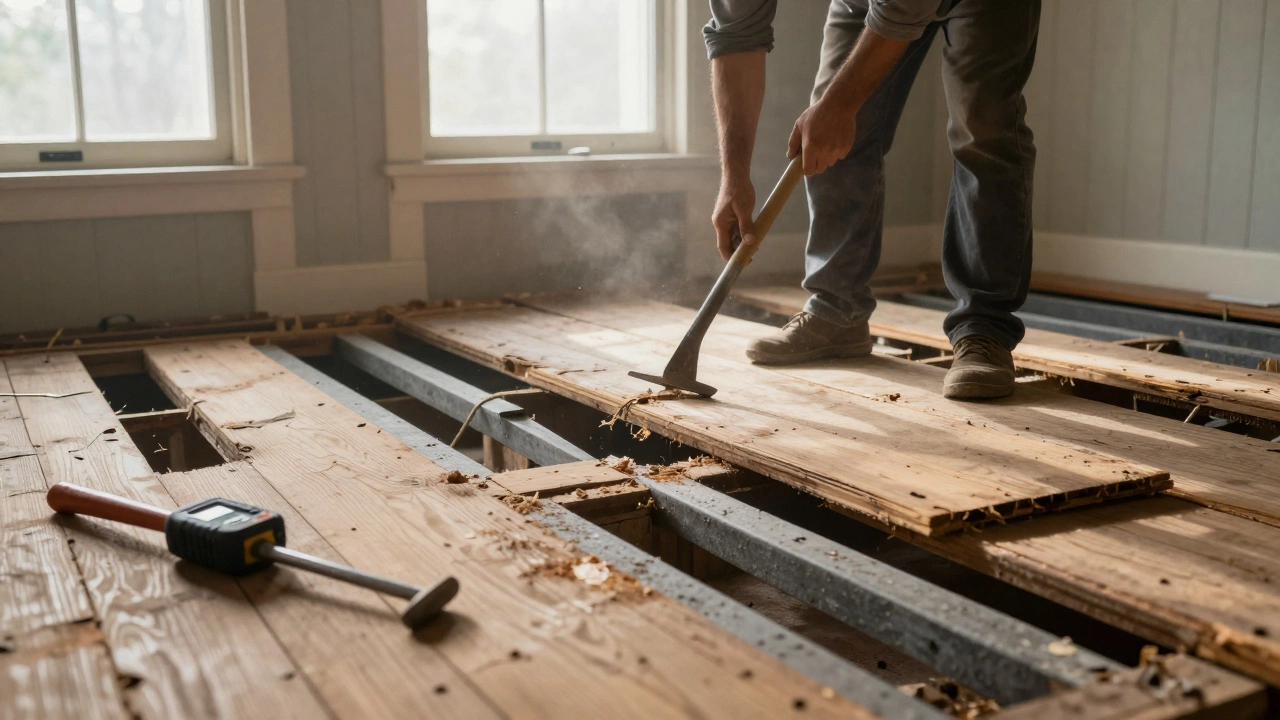
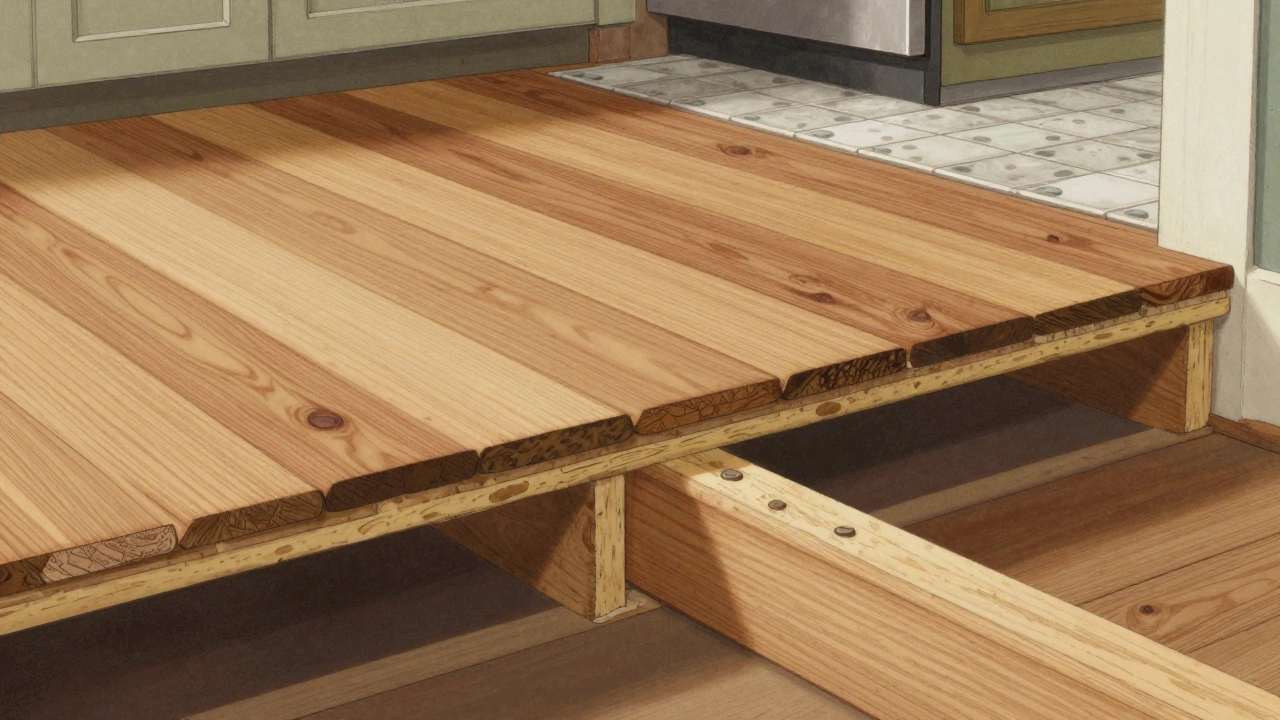
Before you even think about oak, tile, or laminate, check what’s underneath. Most old houses have wood joists that settled decades ago. The subfloor? Often 1x6 or 1x8 boards nailed haphazardly, with gaps, rot, or nails sticking up. You can’t install rigid flooring over that. Tile will crack. Laminate will click and pop. Even hardwood will squeak louder than before.
Here’s what most pros do: strip off the old flooring, inspect the joists, and then reinforce them with sistered lumber if needed. Then they lay down 3/4-inch plywood over the top - not particleboard, not OSB, real plywood. That gives you a stable base. It’s not glamorous, but it’s the reason your new floor lasts 20 years instead of 5.
Hardwood: the classic choice - if you do it right
Hardwood is what most people picture when they think of old houses. And for good reason. Original heart pine floors in a 1920s Craftsman? They’re gorgeous. But if your floor is already gone, you’re not going to find that exact wood. Modern solid hardwood (3/4-inch thick) can work, but only if your subfloor is truly flat and dry.
Here’s the catch: old homes often have moisture issues. Basements leak. Crawl spaces breathe. That moisture rises. Solid hardwood expands and contracts with humidity. In a damp basement? It’ll buckle. In a dry attic? It’ll crack.
That’s why many renovators now choose engineered hardwood. It’s made of thin real wood on top, with layers of plywood underneath. That makes it way more stable. It handles moisture better. It can be glued or floated over a well-prepared subfloor. And it looks just like solid wood. Brands like Boral and Shaw offer engineered options with thicker wear layers - 3mm or more - so you can sand and refinish them 2-3 times.
Tile: tough, timeless, and surprisingly flexible
Tile isn’t just for bathrooms. In old homes, it’s a smart pick for kitchens, entryways, and even living rooms - especially if you’ve got moisture or pets or kids. Porcelain tile is dense, stain-resistant, and won’t warp. But installing it over an uneven subfloor? Big mistake.
You need a level surface. That’s why pros often use a self-leveling underlayment before laying tile. It’s messy, but it fills gaps and cracks like a liquid cement. Once it’s dry, you get a rock-solid base. Then you lay the tile with flexible thinset mortar - not the old-school rigid kind. That lets the tile move a little without cracking.
Large-format tiles (12x24 inches or bigger) look modern, but they’re harder to install over uneven floors. Smaller tiles - 6x6 or 4x4 - are more forgiving. They follow the natural contours better. And they’re easier to replace if one gets damaged.
Laminate and vinyl: the budget-friendly alternatives
Laminate and luxury vinyl plank (LVP) are popular because they’re cheap and easy. But in old houses? They’re risky.
Laminate is rigid. If your subfloor has a 1/4-inch dip, the laminate will flex and click when you walk on it. It’ll sound like a drum. And once it starts, it never stops. Plus, if your house has any moisture at all - even from a leaky pipe above - laminate will swell and warp. It’s not repairable. You have to replace the whole section.
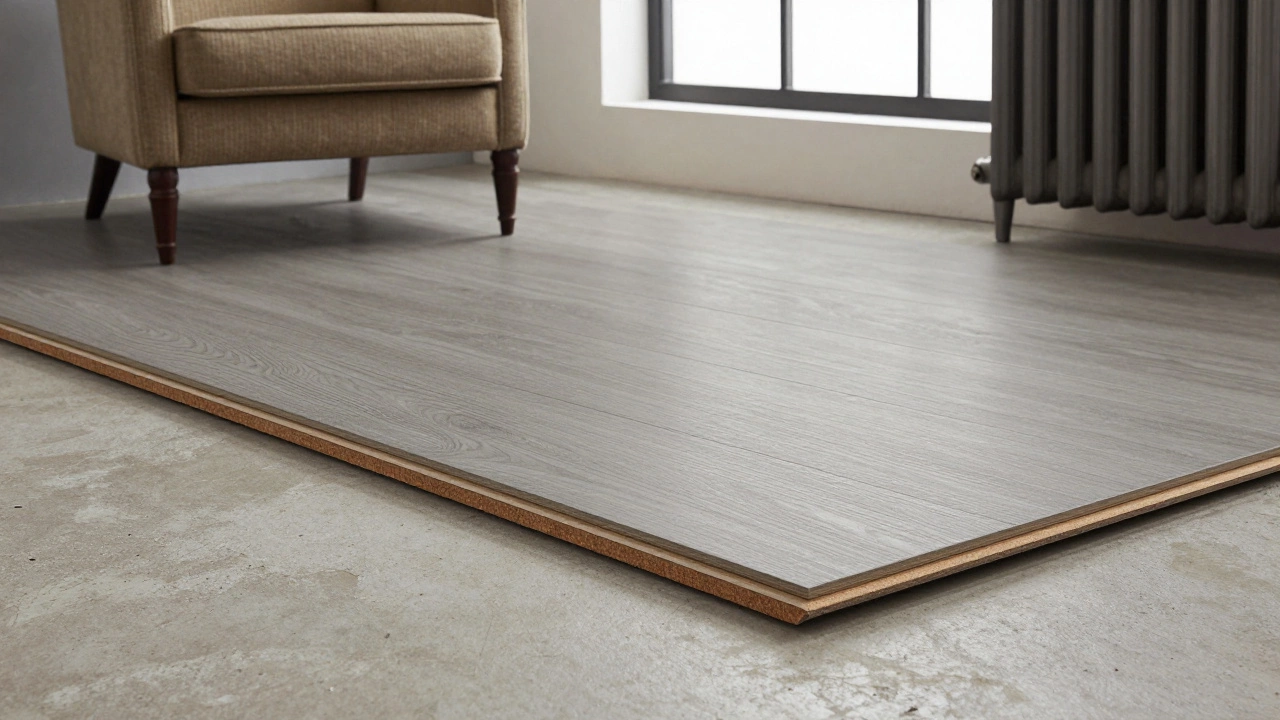
LVP is better. Modern LVP has a rigid core (often stone-plastic composite) that resists dents and moisture. It’s also designed to be installed as a floating floor - meaning it doesn’t glue to the subfloor. That’s actually an advantage in old homes. If the floor shifts slightly over time, the LVP can move with it. Look for products with a thick wear layer (at least 20 mil) and a cork or foam underlayment already attached. Brands like COREtec and Shaw’s Floorte Pro are built for older homes.
What to avoid
Some flooring choices are just bad for old houses. Here’s why:
- Carpet: It hides problems. You can’t see the rot, the sagging, or the mold growing underneath. If you install carpet over a damp subfloor, you’re inviting mildew - and the smell never goes away.
- Linoleum: Old-school linoleum (the real kind, made from linseed oil) is fine. But modern vinyl sheet flooring? It’s thin, cheap, and tears easily over uneven surfaces. It also traps moisture.
- Engineered bamboo: It’s marketed as eco-friendly, but it’s not stable in changing humidity. In a 100-year-old house with no AC, bamboo will cup and warp faster than you think.
Moisture is the silent killer
Old houses weren’t built to be sealed tight. They breathe. That’s why moisture moves through them - from the ground up, from the outside in. If you ignore this, no flooring lasts.
Here’s what to check:
- Is there a vapor barrier under the crawl space? If not, install one. Use 6-mil polyethylene sheeting, overlapped and taped at seams.
- Are gutters clean and draining away from the foundation? Water pooling near the house = moisture rising into the floor.
- Do you have a sump pump in the basement? If you’re installing tile or hardwood, you need one if water ever enters.
- Is the house properly ventilated? Old homes need airflow. Running a dehumidifier in the basement during summer helps more than you’d think.
Test the moisture level before installing anything. A pin-type moisture meter will tell you if your subfloor is below 12% moisture content. If it’s higher, wait. Fix the source. Don’t just cover it up.
Real-world examples
Take a 1912 bungalow in Portland. The original oak floor was gone - rot from a leaky roof. The owners chose engineered hardwood with a 3mm wear layer. They fixed the roof, installed a vapor barrier under the crawl space, and used a moisture-resistant underlayment. Ten years later? Still looks new.
Or a 1940s bungalow in Chicago with a concrete basement floor. They went with LVP that mimics wide-plank walnut. It’s warm underfoot, waterproof, and didn’t require tearing up the concrete. The underlayment handles the slight slope. No cracking. No mold.
Final advice: match the material to the room
Not every room needs the same floor.
- Entryway: Tile or LVP. High traffic. Moisture from boots. Easy to clean.
- Kitchen: Engineered hardwood or LVP. Durable, warm, and forgiving if you drop a pan.
- Living room: Engineered hardwood. Beauty matters here. Go for wider planks - 5 inches or more - for that authentic old-home look.
- Bathroom: Porcelain tile. Always. Even if it’s a small powder room. Water doesn’t care about aesthetics.
- Bedroom: Engineered hardwood or LVP with a cork underlayment. Soft underfoot, quiet, and warm.
Don’t force one material throughout. Let each room’s needs guide you. That’s how you get a floor that lasts - and feels right.
Can I install hardwood over an uneven subfloor in an old house?
No. Hardwood - whether solid or engineered - needs a flat, stable base. If the subfloor has dips or humps over 1/8 inch, you must level it with plywood or self-leveling compound. Otherwise, the planks will click, crack, or warp. Skipping this step leads to expensive repairs down the road.
Is engineered hardwood better than solid hardwood for old homes?
Yes, in most cases. Engineered hardwood is more stable in changing humidity, which is common in older homes. It’s also easier to install over slightly uneven subfloors and doesn’t require nail-down methods that can damage historic joists. Solid hardwood is beautiful but more sensitive to moisture and movement.
How do I know if my subfloor is too damp?
Use a pin-type moisture meter. Insert the pins into the subfloor - not the finish. Readings above 12% mean the wood is too wet for most flooring. Below 12% is safe. If you don’t have a meter, look for signs: dark spots, musty smells, or soft spots when you walk. These mean moisture is present and needs fixing before installing new flooring.
Should I remove all the old flooring before installing new?
Almost always, yes. Old flooring hides damage. You can’t assess the condition of the joists or subfloor without removing it. Plus, adding new flooring over old layers raises the height, which can mess with door clearances, stair transitions, and appliance fit. Removing it gives you a clean slate to fix structural issues first.
Can I use radiant heating under flooring in an old house?
Yes, but only with the right materials. Electric radiant mats work well under tile or LVP. Hydronic systems (water-based) require major plumbing work and are risky in older homes unless the foundation is sound. Always consult a pro - adding heat changes how wood and other materials expand. Improper installation can cause warping or cracking.