Sofa Cushion Filling Selector
Find Your Perfect Cushion Filling
Answer these 5 questions to get a personalized recommendation based on the latest sofa filling research. We'll analyze your priorities, budget, and lifestyle needs.
Your Perfect Cushion Filling
Why this works for you:
- Best for your priorities
- Expected lifespan
- Best density range
Choosing the right cushion filling for your sofa isn’t just about comfort-it affects how long the sofa lasts, how it feels after years of use, and even how well it supports your back. With so many options out there, it’s easy to get overwhelmed. But the truth is, there’s no single "best" filling. It depends on how you use your sofa, what you value most (support? softness? durability?), and your budget. Let’s cut through the marketing noise and break down what actually works.
Memory Foam: The Hug You Can’t Ignore
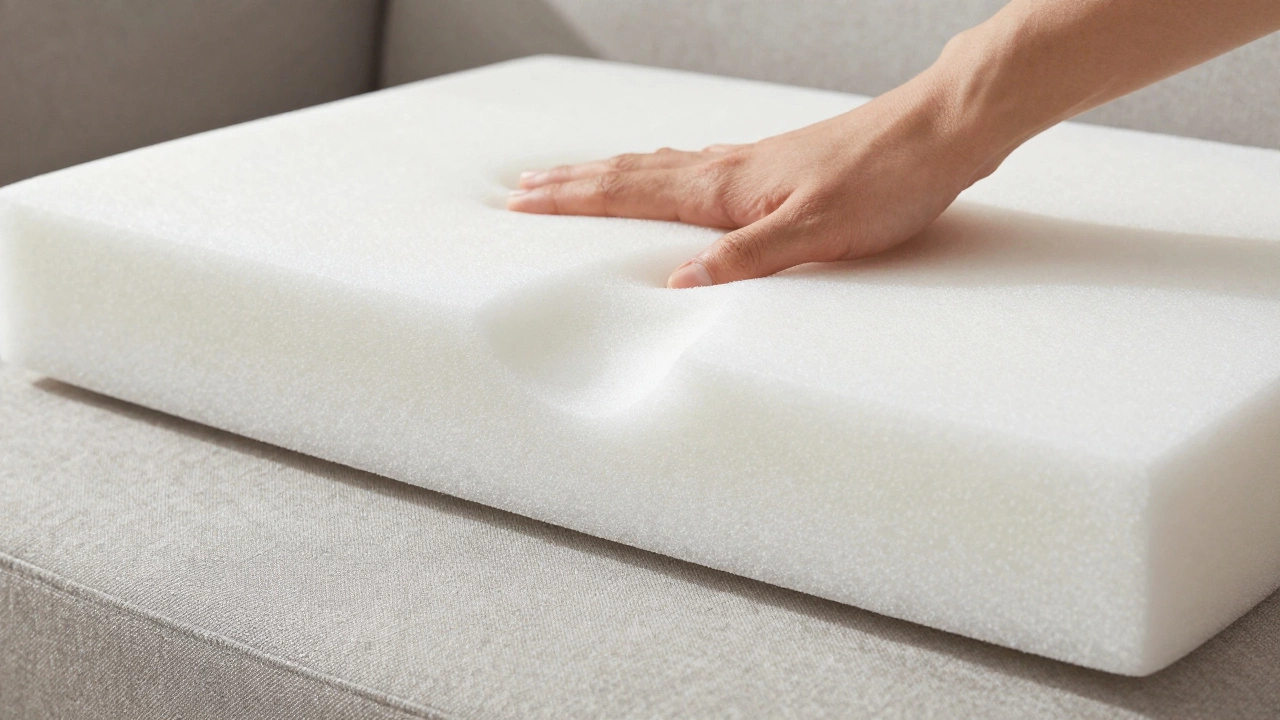
Memory foam has been the go-to for years, and for good reason. It molds to your body shape, offering pressure relief that’s hard to beat. If you sit for long hours-reading, watching TV, or working from the couch-this is one of the top choices. High-density memory foam (5 lb/ft³ or higher) holds its shape better over time. Lower-density versions (under 3 lb/ft³) sink too much and flatten fast. Brands like Tempur-Pedic and Sleep Number use this in premium sofas, and it’s not just for beds. The downside? It can trap heat. If you live in a warm climate or run hot, you might wake up sweaty after a long nap. Look for gel-infused memory foam-it pulls heat away and stays cooler.
High-Density Foam: The Workhorse
If you want a sofa that lasts 10+ years without turning into a hammock, high-density foam is your best bet. This isn’t the flimsy foam you find in cheap furniture. We’re talking about foam with a density of 2.5 lb/ft³ or more. It’s firm, supportive, and bounces back after every sit-down. It’s the standard in mid-to-high-end sofas from brands like IKEA’s FRIHETEN line or Ashley’s higher-end collections. It doesn’t mold to you like memory foam, but it doesn’t collapse either. Perfect for families with kids or pets who jump on the couch daily. The catch? It’s less plush. If you crave that "sink in" feeling, this might feel too stiff. But if you value structure and longevity, this is the silent hero of sofa fillings.
Down and Feather: Luxurious, But High-Maintenance
Down and feather blends give that cloud-like, luxurious sink. You’ll find them in high-end sofas from Restoration Hardware or Design Within Reach. Down (the soft underlayer of ducks or geese) is fluffy and light. Feathers add a bit of structure. Together, they create a soft, moldable seat that feels indulgent. But here’s the catch: they need constant fluffing. If you don’t reshape them every few days, they clump. They also flatten faster than foam. And if you’re allergic or hate the idea of animal products, this isn’t for you. A good down blend is usually 80% down, 20% feather. Anything with more feather and less down will feel prickly. It’s beautiful, but it’s a lifestyle choice-not a practical one for busy households.
Polyester Fiber (Polyfill): Budget-Friendly but Short-Lived
Most entry-level sofas use polyester fiber filling. It’s cheap, soft, and easy to work with. You’ll find it in sofas under $800. The problem? It compresses fast. Within a year, it starts looking flat and uneven. It doesn’t spring back. It just stays squished. It’s also prone to clumping, especially if it gets damp or isn’t cleaned regularly. If you’re on a tight budget and plan to replace your sofa in 3-4 years, this is fine. But if you want something that lasts, skip this. Some manufacturers mix it with foam to improve durability. Look for cushions labeled "foam core with polyfill wrap"-that’s a decent middle ground.
Hybrid Fillings: The Smart Compromise
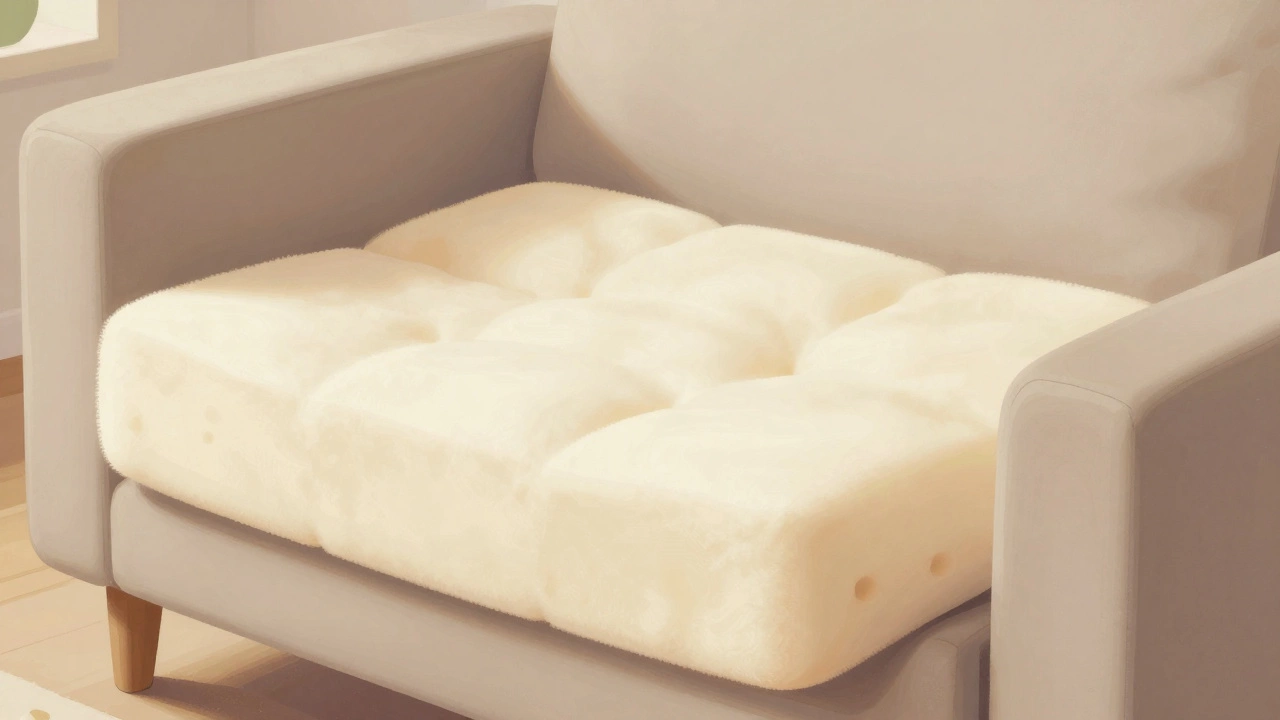
Many modern sofas use a mix of materials to get the best of both worlds. A common hybrid is high-density foam core wrapped in a layer of down alternative or polyester fiber. This gives you the support of foam with the softness of a plush cover. Another popular combo is foam with a thin layer of memory foam on top. This is what you’ll find in sofas from Crate & Barrel, West Elm, or even some AmazonBasics models. These hybrids are becoming the new standard because they balance comfort, durability, and price. If you’re torn between firm and soft, this is your sweet spot.
What Density Should You Look For?
Density isn’t just a number-it’s your cushion’s lifespan. Here’s what to aim for:
- Below 1.8 lb/ft³: Cheap, flattens in months. Avoid.
- 1.8-2.2 lb/ft³: Acceptable for light use. Fine if you’re not sitting all day.
- 2.3-2.8 lb/ft³: Good for daily use. Most durable foam in budget to mid-range sofas.
- 3.0 lb/ft³ and above: Premium. Will last 10+ years. Ideal for heavy use.
Check the product specs. If the density isn’t listed, call the manufacturer. Reputable brands will tell you. If they dodge the question, that’s a red flag.
How to Test a Sofa Before Buying
Don’t just sit on it for 30 seconds. Do this:
- Sit in the center and lean back. Does it feel like it’s holding your spine straight? Or do you sink into a U-shape?
- Press down hard with your hand. If it doesn’t spring back within 2-3 seconds, the foam is too soft.
- Check the seams. Are the cushions stitched tightly? Loose stitching means the filling will shift.
- Ask if the cushions are removable. If yes, flip one over. Does the underside look compressed or uneven? That’s a sign of poor quality.
Try sitting on the sofa for at least 10 minutes. Your body will tell you what it really feels like after real use.
What’s Best for Pet Owners?
If you have dogs or cats, avoid down or feather. They claw through fabric easily, and feathers can escape. Stick with high-density foam or foam-polyfill hybrids. Choose removable, machine-washable covers. Pet hair sticks to polyester fiber more than foam, but foam cores are easier to clean underneath. Look for cushions with zippers so you can wash the cover and shake out debris from the core.
What’s Best for Back Pain?
If you have lower back issues, firm support matters more than softness. High-density foam (2.8 lb/ft³ or higher) is your best friend. It keeps your pelvis aligned. Memory foam can be good if it’s high-density and not too thick-too much sink can tilt your spine. Avoid overly soft fills. They make your body slump. A sofa with lumbar support built into the frame, paired with firm cushions, is ideal. Some brands, like Herman Miller, even design sofas with adjustable cushion firmness.
Final Verdict: What Should You Choose?
Here’s the quick guide:
- Want luxury and don’t mind maintenance? Go for down/feather blend.
- Want comfort and pressure relief? Choose high-density memory foam (gel-infused if you run hot).
- Want durability and easy care? Pick high-density foam (2.5 lb/ft³+).
- On a budget or replacing soon? Foam core with polyfill wrap is the smartest compromise.
- Have pets or kids? Stick with foam-no exceptions.
- Have back pain? Firm, high-density foam is non-negotiable.
There’s no magic material. But there is a right choice for your life. Don’t buy based on looks alone. Test it. Ask questions. Demand density numbers. Your back-and your wallet-will thank you in five years when your sofa still looks and feels like new.