Sofa Foam Density Calculator
Get Your Ideal Density Recommendation
Enter your usage patterns to find the perfect foam density for long-lasting comfort.
When you sit down on a sofa, you expect comfort - but not every cushion feels the same. Some sink too much, others feel rigid, and a few just collapse after a year. The secret behind how long your sofa stays comfortable? foam density. It’s not just a number on a spec sheet - it directly affects how your sofa feels, how long it lasts, and whether you’ll still love sitting on it five years from now.
What Does Foam Density Actually Mean?
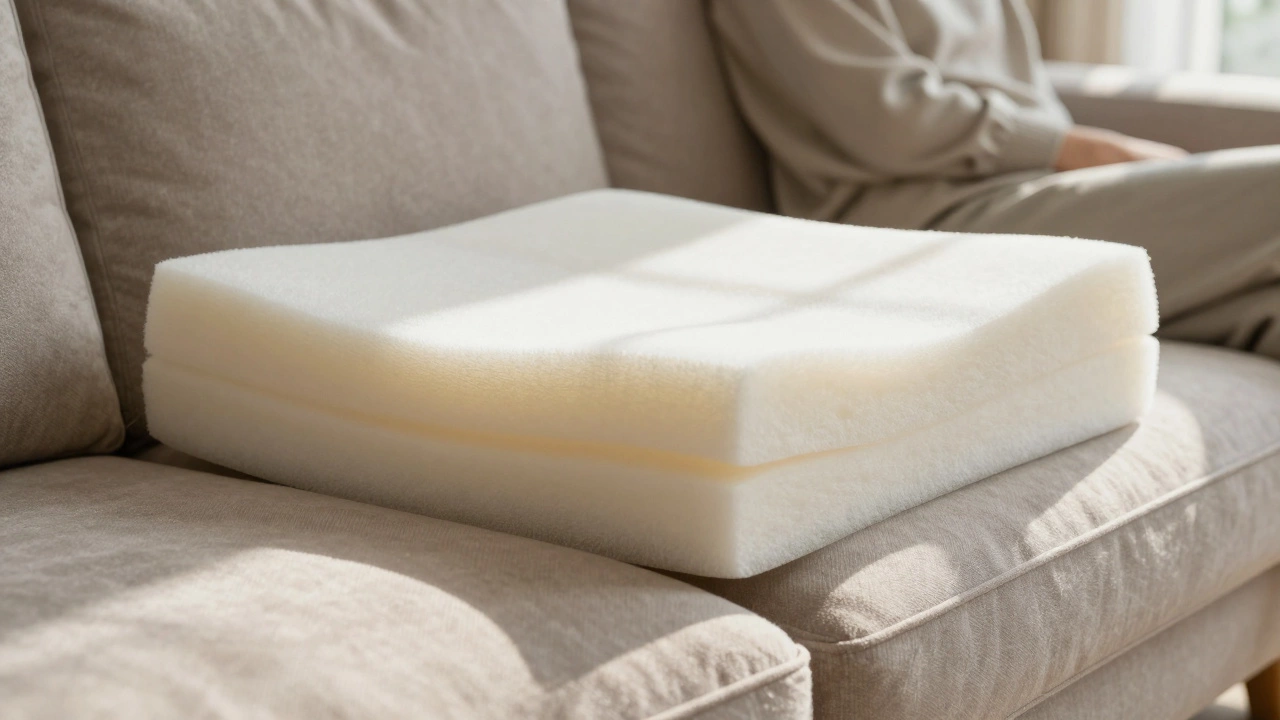
Foam density isn’t about weight - it’s about how tightly packed the foam material is. Measured in kilograms per cubic meter (kg/m³), it tells you how much raw material is squeezed into a given space. Think of it like a sponge: low-density foam is loose and airy; high-density foam is dense and firm. The difference isn’t subtle. A cushion with 18 kg/m³ foam will feel soft but flatten fast. One with 35 kg/m³? It holds its shape, supports your body, and lasts longer.
Most sofa manufacturers use foam between 15 kg/m³ and 40 kg/m³. But not all densities are created equal. If you’re shopping for a new sofa or replacing old cushions, knowing this number helps you avoid the common mistake of choosing comfort over durability.
Why Foam Density Matters More Than Firmness
Many people confuse foam density with firmness. They think a soft cushion means low density - but that’s not always true. You can have a soft, plush cushion made from high-density foam. It feels comfy because of the top layers (like polyester batting or down), but the core foam underneath is dense enough to last. On the flip side, a firm cushion made from low-density foam will feel stiff at first, then sag and collapse within months.
The real test? Sit on the sofa for 10 minutes. Then stand up. If the cushion doesn’t bounce back, the foam is too weak. High-density foam rebounds quickly. It doesn’t just feel good - it remembers its shape.
What’s the Best Foam Density for Sofa Cushions?
There’s no single answer - it depends on how you use your sofa. But here’s what works in real life:
- 18-22 kg/m³: Budget sofas. Feels soft at first, but compresses quickly. You’ll notice sagging within 1-2 years. Not recommended for daily use.
- 25-30 kg/m³: The sweet spot for most households. Offers good comfort and lasts 5-7 years with regular use. This is what most mid-range sofas use. Ideal for families, casual lounging, and people who sit for hours.
- 32-35 kg/m³: Premium quality. Used in high-end furniture. Resists sagging for 8-12 years. Best for heavy users, people over 90 kg, or those who want a sofa that won’t need replacing.
- 38-40 kg/m³: Overkill for most. Feels too stiff for lounging. Found in office chairs or commercial furniture. Rarely used in home sofas unless designed for extreme durability.
In London, where sofas get used daily - for TV, work-from-home, naps, and movie nights - 28 kg/m³ is the most common density we see in sofas that still look good after five years. Brands like Sofa.com, DFS, and Made.com use this range in their best-selling models.

What About Foam Types? HR, Polyurethane, Memory Foam
Not all foam is the same. Density alone doesn’t tell the whole story. Here’s what to look for:
- High Resilience (HR) Foam: This is the gold standard for sofa cushions. It’s durable, breathable, and bounces back fast. Most 28-32 kg/m³ HR foams last over 7 years.
- Standard Polyurethane Foam: Cheaper, less durable. Often below 25 kg/m³. It breaks down faster, especially in heat or humidity. Avoid if you want longevity.
- Memory Foam: Great for pressure relief, but not ideal as the main cushion foam. It retains heat and compresses permanently over time. Used in small amounts as a top layer, never as the core.
Ask the seller: “Is the foam high resilience (HR)?” If they hesitate or don’t know, it’s probably not.
Signs Your Sofa Foam Needs Replacing
You don’t need to replace the whole sofa. Just the cushions. Watch for these signs:
- You sink in too far - your hips or thighs hit the frame.
- The cushion doesn’t spring back after you stand up.
- There are deep indentations that won’t flatten out.
- The fabric looks stretched or bulging in the middle.
- You feel the springs or frame when you sit.
If you notice two or more of these after 3-4 years, your foam has degraded. Replacing cushions costs between £80 and £200 depending on size and foam density. It’s far cheaper than buying a new sofa.
How to Choose the Right Density When Replacing Cushions
If you’re replacing old cushions, here’s how to pick the right foam:
- Check the original label - sometimes the density is printed on the cushion base.
- Measure the cushion thickness. Thinner cushions (under 10 cm) need higher density to hold shape.
- Match the firmness you liked before. If you liked the old one, find the same density.
- Ask for a sample. Reputable upholstery shops will let you sit on a foam sample before buying.
- Go for 28-32 kg/m³ if you’re unsure. It’s the most balanced option for home use.
Don’t just go by price. A £30 cushion made with 18 kg/m³ foam will cost you more in the long run than a £70 one with 30 kg/m³.

Myths About Foam Density
Let’s clear up some confusion:
- Myth: Higher density always means harder.
Truth: Density affects durability. Firmness comes from the top layers. You can have soft, plush cushions with high-density cores. - Myth: All foam turns yellow and crumbly.
Truth: Only low-density, low-quality foam does. HR foam with proper UV stabilizers lasts for years without breaking down. - Myth: Memory foam is better for comfort.
Truth: Memory foam is great for pressure relief in beds, but it’s too slow to rebound for sofas. It makes you feel stuck.
What Do Experts Recommend?
Furniture designers and upholstery professionals in the UK consistently recommend 28-32 kg/m³ HR foam for home sofas. The British Furniture Confederation states that this range offers the best balance of comfort, support, and lifespan. A 2024 study by the UK Furniture Testing Lab found that sofas with 30 kg/m³ foam retained 89% of their original shape after 5 years of simulated daily use. Lower densities dropped below 65%.
Even high-end brands like Poltrona Frau and B&B Italia use 32-35 kg/m³ foam in their core cushions. They don’t do it because it’s expensive - they do it because it works.
Final Advice: Don’t Just Buy a Sofa - Buy the Right Foam
When you’re shopping for a sofa, ask for the foam density. If the salesperson doesn’t know, walk away. It’s not a trick question - it’s the most important number you need to know. A sofa is a long-term investment. You don’t want to replace it in two years because the cushions turned to mush.
For most people in the UK, 28-32 kg/m³ HR foam is the answer. It’s comfortable, durable, and worth every pound. Skip the cheap options. Your back - and your future self - will thank you.
What is the minimum foam density for sofa cushions?
The minimum recommended foam density for sofa cushions is 25 kg/m³. Below this, the foam will compress too quickly and lose support within 1-2 years. Most budget sofas use 18-22 kg/m³, which is only suitable for occasional use.
Does higher foam density mean a harder sofa?
No. Foam density affects how long the cushion lasts, not how firm it feels. Firmness is determined by the top layers - like down, polyester, or gel inserts. A 30 kg/m³ foam core can still feel soft and plush if it’s wrapped in thick padding.
How long should sofa cushions last?
With 25-30 kg/m³ foam, cushions should last 5-7 years with daily use. High-density foam (32-35 kg/m³) can last 8-12 years. Low-density foam (below 22 kg/m³) often fails in under 2 years.
Can I add a foam topper to improve my old cushions?
Yes, but it’s a temporary fix. A 5 cm foam topper (preferably 28 kg/m³ HR foam) can add comfort for a year or two. But if the core foam is crushed, the topper will just sink into the old foam. It’s better to replace the entire cushion insert.
Is memory foam good for sofa cushions?
Not as the main cushion foam. Memory foam is slow to rebound and retains heat, making it uncomfortable for long sitting sessions. It’s fine as a thin top layer for pressure relief, but never use it as the core. High Resilience (HR) foam is far better for sofas.