Commercial vs Residential Construction Comparison Tool
Compare Construction Characteristics
Select your project type to see key differences in construction requirements, timelines, and costs.
Commercial Project Comparison
Primary Goal:
Generate revenue, serve customers, support operations
Building Codes:
Stricter fire safety, ADA compliance, higher load requirements
Materials:
Steel, concrete, glass, heavy-duty flooring
Design Complexity:
High—mechanical systems, HVAC, elevators, security
Construction Timeline:
6 months to 2+ years
Financing:
Commercial loans, investors, corporate budgets
When you hear the term commercial project, it might sound vague-like something only architects or developers talk about. But if you’ve ever walked past a new office tower, stepped into a recently opened grocery store, or noticed a warehouse being built on the edge of town, you’ve seen a commercial project in action. It’s not just another building. It’s a structure designed for business, not for living.
What Exactly Is a Commercial Project?
A commercial project is any construction effort aimed at creating buildings meant for business use. That means spaces where companies operate, sell goods, provide services, or store inventory. Think of it this way: if people live in it, it’s residential. If a business runs out of it, it’s commercial.This includes:
- Office buildings
- Shopping centers and retail stores
- Hospitals and clinics
- Hotels and motels
- Restaurants and cafes
- Warehouses and distribution centers
- Manufacturing plants
- Bank branches and financial centers
- Entertainment venues like cinemas and theaters
It doesn’t matter if the building is small or huge. A single-story dental office counts just as much as a 30-story corporate HQ. The key is the purpose: generating income, serving customers, or supporting business operations.
How Is It Different From Residential Construction?
Residential projects are built for families to live in-apartments, houses, condos. Commercial projects? They’re built for profit, efficiency, and durability under heavy use.Here’s how they differ:
| Aspect | Commercial Project | Residential Project |
|---|---|---|
| Primary Goal | Generate revenue, serve customers, support operations | Provide comfortable living space |
| Building Codes | Stricter fire safety, ADA compliance, higher load requirements | Focus on habitability, basic safety, energy efficiency |
| Materials Used | Steel, concrete, glass, heavy-duty flooring | Wood framing, drywall, standard insulation |
| Design Complexity | High-mechanical systems, HVAC, elevators, security | Lower-simple layouts, fewer systems |
| Construction Timeline | Usually longer-often 6 months to 2+ years | Typically 3-9 months |
| Financing | Commercial loans, investors, corporate budgets | Mortgages, personal savings |
Commercial buildings have to handle hundreds-or thousands-of people daily. That means elevators must be reliable, HVAC systems must run nonstop, and fire exits need to meet strict codes. A residential home might get away with one smoke detector. A commercial office needs a full network connected to the fire department.
Who Pays for a Commercial Project?
Unlike a homeowner taking out a mortgage, commercial projects are funded by businesses, investors, or developers. Sometimes it’s a company building its own HQ. Other times, a developer buys land, constructs a shopping center, then leases out spaces to retailers.Financing is more complex. You don’t just walk into a bank and ask for a loan-you need:
- A detailed business plan
- Proof of tenant interest (signed leases)
- Financial statements showing cash flow
- Appraisals and market studies
In London, for example, a developer looking to build a new mixed-use building in Shoreditch would need to show that retail tenants like Starbucks or a boutique fitness studio are already committed to leasing space. Without those leases, banks won’t approve the funding.
What Happens After Construction?
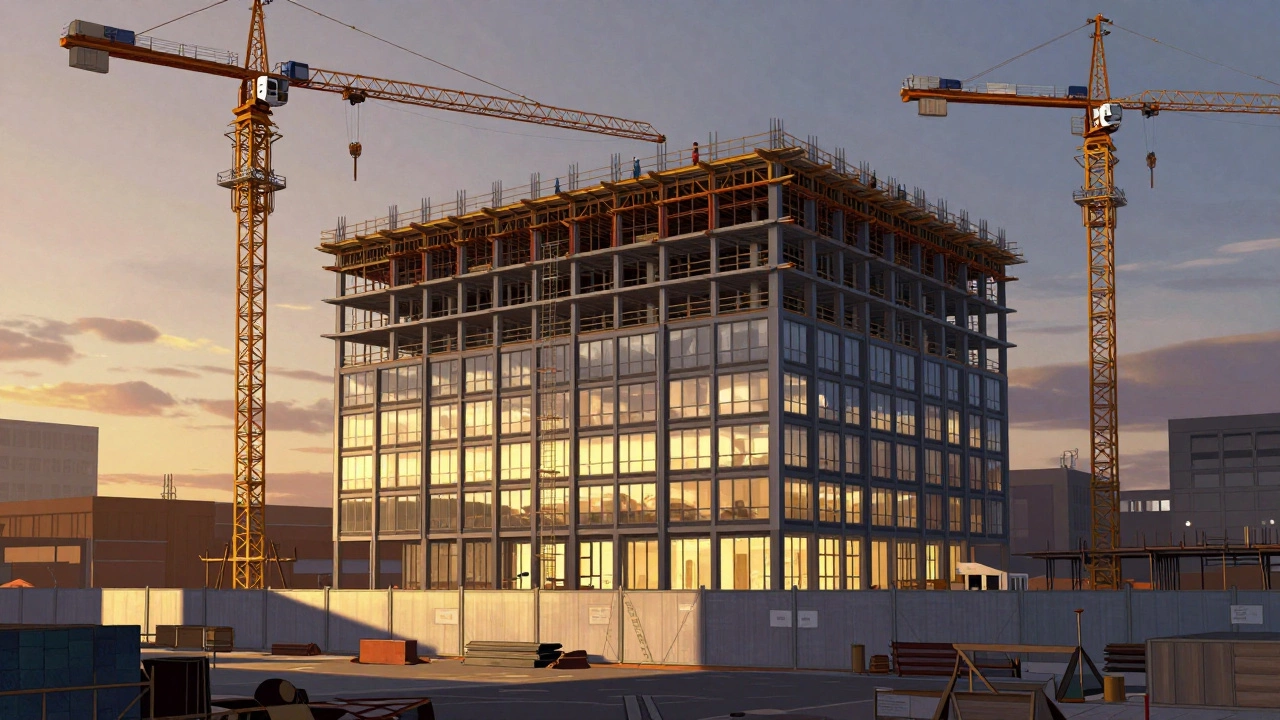
Once a commercial project is done, the work doesn’t stop. Maintenance is constant. HVAC systems need quarterly servicing. Elevators require monthly inspections. Lighting and security systems must stay up to date. These buildings are assets-and like any asset, they need upkeep to hold value.Many commercial owners hire property management firms to handle day-to-day operations. That’s why you’ll often see signs like “Managed by [Company Name]” on office buildings. It’s not just branding-it’s necessary.
Also, commercial properties are taxed differently than homes. They’re assessed based on income potential, not just square footage or neighborhood. A vacant office building in central London might pay far more in taxes than a fully occupied one because the tax authority assumes it *could* be earning money.
Why Does This Matter to You?
Even if you’re not a developer or investor, understanding commercial projects helps you make sense of your city. When a new retail park opens near you, it’s not just about shopping-it’s about jobs, traffic, local taxes, and even property values.Take the old warehouse district in Bermondsey. A few years ago, it was full of empty industrial buildings. Now, it’s packed with design studios, tech startups, and coffee shops. That transformation? That’s a commercial project. And it changed the whole neighborhood.
If you’re renting office space, knowing what goes into a commercial build helps you ask better questions: Is the HVAC system new? Are the elevators under maintenance contract? Is the building compliant with current accessibility laws? These aren’t just details-they affect your business.
Common Misconceptions
People often confuse commercial projects with luxury homes or high-end apartments. But a luxury apartment building is still residential if people live there. Even if it has a concierge, a gym, and marble hallways-it’s not commercial unless a business operates out of it.Another myth: “All big buildings are commercial.” Not true. A university dormitory? Residential. A student housing complex run by a private company? That’s commercial. The difference isn’t size-it’s ownership and use.
And don’t assume commercial means cold or soulless. Many modern commercial spaces are designed to be inviting-think Apple Stores, WeWork locations, or boutique hotels. They’re built to attract people, not just house them.
What’s Next for Commercial Projects?
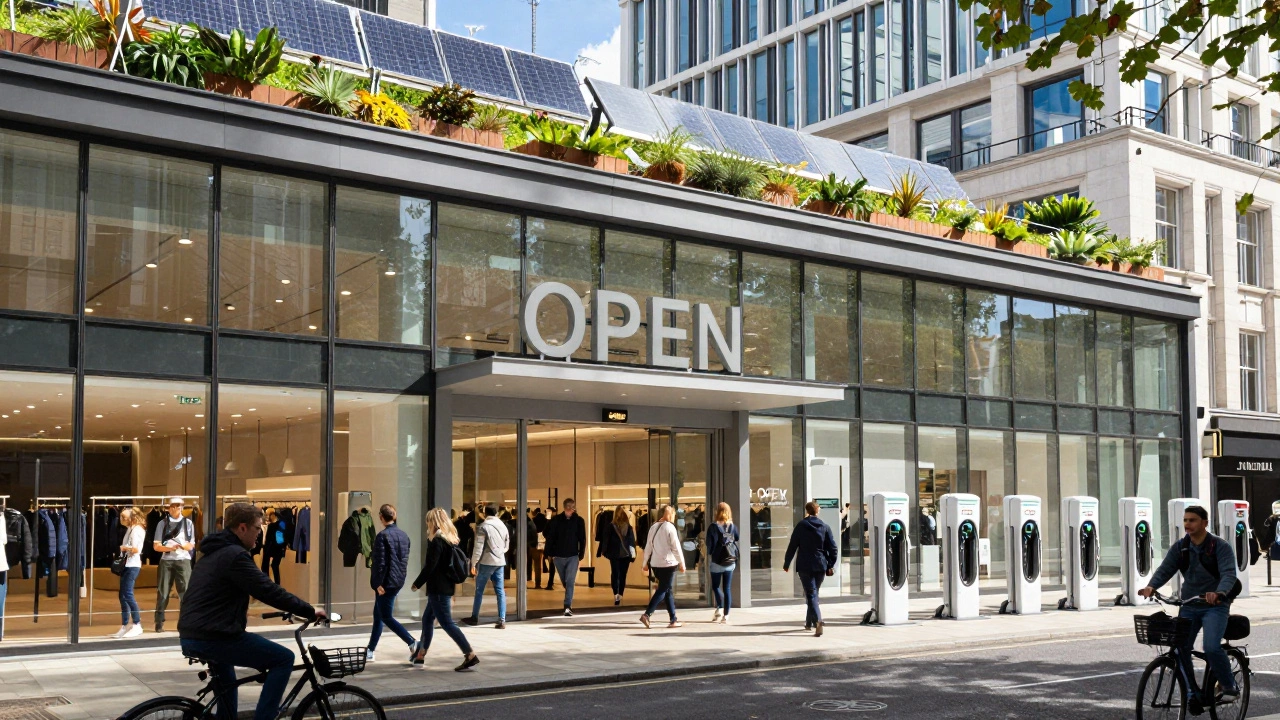
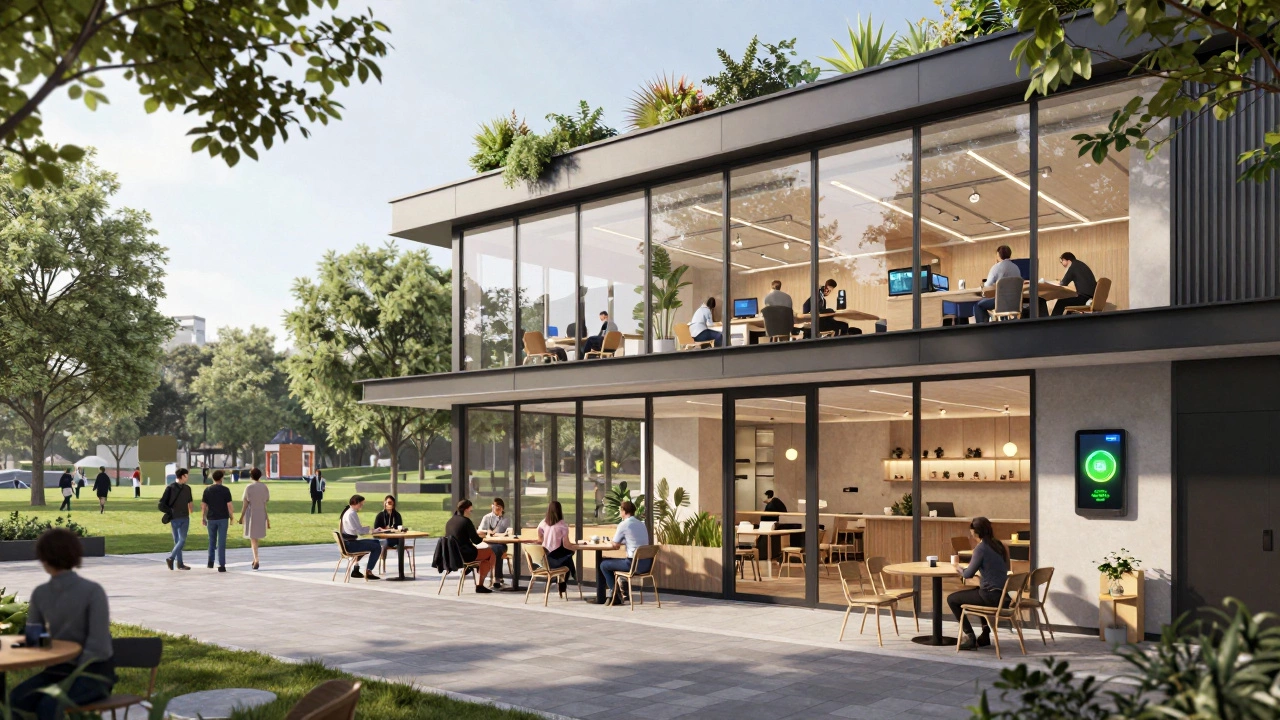
In 2026, commercial construction is shifting fast. Sustainability isn’t optional anymore. New buildings in London must meet strict carbon targets. Many now include solar panels, green roofs, and electric vehicle charging stations.Hybrid work has changed office design. Instead of rows of desks, companies want flexible spaces-meeting pods, quiet zones, collaboration areas. Retail spaces are shrinking too. More stores now use the building as a pickup hub or showroom, not just a sales floor.
And technology? It’s everywhere. Smart lighting, automated security, real-time energy monitoring-all standard in new commercial builds. A building without this tech is already outdated.
If you’re thinking about leasing space or investing in a property, keep this in mind: the commercial projects being built today aren’t just structures. They’re ecosystems designed to support how businesses operate now-not how they did 20 years ago.