Commercial Use Classification Checker
Answer the questions below to estimate the legal status of your project. This tool helps identify potential zoning, code, and insurance implications.
Determining...
Key Implications
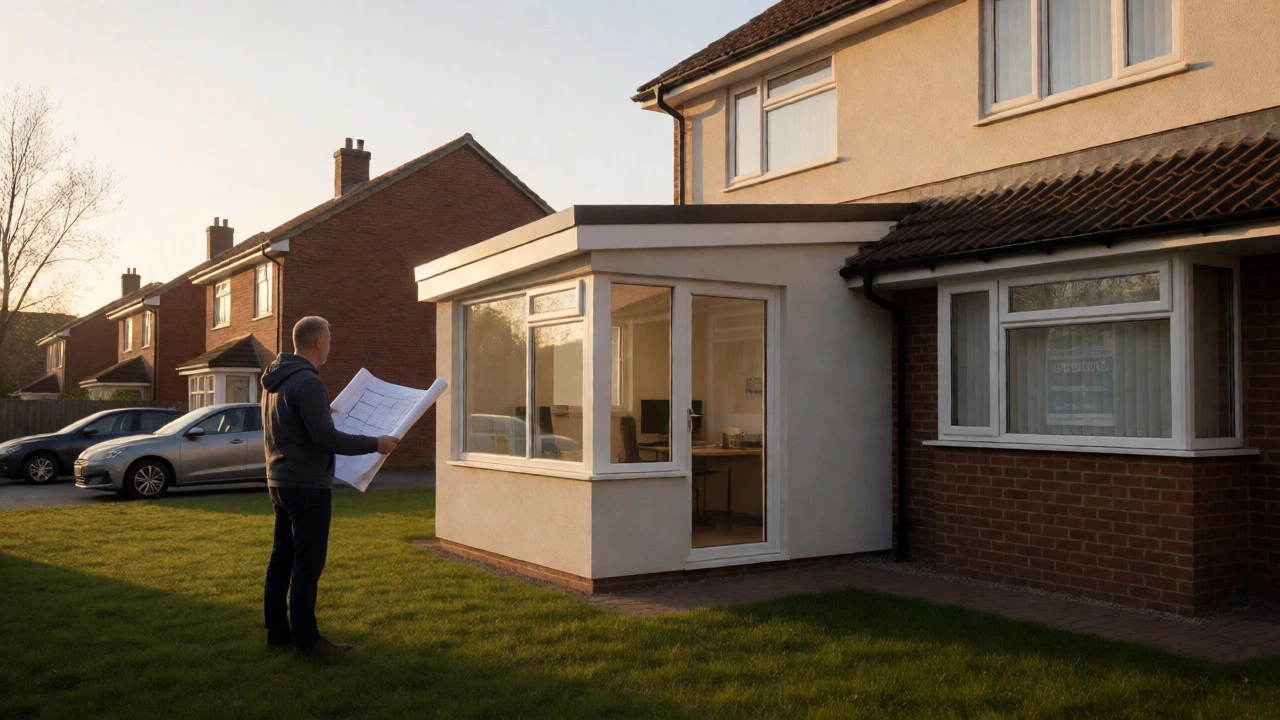
You’re standing on a plot of land. You want to build something. But before you pour a single yard of concrete, there’s a question that can save you thousands in fines or shut down your project entirely: what does commercial mean legally? It sounds simple. If it’s not a house, it’s commercial, right? Wrong. The legal definition is a tangled web of zoning ordinances, building codes, and insurance requirements that vary by city, county, and state.
If you get this wrong, you might find yourself with a beautiful structure that’s technically illegal to occupy. Maybe you built a "home office" that the city considers a retail store. Or perhaps you classified a mixed-use building as residential to avoid higher taxes, only to have the assessor slap you with back-payments. Understanding the legal distinction isn't just academic; it dictates which fire exits you need, how thick your walls must be, and what kind of liability insurance you carry.
The Core Legal Definition: Use vs. Structure
Here is the first trap most people fall into. They think "commercial" refers to the size of the building or who owns it. In legal terms, it almost always refers to the Use of the property for business purposes rather than dwelling. This is known as "occupancy classification." The International Building Code (IBC), which forms the basis for most local codes in the US, categorizes buildings based on how they are used, not what they look like.
A single-family home where a lawyer sees clients twice a week is usually still residential. But if that same lawyer starts seeing twenty clients a day, installs a waiting room, and adds signage visible from the street, the use has shifted. The activity generates foot traffic, noise, and potential liability that differs from a family living space. That shift triggers a change in legal status. The law cares about impact on neighbors and safety risks more than it cares about whether you have a mortgage or a business loan.
Zoning Laws: The Gatekeeper of Commercial Status
Zoning is the primary tool municipalities use to define commercial areas. When you buy land, you aren’t just buying dirt; you’re buying the right to use that dirt in specific ways. Local governments divide land into zones-Residential (R), Commercial (C), Industrial (I), and Mixed-Use. These designations are strict. If you build a coffee shop in an R-1 zone (single-family residential), you are likely violating the code, even if the building looks perfect.
But here’s where it gets tricky. Many jurisdictions allow "conditional use permits." This means you can operate a small commercial entity in a residential zone if you meet specific criteria. For example, a barber shop might be allowed in a residential neighborhood if it doesn’t exceed a certain square footage, doesn’t create excessive parking issues, and operates only during set hours. The legal definition of "commercial" here becomes flexible, but only within the narrow boundaries of the permit. Ignore these boundaries, and you face cease-and-desist orders.
Building Codes and Occupancy Classifications
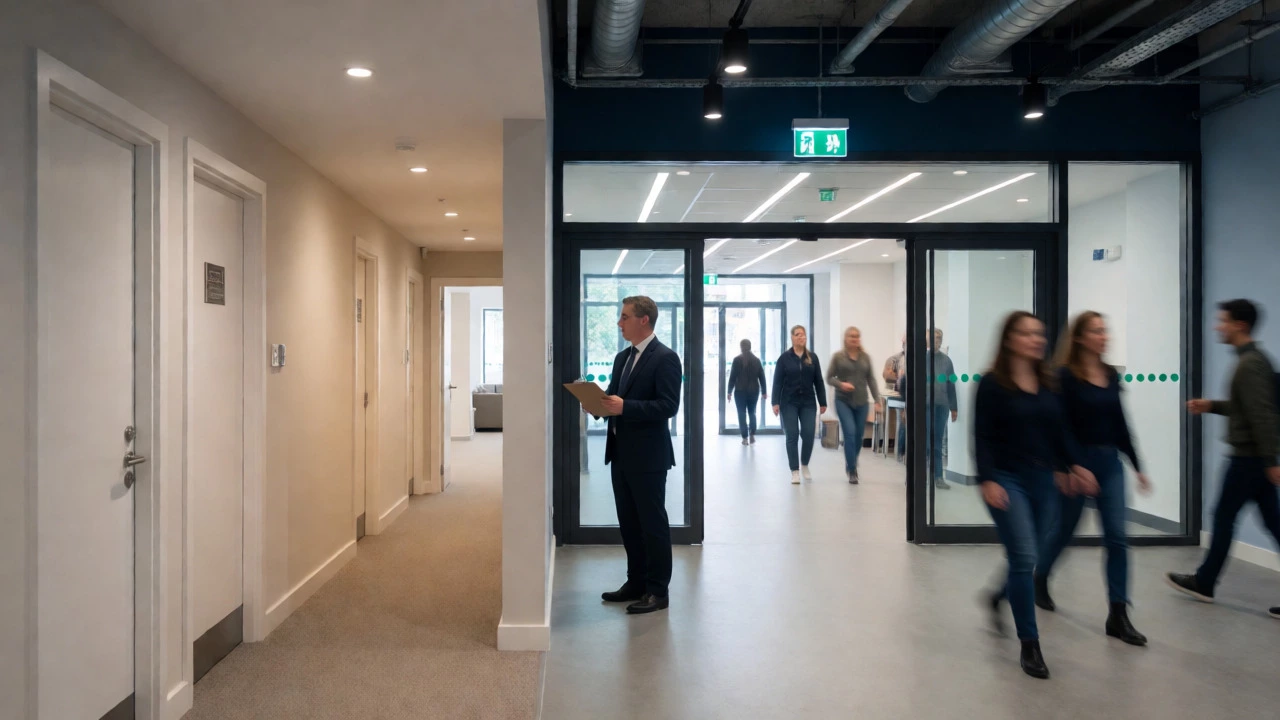
Once zoning allows the use, building codes take over. The IBC divides buildings into occupancy groups. Group R covers residential uses (like apartments and hotels). Groups B, M, S, and others cover commercial uses. Group B includes offices and professional services. Group M covers mercantile spaces like stores and shopping malls. Group S is for storage.
Why does this matter legally? Because each group has different safety requirements. A Group B office might need one exit per floor. A Group M retail store with high occupant loads needs multiple exits, wider corridors, and specific fire-rated assemblies. If you classify your new bakery as a "residential kitchen" to avoid commercial-grade ventilation requirements, but the health inspector deems it a Group M food service establishment, you will fail inspection. The legal definition forces you to install grease traps, fire suppression systems, and ADA-compliant restrooms that a standard home doesn’t require.
| Occupancy Group | Typical Use | Key Legal Requirements | Risk Level |
|---|---|---|---|
| Group R | Residential (Homes, Apartments) | Smoke detectors, basic egress, lower fire ratings | Low Liability |
| Group B | Business (Offices, Banks) | ADA access, specific egress width, fire alarms | Moderate Liability |
| Group M | Mercantile (Stores, Markets) | High occupant load calculations, sprinkler systems | High Liability |
| Group H | Hazardous (Labs, Storage) | Explosion containment, specialized ventilation | Critical Liability |
Liability and Insurance: The Financial Reality
Insurance companies rely heavily on the legal definition of commercial use. If you run a daycare out of your home, your homeowner’s policy might cover minor accidents. But if you scale up to care for twelve children daily, you’ve crossed into commercial territory. Your insurer will deny claims if you didn’t disclose the change in use. Why? Because the risk profile changed. More non-residents entering the property increases the likelihood of slip-and-fall incidents, child injuries, and property damage.
Legally, commercial properties often require different types of coverage. General Liability insurance protects against third-party bodily injury and property damage. Business Property insurance covers equipment and inventory. Homeowner policies rarely include these endorsements. Misclassifying your property leads to "coverage gaps." You pay premiums thinking you’re protected, but when a customer trips on your threshold, you discover your policy excludes commercial activities. This is a common lawsuit trigger in mixed-use developments.
Taxation and Assessment Differences
Local assessors determine property taxes based on use. Residential properties often benefit from homestead exemptions, lowering the taxable value. Commercial properties do not typically qualify for these breaks. Furthermore, commercial assessments often factor in income generation. If your building produces rental revenue, the tax authority may assess its value based on potential earnings rather than just comparable sales of nearby homes.
This creates a strategic dilemma. Some owners try to keep properties "residential" to save on taxes. But if the city determines the primary use is commercial, they can reclassify the property retroactively. This results in a tax bill that includes penalties and interest for previous years. Conversely, some businesses prefer commercial classification because they can deduct depreciation and operating expenses against their income. The legal definition dictates which side of the ledger you sit on.
How to Determine Your Project’s Legal Status
Don’t guess. Follow these steps to nail down the legal definition for your specific situation:
- Check the Zoning Map: Visit your local planning department website. Find your parcel ID. See what zone it falls under. Look for permitted uses lists.
- Review the Building Code: Identify the occupancy group that matches your intended activity. Count the expected occupants. This number drives many code requirements.
- Consult the Certificate of Occupancy (CO): If you’re buying an existing building, check the current CO. It states exactly what uses are approved. Changing the use requires a new CO.
- Talk to a Land Use Attorney: For complex projects, especially those involving variance requests or historical districts, legal counsel is worth the cost. They can interpret ambiguous language in local ordinances.
Remember, the definition isn’t static. Cities update zoning maps regularly. A quiet industrial area might be rezoned for mixed-use development, suddenly allowing cafes and boutiques. Staying informed prevents surprises.
Can I run a business from my home without it being considered commercial?
It depends on local zoning laws and the scale of the business. Most cities allow "home occupations" provided they don’t alter the residential character of the neighborhood. Key restrictions usually include no external signage, limited employee count, and no increased traffic or parking issues. However, once you start receiving customers regularly or storing large amounts of inventory, you likely cross into commercial use.
What happens if I misclassify my building as residential when it is commercial?
You face several risks. First, your insurance may deny claims related to business operations. Second, you could be fined by the city for code violations. Third, you may owe back taxes if the assessor reclassifies the property. Finally, you might be forced to make expensive structural changes to meet commercial safety codes, such as adding fire exits or upgrading electrical systems.
Does having a separate entrance make a property commercial?
Not necessarily. A separate entrance is a physical feature, not a legal definition. However, it is often a requirement for commercial units in mixed-use buildings to ensure privacy for residents. The legal status is determined by the use of the space inside and the zoning designation, not just the architectural layout. Still, adding a second entrance often signals to inspectors that a commercial use is intended.
Are mixed-use buildings considered commercial?
Mixed-use buildings contain both residential and commercial components. Each component is treated separately regarding codes and taxes. The ground-floor retail space is assessed and regulated as commercial, while the upper-floor apartments are treated as residential. This dual nature requires careful compliance with two sets of rules simultaneously.
Do I need a commercial certificate of occupancy?
Yes, if your building is primarily used for business purposes. A residential CO certifies that a dwelling meets housing standards. A commercial CO certifies that a building meets safety standards for public access, including fire protection, accessibility, and structural integrity for higher occupant loads. Operating without the correct CO can lead to closure orders.