Curtain Space Expansion Calculator
Use this tool to determine the best curtain color and hanging technique to make your room look bigger based on its current conditions.
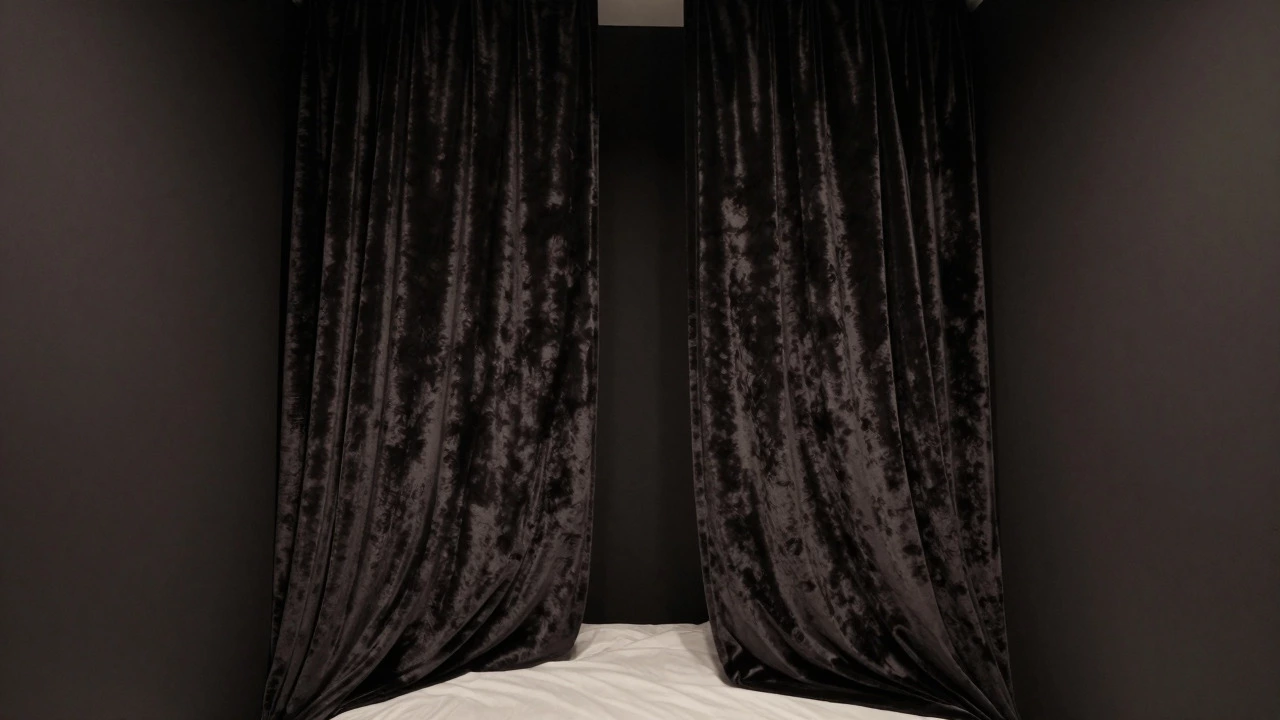
Walk into a cramped London flat with dark walls and heavy velvet drapes. It feels like the walls are closing in on you, right? Now imagine peeling back those layers to reveal light, airy fabrics that seem to dissolve into the architecture. The difference isn't magic; it's physics and psychology working together. When you ask what color curtains make a room look bigger, you aren't just asking about aesthetics. You are asking how to manipulate perception to create breathing room where none exists.
The Science of Visual Expansion
To understand why certain colors work, we have to look at how your brain processes light and depth. Light colors reflect more light waves than dark ones. When a surface reflects light, it appears to advance toward the viewer or recede depending on the context, but generally, lighter tones create an illusion of openness because they reduce visual weight. Dark colors absorb light, creating a sense of density and proximity. If you want a small room to feel expansive, you need to minimize visual barriers.
Think of your windows as portals. Heavy, dark curtains act like shutters, blocking that portal and emphasizing the boundary of the room. Light-colored curtains, however, blend with the surrounding wall and ceiling, tricking the eye into seeing a continuous plane rather than a segmented box. This is the core principle behind using color for spatial manipulation.
Top Colors That Expand Space
Not all light colors are created equal. While white is the obvious choice, it can sometimes feel sterile or hospital-like if not balanced correctly. Here are the specific hues that deliver the biggest bang for your buck in terms of perceived square footage.
| Color Family | Visual Effect | Best For |
|---|---|---|
| Crisp White | Maximum reflection, high contrast with frames | Minimalist spaces, north-facing rooms |
| Ivory/Cream | Softens light, adds warmth without heaviness | Living rooms, bedrooms with natural wood |
| Pale Grey | Modern neutrality, blends with cool tones | Contemporary apartments, urban lofts |
| Light Beige/Sand | Earthy expansion, hides dust better than white | Families, high-traffic areas |
| Pastel Blue/Green | Airiness, mimics sky/water recession | Bathrooms, small offices |
Crisp White is the heavyweight champion of space expansion. It reflects nearly all visible light, making the area around the window glow. However, pure white can be harsh. Many designers prefer off-white or ivory because it maintains the reflective quality while adding a subtle layer of warmth that prevents the room from feeling cold. In a small London bedroom with limited natural light, ivory curtains will bounce whatever little sunlight there is across the floor and walls, effectively doubling the perceived brightness.
Pale Grey has become a staple in modern interiors. Unlike beige, which can lean yellow, grey offers a cool neutrality that pairs well with concrete, steel, and glass. A light dove grey curtain creates a soft gradient against white walls, maintaining the illusion of depth without the starkness of pure white. It’s particularly effective in rooms with large windows where you want to maintain privacy during the day without sacrificing the sense of airiness.
The Power of Sheer Fabrics
Color is only half the equation. Fabric weight and transparency play a massive role in how much space a curtain consumes visually. Thick, opaque fabrics like velvet or heavy linen block the view outside, reinforcing the idea that the room ends at the window frame. Sheer fabrics, on the other hand, allow light to pass through while still providing a degree of privacy.
When you hang sheer white or cream curtains, you create a layered effect. The light filters through, diffusing softly into the room. This diffusion eliminates hard shadows that can make corners look dark and confined. Moreover, sheers add texture without bulk. They flutter slightly with air currents, introducing movement that draws the eye upward and outward, rather than inward toward the center of the room.
Consider the "double rod" technique. Install two curtain rods: one inside the window recess for heavier blackout curtains (used only at night) and one outside the recess, mounted higher up, for sheer panels. During the day, the sheers remain closed, blending with the wall color. At night, you draw the heavier curtains behind them. This setup ensures that your daytime aesthetic remains light and expansive, while still giving you functional darkness when needed.
Hanging Techniques That Multiply Space
You can buy the perfect pale blue curtain, but if you hang it incorrectly, it will shrink your room. The height and width of your installation matter just as much as the color. Here is the golden rule: go high and wide.
- Mount High: Place the curtain rod as close to the ceiling as possible, ideally within 1-2 inches. This draws the eye upward, emphasizing vertical height. Low-hanging rods chop the wall horizontally, making the ceiling feel lower.
- Extend Wide: Extend the rod 3-6 inches beyond the window frame on both sides. When the curtains are open, they should stack against the wall, not over the glass. This exposes the maximum amount of window opening, letting in more light and showing more of the outside world, which extends the visual boundary of the room.
- Fullness Matters: Avoid skimpy, thin-looking panels. Use fabric that is 2 to 2.5 times the width of the window. Proper fullness creates elegant folds that add luxury without clutter. Skimping on fabric makes the treatment look cheap and draws attention to the narrowness of the window.
In a small hallway or entryway, this technique is crucial. By mounting the rod near the ceiling and extending it wide, you create a vertical line that competes with the horizontal constraints of the space. Your brain focuses on the height, forgetting about the lack of width.
Common Mistakes That Shrink Rooms
Avoid these pitfalls if you want to maintain the illusion of space. First, steer clear of bold patterns. Large florals, geometric prints, or stripes break up the continuity of the wall. Your eye stops at each pattern repeat, measuring the distance between them. Solid colors allow the eye to glide uninterrupted. If you crave pattern, introduce it through cushions or rugs, not the vertical planes of the curtains.
Second, avoid contrasting trim or tie-backs that cut across the curtain. A bright red tassel on a white curtain creates a focal point that anchors the eye in the middle of the window. Let the curtain flow freely from top to bottom. Unbroken vertical lines are your best friend for expanding small spaces.
Third, don't ignore the valance. Those decorative fabric swags at the top of the window are relics of a bygone era. They eat up vertical space and add unnecessary bulk. Skip them entirely. A clean, simple rod with plain rings or grommets keeps the focus on the height of the room, not the decoration of the window.
Matching Walls vs. Contrasting
Should your curtains match your walls exactly, or provide a slight contrast? Matching the wall color precisely creates a seamless blend, making the window treatment almost invisible. This is the ultimate stealth move for tiny rooms. If your walls are sage green, choose sage green curtains. The eye struggles to find the edge of the window, perceiving the entire wall as one continuous surface.
However, exact matching can be difficult due to lighting variations. A safer bet is to choose a shade that is one tone lighter or darker than the wall. If your walls are light grey, try a slightly warmer greige. This subtle variation adds depth without creating a hard border. The goal is harmony, not invisibility. You want the curtains to disappear into the background, not vanish completely, as some texture is necessary to define the window's location.
Do dark curtains make a room look smaller?
Yes, generally speaking. Dark colors absorb light and create visual weight, which can make a small room feel enclosed and cozy rather than spacious. However, dark curtains can work in very large rooms to create intimacy or in rooms with excessive natural light to balance the brightness. For small spaces, stick to light neutrals.
Are sheer curtains better for small rooms?
Sheer curtains are excellent for small rooms because they maximize light transmission and maintain visibility of the outdoors, which extends the visual space. They add texture without bulk. For best results, use sheers as your primary daytime treatment and pair them with hidden blackout liners for nighttime.
How high should I hang my curtain rod?
Hang your curtain rod as close to the ceiling as possible, typically 4 to 6 inches below the crown molding or directly under the ceiling if there is no molding. This draws the eye upward, creating the illusion of higher ceilings and a larger room volume.
Can I use patterned curtains in a small room?
It is risky. Patterns break up the visual field and can make a room feel cluttered and smaller. If you must use a pattern, choose a small-scale, subtle print in light colors. Avoid high-contrast or large-scale designs. Solid colors are always safer for maximizing perceived space.
Does the length of the curtain affect room size?
Yes. Floor-length curtains that graze the floor or pool slightly create long, unbroken vertical lines that enhance height. Short curtains that end at the sill chop the window visually, making the wall appear shorter and the room more confined. Always opt for floor-length treatments.
Next Steps for Your Renovation
If you are ready to transform your space, start by measuring your windows accurately. Remember to add extra width for the rod extension and extra height for the high mount. Visit a local fabric store in London to see how different light conditions affect color samples. Hold up swatches of ivory, pale grey, and white next to your wall paint in both morning and evening light. Once you select your fabric, invest in sturdy hardware. A flimsy rod will sag under the weight of proper fullness, ruining the clean lines you are trying to achieve. With the right color and hanging technique, your smallest room can feel surprisingly vast.