Loft Conversion Selector
Dormer
£25,000–£45,000
Moderate Space GainVelux
£10,000–£18,000
Minimal Space GainHip to Gable
£30,000–£50,000
High Space GainMansard
£45,000+
Very High Space GainEnter your requirements to see your best loft conversion option.
When you’re thinking about adding space to your home in London, a loft conversion is one of the smartest moves you can make. It doesn’t require moving, doesn’t eat up your garden, and often adds serious value to your property. But not all loft conversions are the same. The shape of your roof, the size of your attic, and your budget all decide which type works best. There are four main types of loft conversion you’ll see across UK homes - and knowing the difference can save you time, money, and headaches.
Dormer Loft Conversion
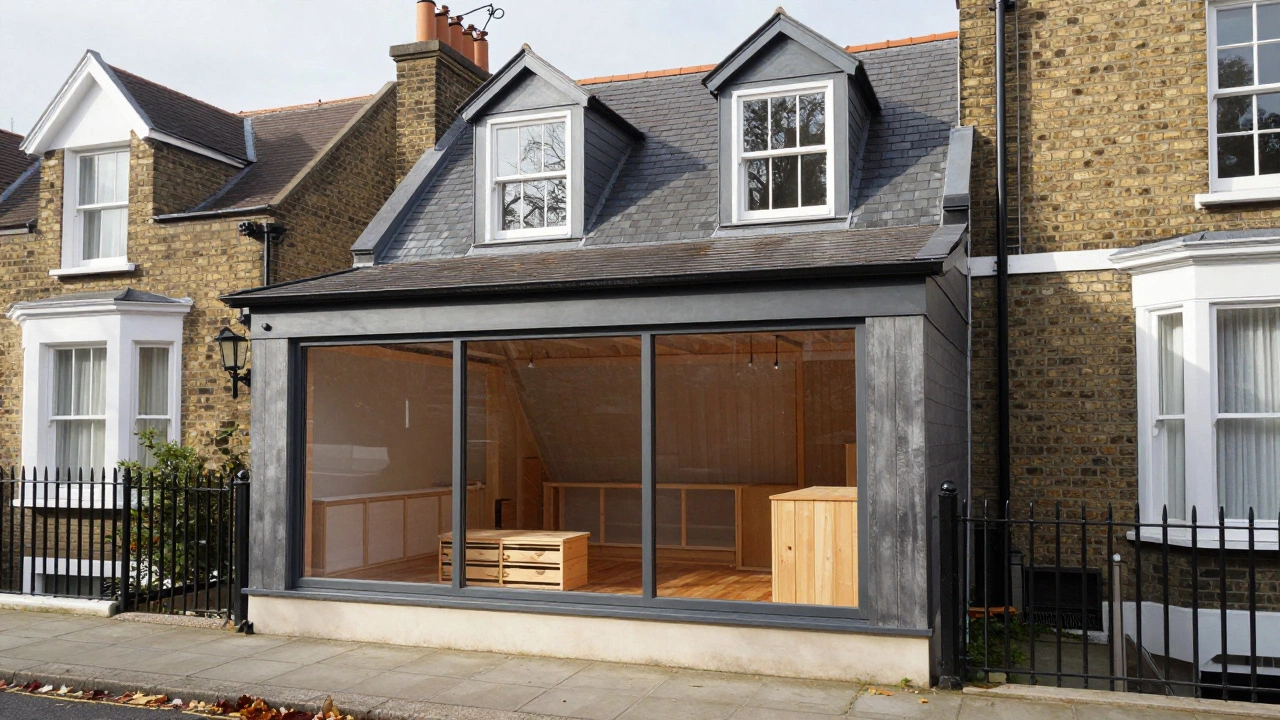
The dormer loft conversion is the most common type you’ll find in terraced and semi-detached homes across London. It involves building a box-like structure that extends vertically from the roofline, creating a flat ceiling and vertical walls. This gives you headroom on all sides, making the space feel like a proper room - not just an attic.
Most dormers have a pitched roof of their own, matching the slope of the main roof. You can choose from several styles: flat-roofed, gable-ended, or even a shed-style dormer. The big win? You get more floor space and natural light from windows on the front and sides. It’s ideal if you want to turn your loft into a bedroom, home office, or even a small bathroom. Planning permission isn’t always needed if it stays within permitted development rules, but check with your local council - some areas in London have stricter limits.
Hip to Gable Loft Conversion
If your house has a hipped roof - where all sides slope down to the walls - you might be sitting on a hidden opportunity. A hip to gable conversion turns one or both of those sloping sides into a vertical wall, creating a gable end. Think of it like extending the peak of your roof outward to gain extra space.
This type works best on detached homes or end-of-terrace properties where there’s room to build out. The result? A much larger usable area compared to a simple roof conversion. You’ll often see this paired with a dormer on the front to maximize light and access. It’s a solid choice if you need more square footage for a master suite or a kids’ playroom. Because it changes the roofline significantly, you’ll usually need planning permission, especially in conservation areas or listed buildings.
Velux (Skylight) Loft Conversion
Let’s be honest - not everyone wants to rebuild their roof. If you’re looking for the quickest, cheapest, and least disruptive option, the Velux loft conversion is your go-to. It uses roof windows - commonly called Velux windows - installed directly into the existing rafters. No structural changes. No extensions. Just natural light flooding in.
This type is perfect for lofts with enough headroom already. If you’ve got a decent pitch (over 30 degrees) and your roof isn’t too shallow, you can turn it into a cozy reading nook, storage space, or even a small guest room. The downside? You won’t get much floor space. The ceiling slopes down toward the edges, so you’re limited to using the center area. But for under £10,000, you get instant value, and it’s often exempt from planning permission if the windows don’t face the street. Many London homeowners choose this for a simple, clean upgrade.
Mansard Loft Conversion
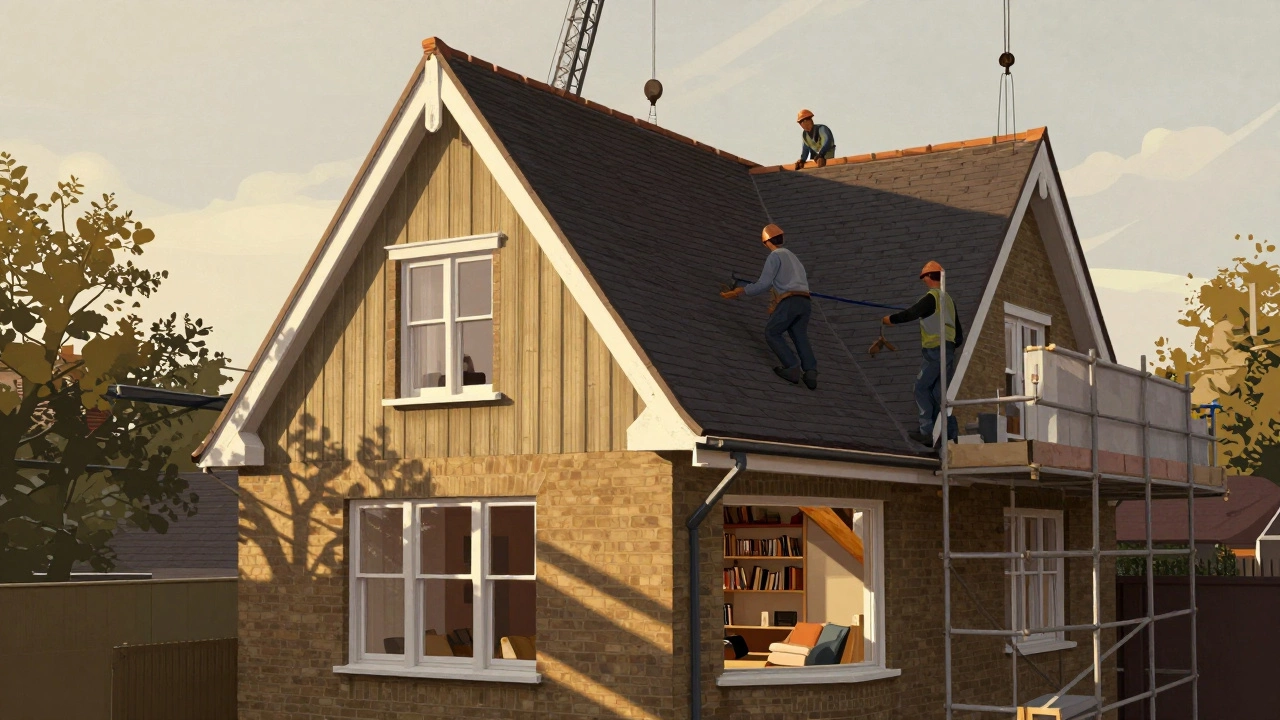
If you’ve got a larger budget and want maximum space, the mansard loft conversion is the powerhouse. It involves completely rebuilding the rear (or sometimes front) of the roof into a near-vertical, flat-topped structure with steeply sloped sides. Think of it as adding a full second floor - but with a roofline that looks intentional, not tacked on.
This style is common in Victorian and Edwardian terraces, especially in areas like Clapham or Camden. It gives you almost full-height walls on all sides, allowing for large windows, built-in storage, and even a bathroom with a shower. The trade-off? It’s the most expensive and complex option. You’ll need full planning permission, and the work can take 8-12 weeks. But if you’re planning to sell, it’s one of the best ROI moves you can make. Properties with mansard conversions often fetch 20-25% more than those with basic conversions.
Which Type Is Right for You?
Choosing the right loft conversion isn’t just about looks - it’s about your roof, your budget, and how you plan to use the space.
- Go for a Velux if you want fast, affordable, and minimal disruption.
- Choose a dormer if you need more usable floor space and natural light without a full rebuild.
- Opt for a hip to gable if your home has a hipped roof and you need extra square footage on one side.
- Select a mansard if you’re serious about maximizing space and are willing to invest for long-term value.
Don’t forget to check your local council’s rules. In London, some boroughs limit height, materials, or even window placement. A good architect or surveyor can walk you through what’s allowed on your property. Also, remember that building regulations still apply - insulation, fire safety, and stair access are non-negotiable.
Common Mistakes to Avoid
Many homeowners make the same errors when starting a loft conversion.
- Assuming all lofts can be converted - some have low rafters, asbestos, or structural issues that make conversion unsafe or too costly.
- Ignoring the stairs - a steep, narrow staircase won’t meet building regs. You need a minimum 1.8m headroom and a 30-degree pitch.
- Overlooking insulation - a poorly insulated loft becomes a sauna in summer and a freezer in winter. Aim for at least 270mm of mineral wool or rigid board insulation.
- Skipping the survey - a structural survey costs £300-£500 but can save you £10,000 in hidden problems.
Also, don’t rush the design. Think ahead: Will you need an en suite? A wardrobe? A desk? Plan the layout before the builders start. A well-thought-out loft conversion lasts decades. A rushed one becomes a money pit.
| Type | Cost Range (2026) | Space Gained | Planning Permission Needed? | Best For |
|---|---|---|---|---|
| Velux (Skylight) | £10,000-£18,000 | Minimal | Usually no | Storage, reading nook, small office |
| Dormer | £25,000-£45,000 | Moderate | Often no (if within limits) | Bedroom, bathroom, home gym |
| Hip to Gable | £30,000-£50,000 | High | Usually yes | Master suite, large family room |
| Mansard | £45,000-£75,000+ | Very High | Always yes | Maximizing value, luxury conversion |
Final Thoughts
There’s no single ‘best’ loft conversion. The right type depends on your home’s structure, your budget, and how you’ll use the space. A Velux might be all you need. A mansard could be worth the investment. Either way, the key is to start with a clear plan - and never skip the survey.
London homes are built to last. A good loft conversion doesn’t just add space - it adds comfort, value, and peace of mind. Take your time. Ask questions. Get multiple quotes. And remember: the goal isn’t to copy a Pinterest board. It’s to create a space that works for your life.
Can I convert my loft without planning permission?
Yes, in many cases. Velux and small dormer conversions often fall under permitted development rights in England, as long as they don’t extend beyond the roofline, don’t face the street, and stay under height limits. But if you live in a conservation area, listed building, or flat, you’ll need permission. Always check with your local council - rules vary across London boroughs.
How long does a loft conversion take?
It depends on the type. A simple Velux conversion can be done in 3-4 weeks. A dormer usually takes 6-8 weeks. Hip to gable and mansard conversions take longer - 8-12 weeks - because they involve major structural work. Factor in another 2-4 weeks for surveys, planning, and approvals.
Do loft conversions add value to my home?
Absolutely. On average, a loft conversion adds 20-30% to your home’s value in London. A well-designed dormer or mansard can bring even more - especially if it includes a bathroom or en suite. The return on investment is often better than a kitchen or extension, and it’s faster to complete.
What’s the difference between a dormer and a mansard?
A dormer adds a box-like extension to the existing roof slope, keeping the original roofline mostly intact. A mansard completely replaces the roof with a steep, flat-topped structure that looks like a second floor. Mansards create more usable space, but they’re more expensive and require full planning permission.
Can I live in my home during a loft conversion?
Yes, most homeowners do. The work is mostly done from the roof, so dust and noise are contained. But you’ll need to avoid using the stairs during construction, and some noise will carry through. If you’re doing a full mansard, expect 4-6 weeks of disruption. Plan for temporary storage and quiet hours.