Construction Type Selector Tool
Answer these questions to find out which construction type aligns best with your project vision.
Match Confidence
Comparison with Other Types:
When you hear the word "construction," your mind might jump to a skyscraper going up in London or maybe that new kitchen extension next door. But those two projects have almost nothing in common beneath the surface. The materials, the rules, the people building them, and even the way they’re paid for are completely different.
If you’re looking to invest, build, or just understand why your local roadwork seems to take forever, knowing the types of construction is essential. The industry isn’t one big blob; it’s split into four distinct categories. Each has its own rhythm, risks, and rewards. Let’s break down exactly what these four types are, how they differ, and what you need to know about each.
The Four Main Types of Construction
The construction sector is broadly divided into four pillars: Residential, Commercial, Industrial, and Infrastructure (often called Civil). While there is some overlap-like a warehouse having a concrete floor like a factory-the intent behind the building dictates everything else.
| Type | Primary Purpose | Key Materials | Typical Clients |
|---|---|---|---|
| Residential | Living spaces | Wood framing, brick, drywall | Homeowners, developers |
| Commercial | Business operations | Steel, glass, reinforced concrete | Corporations, investors |
| Industrial | Manufacturing & production | Heavy steel, specialized coatings | Factories, energy firms |
| Infrastructure | Public utility & transport | Concrete, asphalt, rebar | Government agencies |
1. Residential Construction: Where People Live
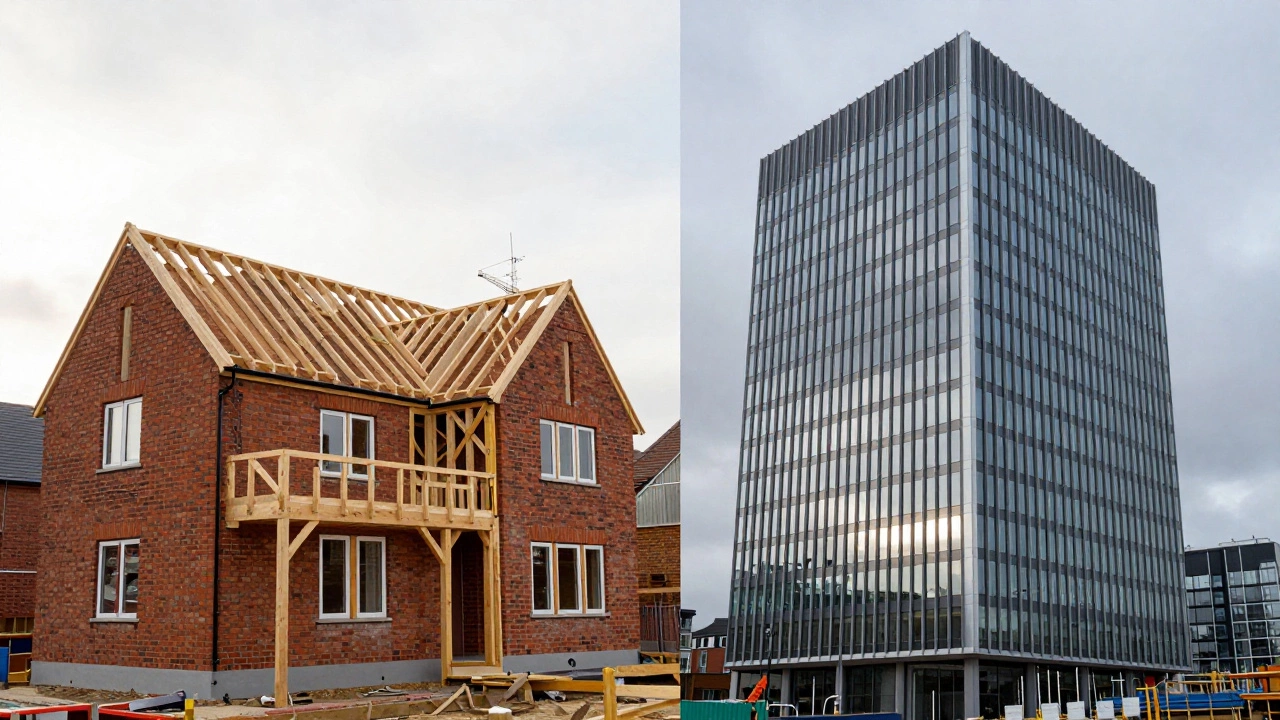
Residential construction covers any building designed for human habitation. This is the most visible type of construction because we all live somewhere. It splits further into single-family homes (detached houses) and multi-family units (apartments, condos, townhouses).
In the UK, this often involves traditional masonry methods-brick on the outside, timber studs inside. In North America, wood framing dominates even for multi-story buildings. The key driver here is comfort and aesthetics. You aren’t just building a box; you’re creating a home. That means attention to insulation, plumbing fixtures, flooring finishes, and natural light.
Single-Family Homes are standalone dwellings owned by one household. These projects are usually smaller in scale but high in customization. Detached Housing requires dealing with zoning laws, septic systems (if not connected to city sewer), and individual permits.
Multi-family residential, like apartment blocks, leans closer to commercial practices. They require fire-resistant materials, elevators, and stricter safety codes because more lives are at stake if something goes wrong. If you’re investing, multi-family offers rental income potential, while single-family appeals to owner-occupiers.
- Pros: High demand, emotional value for buyers, varied design options.
- Cons: Smaller profit margins per unit, sensitive to housing market crashes, labor-intensive finishing work.
2. Commercial Construction: Spaces for Business
Commercial construction includes buildings used for business activities. Think offices, retail stores, hotels, hospitals, and shopping malls. The goal here isn’t shelter; it’s functionality and efficiency. Every square foot needs to generate revenue or support employees effectively.
This category is heavily regulated. Fire codes, accessibility standards (like the Equality Act in the UK or ADA in the US), and environmental regulations play a huge role. A hospital, for instance, needs specialized HVAC systems to control air quality and prevent infection spread. An office tower needs robust structural engineering to handle wind loads and seismic activity.
Office Buildings are commercial structures designed for administrative work. Modern offices prioritize open-plan layouts, high-speed internet infrastructure, and sustainable features like green roofs. Corporate Headquarters often serve as brand statements, using glass facades and unique architectural designs.
Retail construction focuses on customer flow. Store layouts, lighting, and signage placement are engineered to maximize sales. Hotels add another layer: they must feel like homes (comfort) while operating like businesses (efficiency). Housekeeping corridors, back-of-house kitchens, and soundproofing between rooms are critical details.
- Pros: Higher budgets, longer-term leases provide stability, potential for large-scale impact.
- Cons: Complex permitting, longer project timelines, higher upfront costs, sensitive to economic downturns.
3. Industrial Construction: Powering Production
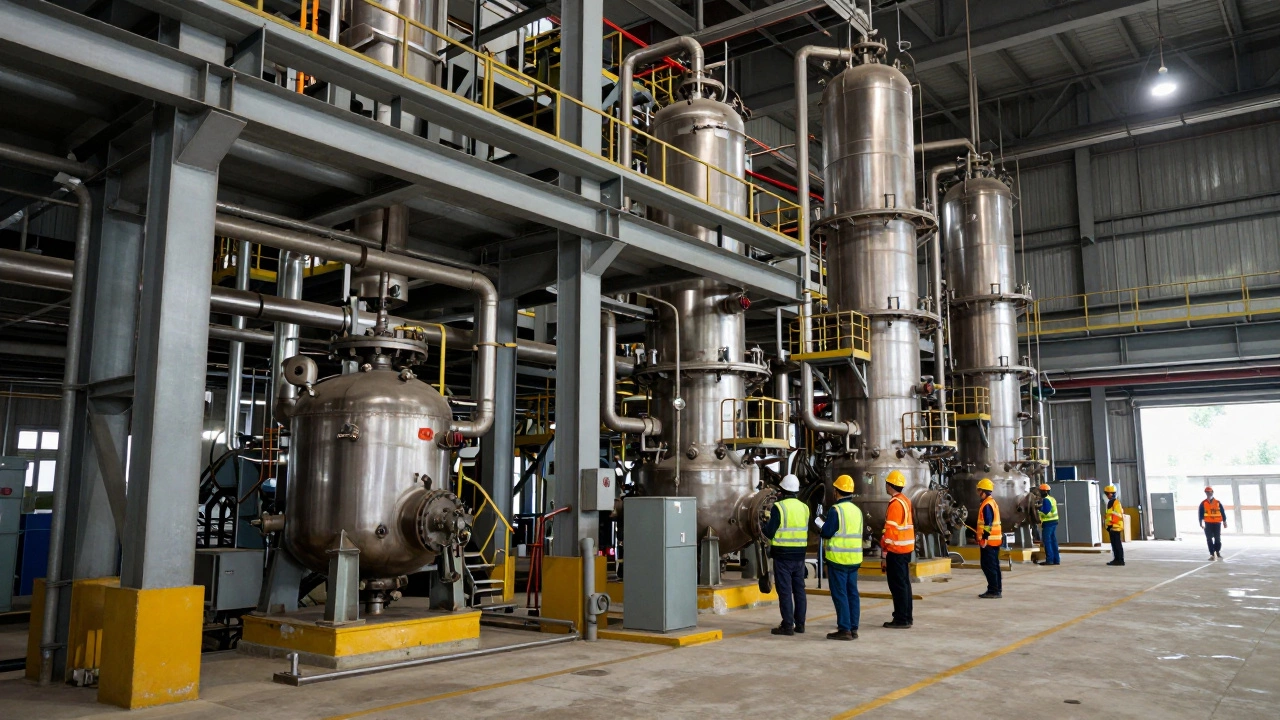
Industrial construction is where things get serious. This type supports manufacturing, processing, refining, and power generation. Factories, chemical plants, oil rigs, and power stations fall under this umbrella. Safety and durability are paramount because these facilities often handle hazardous materials or extreme temperatures.
Unlike residential or commercial builds, industrial projects are highly specialized. You can’t just hire a general contractor. You need engineers who understand process piping, electrical substations, and heavy machinery foundations. The timeline is often dictated by production schedules-a factory can’t afford delays because every day offline costs millions.
Manufacturing Plants are facilities designed for mass production of goods. These buildings feature wide-span clear spans (no interior columns) to accommodate assembly lines. Production Facilities require reinforced floors to support heavy equipment vibration.
Energy infrastructure, like wind farms or solar arrays, also falls here. These projects involve massive logistical challenges, often located in remote areas. Environmental impact assessments are rigorous, and community relations are crucial. If you’re considering industrial real estate, location near transportation hubs (ports, railways) is non-negotiable.
- Pros: High barrier to entry means less competition, long-term contracts, critical societal role.
- Cons: Extreme safety risks, complex technical requirements, limited resale market, regulatory scrutiny.
4. Infrastructure (Civil) Construction: Connecting Society
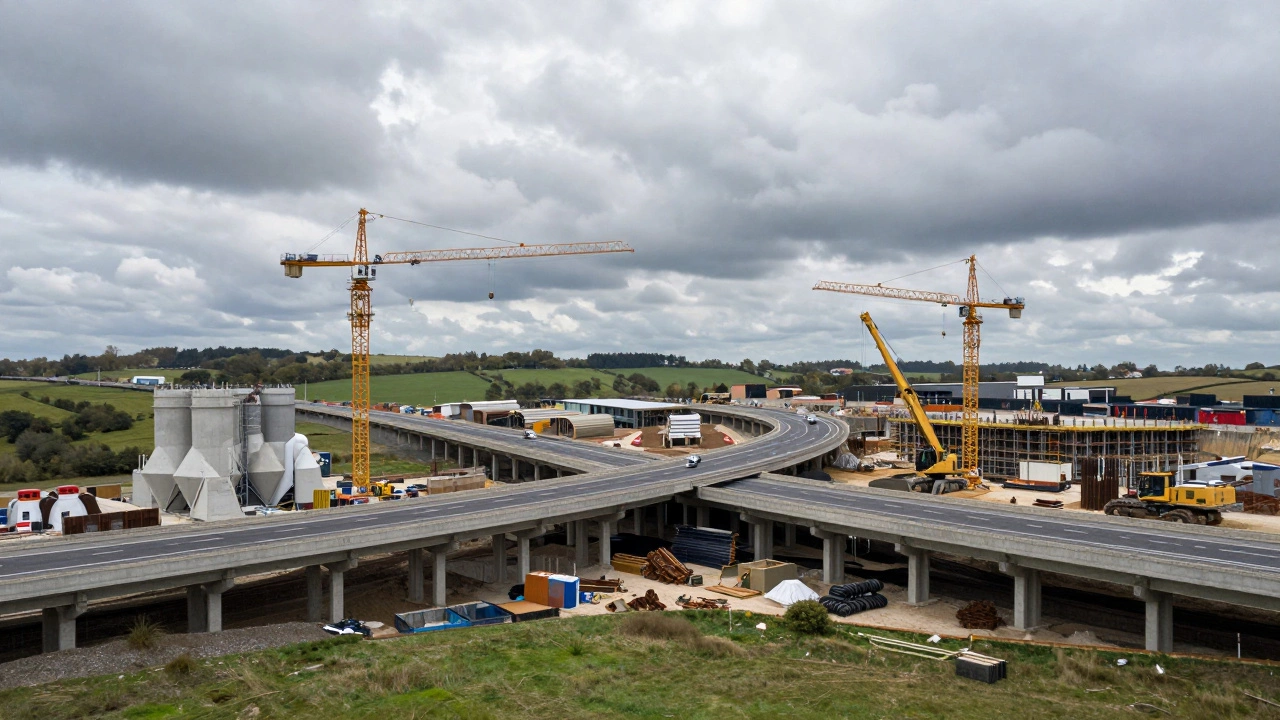
Infrastructure construction, also known as civil construction, builds the backbone of society. Roads, bridges, tunnels, dams, airports, and water treatment plants. These projects are typically funded by government entities through taxes or bonds. They don’t generate direct revenue like a shopping mall, but they enable commerce and daily life.
Civil projects are massive in scale and duration. Building a highway interchange can take years. They require earthmoving equipment, concrete batching plants, and thousands of workers. Weather plays a bigger role here than in indoor construction. Rain can halt bridge pouring; heat can warp asphalt.
Transportation Networks include roads, highways, railways, and airports. These systems facilitate movement of people and goods. Highway Systems require precise grading and drainage planning to prevent flooding.
Utility infrastructure, such as sewage systems and electrical grids, operates underground or overhead. It’s invisible until it fails, which causes major disruptions. Aging infrastructure in many cities creates a steady demand for repair and replacement projects. For contractors, winning a government bid is competitive but offers stable payment terms.
- Pros: Government-backed funding, essential services ensure longevity, large-scale employment opportunities.
- Cons: Bureaucratic bidding processes, public scrutiny, weather dependencies, lower profit margins due to competition.
How to Choose the Right Type for Your Project
Your choice depends on your goals. Are you an investor seeking passive income? Multi-family residential or commercial office space might suit you. Do you want to leave a legacy? Infrastructure projects improve communities for decades. Are you a developer chasing quick flips? Single-family homes offer faster turnover.
Consider your risk tolerance. Industrial and infrastructure projects have higher barriers to entry but lower volatility. Residential markets fluctuate with interest rates and consumer confidence. Commercial real estate ties closely to corporate health-when companies expand, they lease more space.
Location matters immensely. A factory needs access to raw materials and shipping lanes. An apartment building thrives near jobs and schools. A retail store needs foot traffic or visibility from a main road. Never underestimate the power of zoning laws-they dictate what you can build and where.
Common Pitfalls Across All Construction Types
No matter which type you choose, certain mistakes plague every project. Poor planning leads to cost overruns. Ignoring soil conditions causes foundation failures. Underestimating permit times delays openings. Hiring unqualified subcontractors results in rework.
Communication breakdowns between architects, engineers, and builders cause errors. Use detailed blueprints and regular site meetings. Document everything. Changes in scope should be written down and signed off. Budget buffers of 10-20% protect against unexpected issues.
Sustainability is no longer optional. Green building standards like LEED or BREEAM reduce operating costs and attract tenants. Energy-efficient windows, solar panels, and recycled materials add value. Future-proofing your construction investment starts with eco-conscious choices today.
Which type of construction is most profitable?
Profitability varies by region and market conditions. Generally, industrial and infrastructure projects offer higher absolute profits due to scale, but lower percentage margins. Residential development can yield higher percentage returns on smaller investments, especially in growing urban areas. Commercial real estate provides steady cash flow through long-term leases.
Can one company handle all four types of construction?
Large conglomerates may operate across multiple sectors, but specialization is common. A firm expert in residential housing likely lacks the engineering expertise for a chemical plant. Most successful companies focus on one or two related types to maintain quality control and efficient resource allocation.
What is the biggest difference between commercial and industrial construction?
The primary difference lies in function and complexity. Commercial buildings house people for work or leisure, focusing on aesthetics and occupancy comfort. Industrial facilities house machinery and processes, prioritizing structural strength, safety protocols, and operational efficiency over appearance.
Is infrastructure construction considered part of the construction industry?
Yes, absolutely. Infrastructure, often called civil construction, is a major pillar of the global construction industry. It includes public works like roads, bridges, and utilities, typically funded by government entities rather than private developers.
Which construction type has the shortest timeline?
Small-scale residential projects, like custom homes or additions, usually have the shortest timelines, ranging from months to a year. Large commercial complexes and infrastructure projects can take several years due to their size, complexity, and regulatory approval processes.