
Construction Type Estimator & Comparison Tool
Project Parameters
Analysis Result
Enter your project details to see the recommended construction type and cost implications.
Quick Reference: Key Differences
| Feature | Type A Construction | Type B Construction |
|---|---|---|
| Materials | Steel, Concrete, Masonry | Wood, Light-gauge steel |
| Fire Resistance | 2+ Hours (Structural) | 0–1 Hour (Varies) |
| Combustibility | Non-Combustible | Partially Combustible |
| Typical Uses | Hospitals, High-rises, Schools | Warehouses, Garages, Small Retail |
| Cost Factor | Higher Initial Cost | Lower Initial Cost |
Imagine standing in front of a gleaming glass skyscraper in central London. Now picture a modest two-story warehouse on the edge of an industrial estate. They look nothing alike, but they share a hidden common thread: how their bones are built to resist fire. This is where type A construction and type B construction come into play. These aren't just arbitrary labels slapped onto blueprints; they are fundamental classifications that dictate everything from insurance premiums to evacuation timelines. If you are planning a commercial build or managing an existing property, understanding this distinction isn't optional-it's critical for safety and compliance.
In the UK, these terms stem from long-standing building regulations and fire engineering principles. While international codes like the International Building Code (IBC) use numbered types (Type I through V), the British context often refers to 'Type A' as fully protected, non-combustible structures and 'Type B' as those with combustible elements or less stringent protection. Getting this wrong can lead to costly retrofits, failed inspections, or worse-catastrophic failure during a fire event. Let’s break down exactly what these mean, why they matter, and how they impact your project.
The Core Difference: Combustibility and Fire Resistance
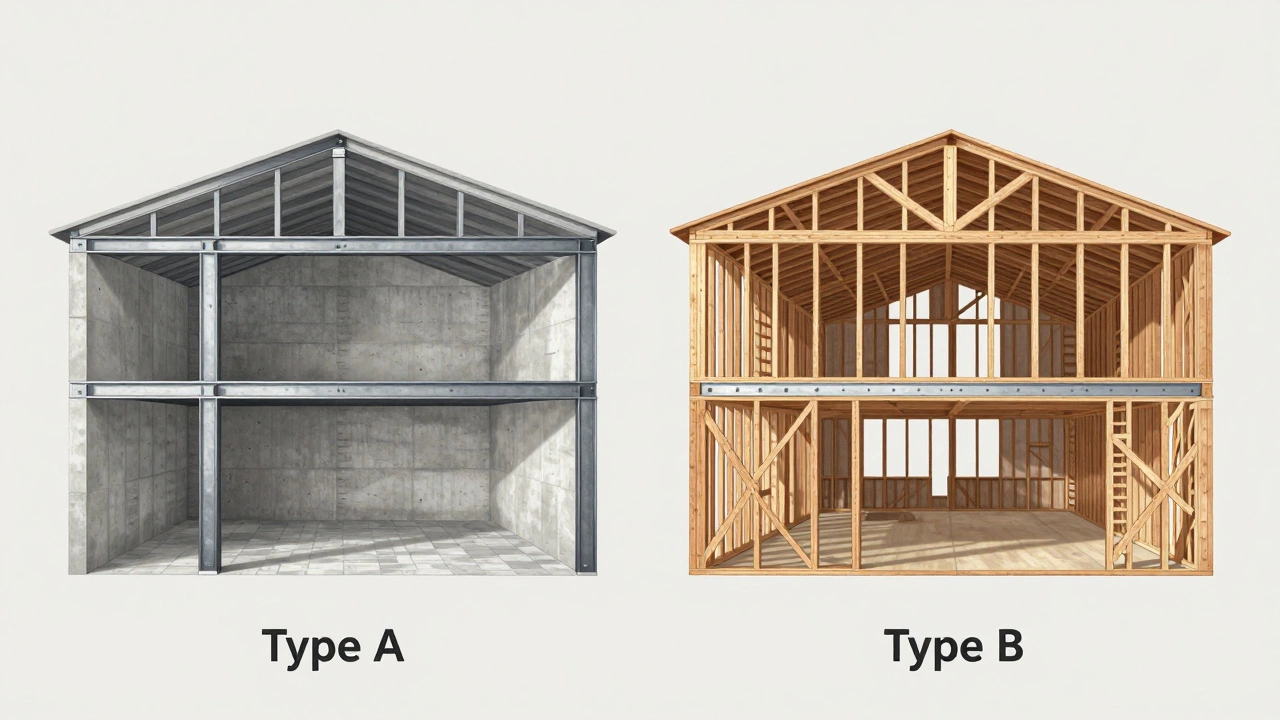
At its heart, the difference between Type A and Type B construction comes down to two things: whether the materials burn, and how long they can hold up under heat. Type A Construction is defined by its use of non-combustible materials such as steel, concrete, and masonry. These materials do not contribute fuel to a fire. More importantly, structural elements in Type A buildings are designed to maintain their integrity for extended periods-often two hours or more-under intense heat. Think of high-rise offices, hospitals, or shopping centers where people need time to evacuate safely.
Type B Construction, on the other hand, allows for some combustible materials, typically wood framing or unprotected steel. The fire resistance rating is lower, often ranging from zero to one hour depending on the component. You’ll see this in smaller commercial units, storage facilities, or older buildings where full protection wasn’t mandated. The key takeaway? Type A buys you time; Type B relies more heavily on early detection and suppression.
This isn’t about one being “better” than the other universally. It’s about matching the construction type to the building’s purpose, height, and occupancy load. A low-risk workshop doesn’t need the same level of protection as a crowded cinema. But misclassifying either can have serious consequences.
Why Classification Matters: Safety, Insurance, and Compliance
Let’s talk real-world impact. First, there’s safety. In a fire, every second counts. Type A constructions are engineered to prevent rapid collapse, giving occupants crucial minutes to escape. That’s why you won’t find Type B framing in any new high-rise residential block post-Grenfell-the lessons learned were clear. Second, insurance companies care deeply. Buildings classified as Type A generally attract lower premiums because they pose less risk of total loss. Insurers know that non-combustible structures limit fire spread and reduce structural failure probability.
Then there’s regulatory compliance. Under the Building Regulations 2010 (as amended), certain uses automatically require higher fire resistance. For example, assembly halls over 60 square meters must meet specific compartmentation rules tied to construction type. Mislabeling a Type B structure as Type A could void your certificate of occupancy-or worse, leave you liable if something goes wrong. Conversely, over-specifying Type A when Type B suffices wastes money without adding meaningful value.
| Feature | Type A Construction | Type B Construction |
|---|---|---|
| Primary Materials | Steel, concrete, masonry | Wood, light-gauge steel, mixed |
| Fire Resistance Rating | 2+ hours (structural) | 0-1 hour (varies by element) |
| Combustibility | Non-combustible | Partially combustible |
| Typical Use Cases | Hospitals, schools, high-rises | Warehouses, small retail, garages |
| Insurance Risk Profile | Lower premium potential | Higher premium due to fuel load |
| Retrofit Complexity | High cost, major works | Moderate, targeted upgrades possible |
Real-World Applications: Where Each Type Shines
Not every building needs Type A armor. Consider a standalone logistics hub in Hertfordshire. Its primary function is storage, not mass occupancy. Here, Type B construction makes sense. The owner saves significantly on material costs while still meeting code requirements through sprinkler systems and smoke detectors. Meanwhile, a multi-level car park in Manchester requires Type A framing-not because cars are flammable (though they are), but because the vertical circulation paths demand robust fire separation to protect pedestrians below.
Another example: a converted Victorian warehouse turned into tech offices. Originally Type B, it now houses hundreds of workers daily. Upgrading to Type A standards would involve encasing all beams in intumescent paint, replacing wooden partitions with gypsum board, and reinforcing floors-a massive expense. Instead, many owners opt for enhanced active systems: advanced alarm networks, automatic door closers, and regular drills. This hybrid approach balances budget and safety, provided local authorities approve the deviation.
But beware shortcuts. Some developers try to pass off lightly protected steel frames as Type A by applying thin coatings. Without proper certification and testing, these fail under stress. Always verify third-party reports from bodies like BRE Global or Intertek before signing off on specs.
How to Determine Your Building’s Type
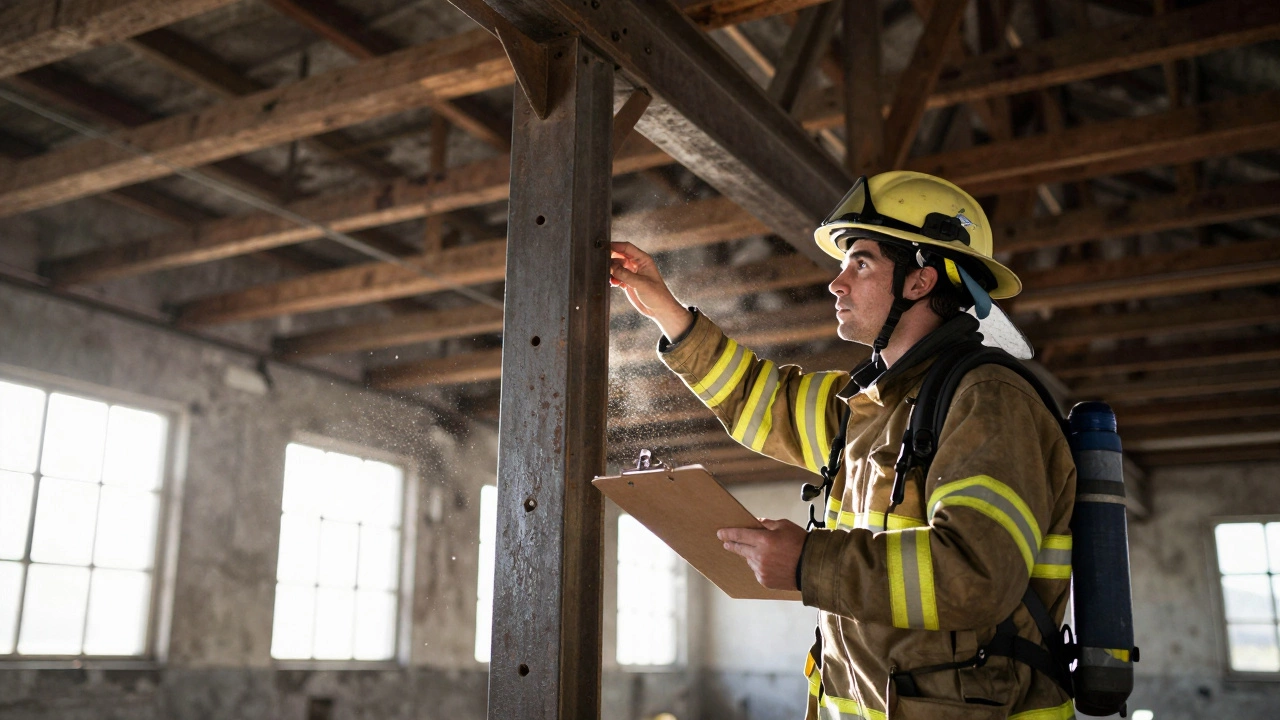
If you’re unsure whether your property falls under Type A or B, start with documentation. Original architectural drawings usually specify structural materials and fire ratings. Look for notes referencing BS EN 1991-1-2 (Eurocode 1: Actions on structures - General actions - Fire actions) or similar standards. If records are missing-which happens frequently with pre-1970s builds-you’ll need a professional assessment.
Hire a qualified fire engineer or surveyor familiar with UK regulations. They’ll inspect load-bearing walls, floor slabs, roof trusses, and connections. Key questions include:
- Are steel columns wrapped in concrete or fireboard?
- Is timber used in primary supports?
- Do stairwells have sealed penetrations around pipes and cables?
Common Pitfalls and How to Avoid Them
Misclassification is the biggest trap. Owners assume older buildings are inherently safer because they survived decades-but aging infrastructure often lacks modern fire barriers. Another mistake? Assuming all steel equals Type A. Unprotected steel loses strength rapidly above 550°C. Without cladding or spray-on cementitious coating, it behaves much like Type B under fire conditions.
Also watch out for false equivalencies. Just because a building has sprinklers doesn’t make it Type A. Active systems complement passive ones-they don’t replace them. Passive means the structure itself resists fire; active means devices respond after ignition. Both are vital, but only passive defines the core classification.
To stay compliant, keep updated with changes to Approved Document B (Fire Safety). Recent revisions emphasize compartmentation and external wall cladding integrity. Even minor renovations can trigger reclassification if they alter egress routes or increase occupant density.
What Comes Next: Planning Around Your Classification
Once you know your type, plan strategically. For Type A projects, focus on precision installation-poor workmanship undermines even the best materials. Ensure welds are certified, joints are sealed, and finishes match tested assemblies. For Type B, invest heavily in detection and suppression. Install addressable fire alarms, ensure extinguishers are accessible, and train staff regularly. Also consider future-proofing: will expansion require denser occupancy later? If yes, design with upgrade paths in mind.
Engage early with your Local Authority Building Control (LABC). Submit detailed method statements showing how you meet required fire resistance levels. Get sign-offs before pouring concrete or erecting frames. Proactive communication prevents delays and ensures smooth certification at completion.
Can I convert a Type B building to Type A?
Yes, but it involves significant renovation. You’d need to replace combustible structural elements with non-combustible alternatives, add fire-rated linings to exposed surfaces, and upgrade compartmentation. Costs vary widely based on scale, but expect substantial investment. Consult a structural engineer first to assess feasibility.
Does having sprinklers change my building’s type?
No. Sprinklers are part of active fire protection and improve overall safety, but they don’t alter the fundamental classification. Type A/B depends solely on passive features-materials and fire resistance ratings of structural components. However, installing sprinklers may allow some relaxations in other areas per current guidelines.
Which type is cheaper to construct?
Type B is generally less expensive upfront due to lighter materials and simpler detailing. Wood framing costs less than reinforced concrete, and labor hours drop when fewer protective layers are needed. Long-term savings depend on usage, maintenance, and insurance rates though.
Are there exceptions for historic buildings?
Historic structures often receive special consideration under conservation laws. While they rarely meet modern Type A criteria, exemptions exist if alterations preserve heritage character. Specialized assessments determine acceptable compromises between preservation and safety.
Who decides the classification during construction?
The architect specifies initial intent, but final determination rests with approved inspectors or Local Authority Building Control officers reviewing submitted documents and site visits. Independent fire engineers also provide expert opinions supporting compliance claims.