
When you're picking out bedroom curtains, the length might seem like a small detail. But get it wrong, and your room looks off - too short and it feels cheap, too long and it drags like a muddy trail. So should bedroom curtains go to the floor or the window sill? The answer isn't just about style. It’s about function, light, cleaning, and even how big your room feels.
Why Floor-Length Curtains Win 9 Out of 10 Times
Most experts, interior designers, and people who actually live in their bedrooms agree: go for floor-length curtains. Not just touching the floor - just barely grazing it. About half an inch above the floor is ideal. This creates a clean, finished look that makes the ceiling feel higher and the room feel larger.
Think about it: when curtains stop at the window sill, they cut the wall off mid-height. It’s like chopping off the bottom half of a painting. Floor-length curtains, on the other hand, draw the eye down and create vertical lines that pull the room upward. It’s a trick used in high-end hotels and design magazines for a reason.
In London, where many homes have older windows and uneven floors, floor-length curtains also hide imperfections. A gap between the sill and the curtain can look like a mistake. A slight puddle of fabric at the bottom? That’s intentional. It adds softness.
When Window Sill Length Might Make Sense
There are exceptions. If your window has a radiator directly underneath, floor-length curtains can block heat. That’s not just uncomfortable - it’s inefficient. In older UK homes, this is a real issue. A sill-length curtain lets warmth rise freely.
Another case: if you have a very small bedroom with low ceilings, a sill-length curtain can sometimes make the space feel less cramped. But this only works if the curtain is light, sheer, and paired with a clean, minimalist rod placed right under the ceiling. Otherwise, it just looks like you gave up.
And let’s not forget kids or pets. If your cat loves to leap onto the windowsill, or your toddler tugs at fabric, a shorter curtain is easier to maintain. But even then, consider a slightly longer length - just enough to cover the sill and a few inches below - with a machine-washable fabric.
What About Pooling? Should Curtains Puddle?
You’ve seen those dramatic, floor-length curtains that pool dramatically on the ground. They look luxurious - like in a palace or a Netflix period drama. But in a bedroom? Not so much.
Pooling means extra fabric bunching up on the floor. It looks fancy, sure, but it’s a dust magnet. It gets stepped on. It gets vacuumed over. It collects pet hair, crumbs, and who knows what else. In a bedroom, where you’re likely to be getting in and out of bed barefoot, that’s a hassle.
The sweet spot? Just touching the floor. No pooling. No gaps. Just a soft, clean line. If you want a bit of drama, go for a 1/4 inch break - enough to create a gentle fold without dragging.
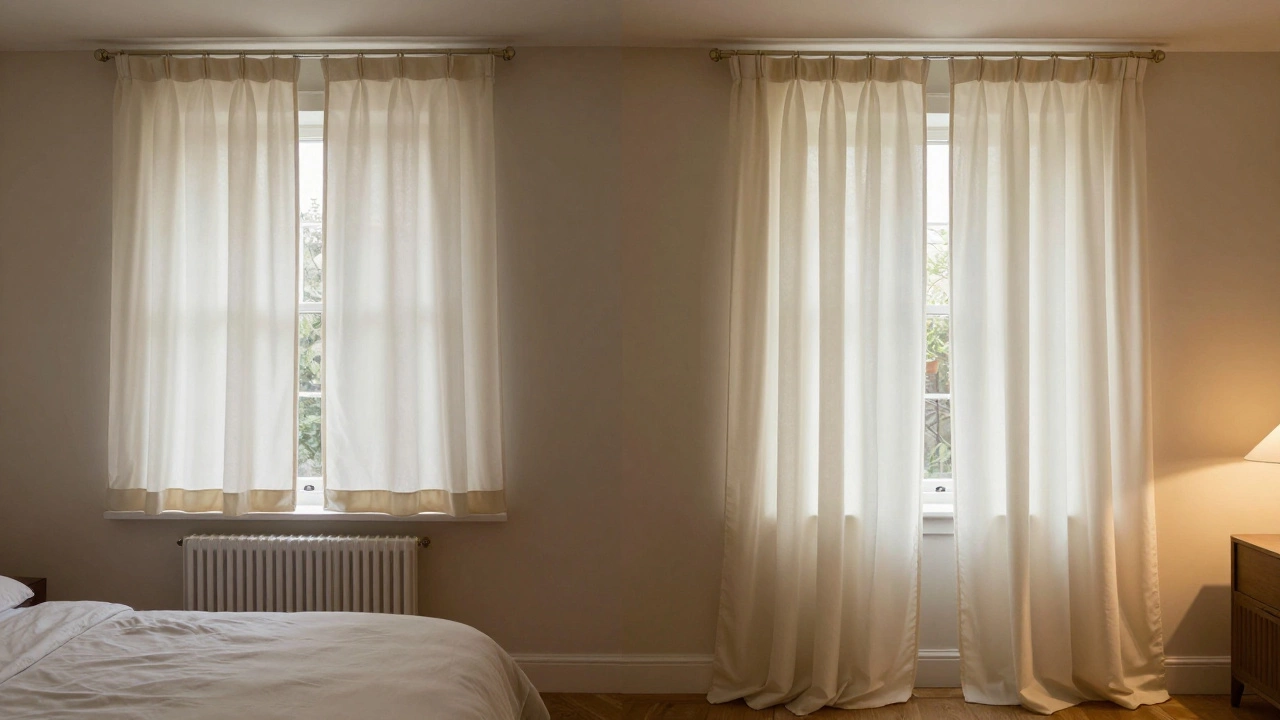
How High Should You Hang the Rod?
Length isn’t the only thing that matters. Where you hang the rod changes everything.
Too low, and your curtains will look like they’re fighting the window. Hang them as close to the ceiling as you can - even if that means drilling into crown molding. The higher the rod, the taller the window looks. And when paired with floor-length curtains? It’s magic.
In a typical UK bedroom with 8-foot ceilings, hang the rod 4 to 6 inches above the window frame. If you have crown molding, mount it right under it. This simple move adds 6 to 10 inches of visual height to your room. That’s like adding a whole extra foot of ceiling.
Fabric Matters More Than You Think
A heavy velvet curtain hanging just above the floor? Beautiful. A heavy velvet curtain dragging on a wooden floor? You’ll be repairing scratches every year.
Lighter fabrics like linen, cotton, or blends work best for bedroom curtains. They drape softly, don’t trap dust as badly, and are easier to wash. Avoid thick, stiff materials unless you’re going for a very specific look.
And if you’re using blackout lining - which most people should, for better sleep - make sure the lining doesn’t add bulk that makes the curtain drag. Test the length with temporary clips before sewing or hemming.

Real-World Examples From London Homes
I’ve seen dozens of bedrooms in flats and terraced houses across North London. The ones with curtains that just kiss the floor? They feel calm, expensive, and put-together.
The ones with curtains stopping at the sill? Usually, they’re in rental properties where the landlord didn’t care. Or in homes with outdated radiators. But even in those cases, switching to floor-length curtains made the room feel more intentional.
One client in Camden had a small bedroom with a radiator under the window. She was convinced she had to go with sill-length. We installed a custom bracket that lifted the rod 12 inches above the window and used a lightweight linen curtain that ended 1/2 inch above the floor. The radiator still got airflow. The room looked twice as big. She didn’t believe it until she saw the before-and-after photos.
Common Mistakes to Avoid
- Buying curtains that are too short because they’re cheaper. They’ll look wrong no matter how nice the fabric is.
- Hanging the rod too low. This kills the effect, even with perfect length.
- Ignoring the floor type. Carpet? You can go slightly longer. Hardwood? Keep it just above.
- Forgetting to measure twice. Curtains are often sold in standard lengths (63”, 84”, 96”, 108”). Measure from rod to floor first. Then pick the closest size. Hemming is easy. Cutting too short? Not so much.
Final Rule: Measure, Don’t Guess
Here’s how to get it right every time:
- Measure from the curtain rod down to the floor.
- Subtract half an inch. That’s your target length.
- Choose the closest standard curtain size. If it’s too long, hem it. If it’s too short, return it.
- Hang the rod as high as possible - near the ceiling or crown molding.
- Use lightweight, washable fabric unless you’re going for a very specific luxury look.
There’s no magic formula. No hidden rule. Just one simple truth: bedroom curtains should flow from ceiling to floor like a quiet, soft curtain call. Anything else feels unfinished.
Should bedroom curtains touch the floor?
Yes - but not too much. The ideal length is about half an inch above the floor. This creates a clean, elegant look without dragging or collecting dust. Curtains that puddle look dramatic but are messy in a bedroom. Curtains that stop at the sill look cheap and cut the room off.
What if I have a radiator under the window?
You can still use floor-length curtains, but you’ll need to raise the rod higher - at least 12 inches above the window - and choose a lightweight, breathable fabric like linen. This lets heat rise while keeping the visual line of the curtain unbroken. Avoid heavy, insulated curtains that block airflow.
Can I use window sill-length curtains in a bedroom?
It’s possible, but not recommended unless you have a specific reason - like a radiator, low ceilings, or small children/pets. Sill-length curtains make rooms feel smaller and look unfinished. If you do go this route, pair it with a high rod and sheer fabric to soften the effect.
How high should I hang the curtain rod?
Hang it as close to the ceiling as you can - ideally 4 to 6 inches above the window frame, or right under the crown molding. This tricks the eye into seeing a taller window and room. A low rod ruins even the best curtain length.
Do I need blackout lining for bedroom curtains?
Yes, if you want to sleep well. Light is one of the biggest disruptors of sleep. A blackout lining adds warmth, reduces outside noise, and blocks morning sun. Just make sure the lining doesn’t make the curtain too heavy or bulky. Test the length before permanently sewing it in.