Home Extension Cost Calculator
Estimate the cost of your home extension in London. This calculator compares the costs of building up (loft conversion) versus expanding out (side extension) based on your specific situation.
Roof Structure: Most loft conversions require good roof trusses. If not, expect additional structural work.
Planning Permission: Loft conversions often qualify for permitted development. Side extensions typically require full planning permission.
Space Savings: Building up preserves garden space, which can increase property value in London.
Disruption: Loft conversions cause less disruption as work is mostly contained in the roof space.
When you’re out of space in your London home, the big question isn’t just how to add more room-it’s whether it’s cheaper to build up or expand out. Most people assume adding a side extension is the obvious answer. But in a city where every square foot of garden is precious and planning rules are tight, going vertical might save you thousands. And sometimes, it’s the smarter move-not just for your wallet, but for your daily life.
What Building Up Actually Means
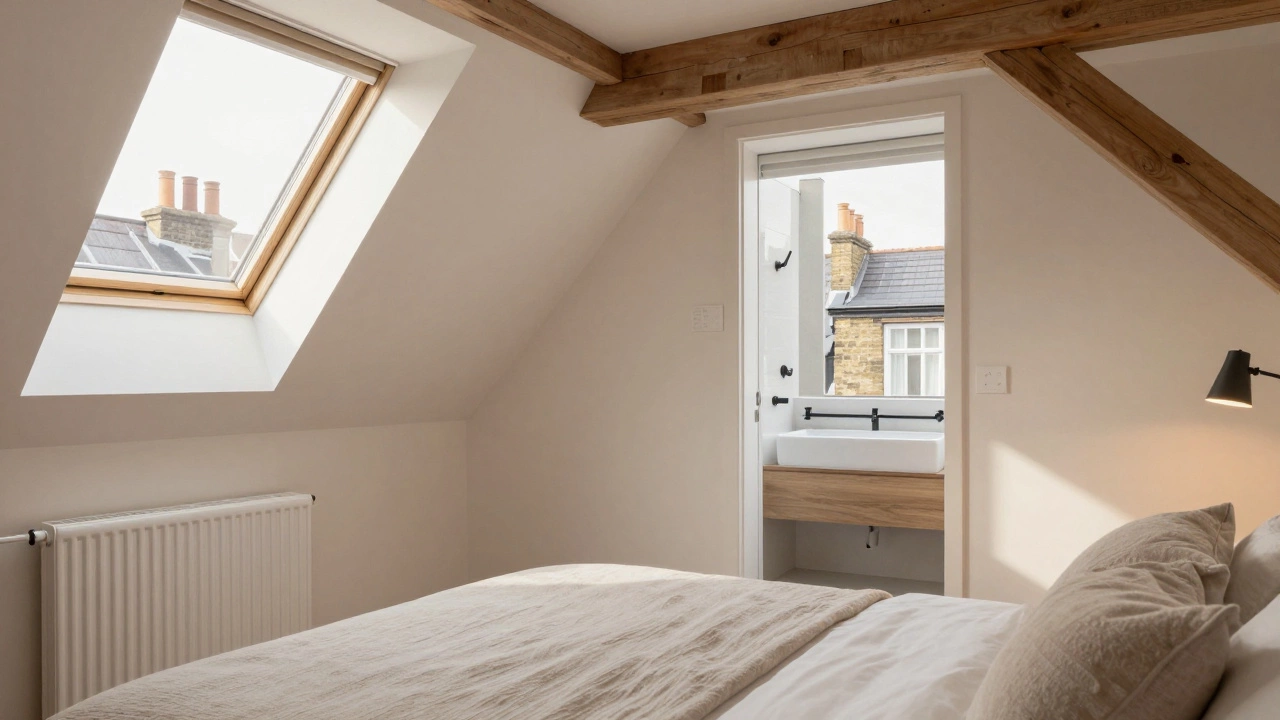
Building up means adding a new level-usually a loft conversion or a second story on top of your existing house. In London, this often means turning your attic into a bedroom, home office, or even a small guest suite. It doesn’t require touching your garden or knocking down walls. You’re working with space you already own, just using it differently.
Loft conversions in London typically cost between £30,000 and £55,000. That includes structural work, insulation, windows, stairs, and finishes. A simple dormer conversion on a semi-detached house in South London might land around £38,000. More complex conversions with en-suite bathrooms and rooflights can hit £50,000. But here’s the catch: you’re not losing any outdoor space. Your garden stays intact. Your neighbours aren’t complaining about overshadowing. And you’re not touching the foundation.
What Expanding Out Means
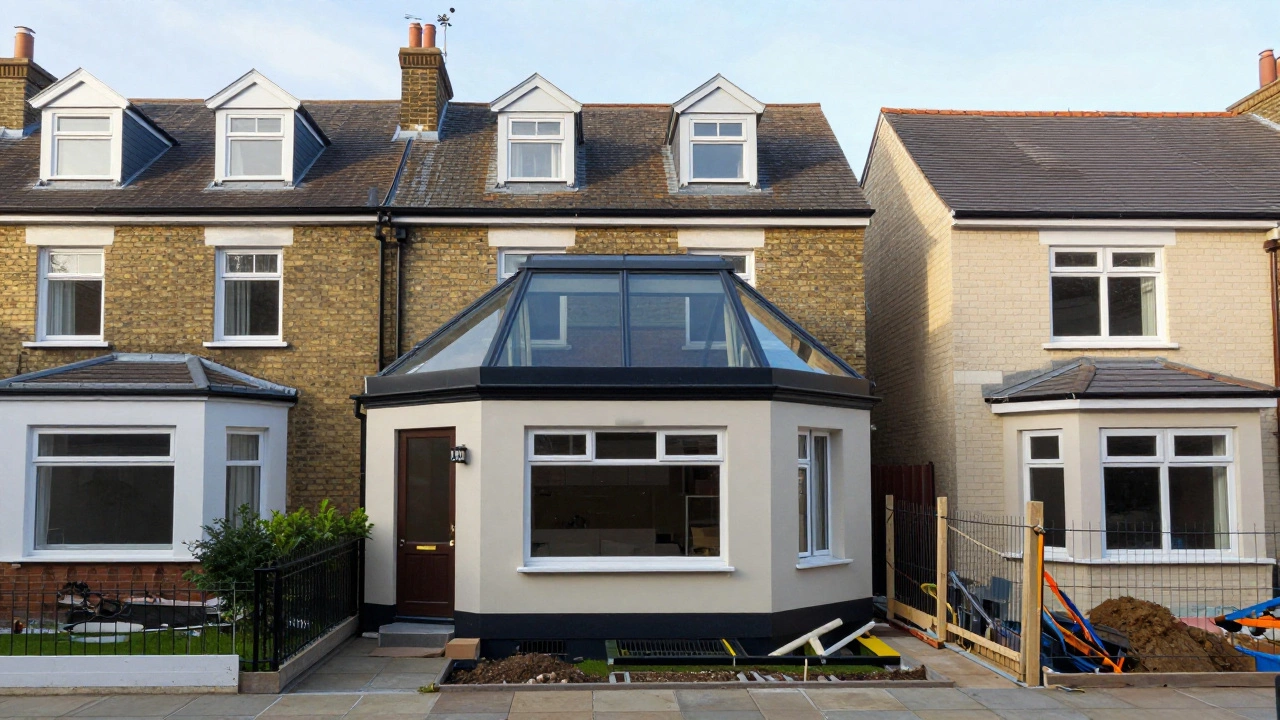
Expanding out usually means a single-storey extension-think a kitchen extension, sunroom, or living room bump-out. This is what most people picture when they think of a home extension. You’re taking your existing footprint and pushing it further into your garden or driveway.
In London, a basic single-storey extension costs £35,000 to £65,000. That’s for a 4m x 5m space with decent finishes, a new kitchen, and proper insulation. But that price doesn’t include landscaping, new fencing, or the cost of relocating utilities. If your garden is narrow or you need to move a drain or gas line, those extras can add £5,000 to £10,000. And if your house is on a tight plot-common in terraced streets-you might need to get planning permission. That means hiring an architect, paying for surveys, and waiting months. All of that adds up.
Why Building Up Often Costs Less
Let’s break it down. Building up doesn’t need new foundations. Your existing walls and footings already support the house. That cuts out the biggest cost in any extension: digging, pouring concrete, and reinforcing the ground. A single-storey extension needs new foundations that run the full length of the new wall. That’s £10,000 to £15,000 right there.
Building up also avoids landscaping. You don’t need to re-turf, re-fence, or re-plant. You don’t need to move sheds or compost bins. You don’t have to worry about drainage sloping the wrong way. In a city where garden space is sold by the square metre, preserving it adds value you can’t put a price on.
And then there’s planning. In many parts of London, loft conversions fall under permitted development rights. That means you don’t need full planning permission-just building regulations approval. A single-storey extension? Often needs full planning, especially if it’s within 2 metres of a boundary or covers more than half your garden. That’s extra time, extra fees, and extra stress.
When Expanding Out Makes More Sense
But building up isn’t always the answer. If your attic is too low, has sloping ceilings, or is filled with old insulation and pigeon droppings, a loft conversion might need serious structural work. If your roof trusses are old and not designed to hold extra weight, you might need to replace them entirely. That can push the cost into the £60,000+ range.
Also, if you need a large open-plan space-a big kitchen, a playroom, or a home gym-building out gives you more flexibility. You can have tall ceilings, big windows, and natural light from all sides. A loft conversion will always feel a bit cramped, no matter how well it’s designed. And if you have mobility issues or plan to age in place, stairs to a second floor aren’t ideal. A ground-floor extension is more accessible.
Another factor: resale value. In some London postcodes, a large garden is worth more than an extra bedroom. If your property is in an area where buyers pay a premium for outdoor space-like parts of Wandsworth or Richmond-a side extension might reduce your home’s appeal. But in areas like Hackney or Peckham, where space is tight, an extra bedroom can boost value more than a garden.
Real Cost Comparison: Side Extension vs Loft Conversion
| Cost Factor | Single-Storey Extension | Loft Conversion |
|---|---|---|
| Labour & Materials | £28,000 | £22,000 |
| New Foundations | £12,000 | £0 |
| Structural Work (Beams, Joists) | £4,000 | £8,000 |
| Planning Permission | £1,500-£3,000 | £0-£1,000 |
| Utilities Relocation | £2,000-£7,000 | £0-£1,500 |
| Landscaping & Garden Work | £5,000-£10,000 | £0 |
| Architect Fees | £2,500 | £1,500 |
| Contingency (10%) | £4,500 | £3,500 |
| Total Estimated Cost | £57,000 | £40,000 |
These numbers aren’t theoretical. I’ve seen three projects in Southwark this year. One homeowner did a side extension-total cost £62,000. Another did a loft conversion-£39,000. Both added a bedroom and a bathroom. The side extension ate up 60% of their garden. The loft conversion left everything untouched. The loft conversion also finished three weeks earlier.
Hidden Costs Nobody Talks About
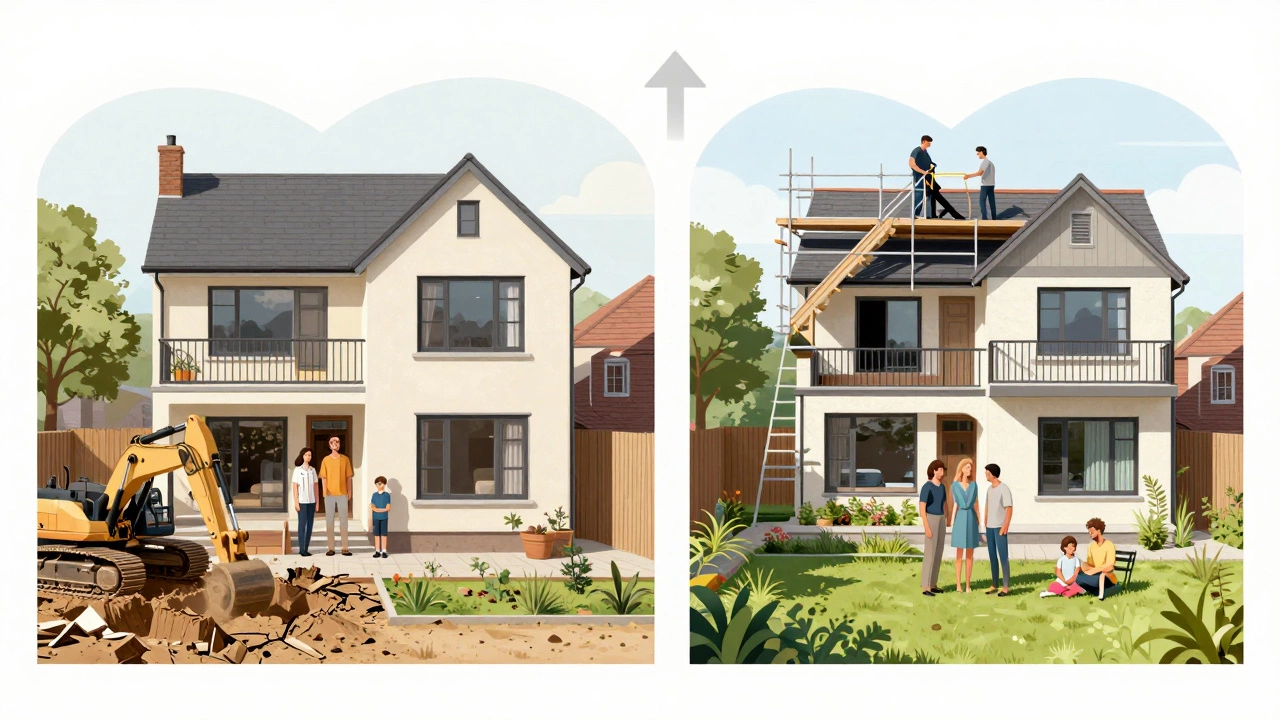
With a side extension, you’re not just paying for bricks and mortar. You’re paying for disruption. Your garden becomes a construction zone for months. You can’t use your patio. You can’t leave your bike outside. Your kids can’t play. If you’re working from home, you’re dealing with noise and dust every day.
With a loft conversion, the mess is mostly contained. You’re working above your head. The builders come in, put up scaffolding, and work mostly in the roof space. You can still use your kitchen and living room. You might have a few days of dust when the stairs are installed, but it’s manageable.
There’s also the issue of neighbours. In a terrace street, a side extension can block light to your neighbour’s window. They can object to your planning application. A loft conversion rarely causes that kind of conflict. It’s higher up. It doesn’t cast shadows on their garden. Most neighbours don’t even notice until it’s done.
What to Do If You’re Still Unsure
Start with a survey. Get a structural engineer to check your roof. If your trusses are timber and in good condition, a loft conversion is likely viable. If your attic has a low ridge height-under 2.2 metres-you might need a dormer. That adds cost, but still less than a side extension.
Next, talk to your local council’s planning department. Ask if your extension would need full planning permission. In many London boroughs, if your extension is under 4m deep and doesn’t go beyond the rear wall, you might qualify for permitted development. But if you’re on a conservation street or listed building, you’re out of luck. That’s when building up becomes your only real option.
Finally, think long-term. Will you need a home office in five years? A guest room? A nursery? A loft conversion gives you flexibility. You can design it as a bedroom now and turn it into a studio later. A side extension is harder to repurpose. Once it’s a kitchen, it’s hard to turn it into a bedroom.
Final Decision Checklist
- Is your roof structure strong enough for extra weight? (Check with a structural engineer)
- Do you have at least 2.2m headroom in the attic? (If not, a dormer is needed)
- Is your garden large enough to lose 15-20m²? (If not, building up saves value)
- Are you in a conservation area or listed building? (Loft conversions often allowed; side extensions usually not)
- Do you need a large open space? (Side extension wins for kitchens or playrooms)
- Are you planning to stay in the house long-term? (Loft conversions add flexibility)
If you answered yes to most of the first four points, building up is probably your best move. If you need a big, bright, open space and have room to spare, then expanding out makes sense. But in most London homes, the cheaper, quieter, and smarter choice is going vertical.
Is a loft conversion cheaper than a side extension in London?
Yes, in most cases. A typical loft conversion costs £35,000-£50,000, while a side extension runs £55,000-£70,000. The main savings come from avoiding new foundations, landscaping, and often planning permission. Loft conversions also preserve your garden, which adds long-term value.
Can I build up without planning permission in London?
Maybe. Many loft conversions fall under permitted development rights if they don’t exceed certain height limits, don’t face the highway, and aren’t in a conservation area. But you still need building regulations approval. Always check with your local council before starting work. Some boroughs, like Westminster or Camden, have stricter rules.
How long does a loft conversion take compared to a side extension?
A loft conversion usually takes 8-12 weeks. A side extension takes 12-18 weeks. The difference comes from groundwork, drainage, and landscaping. Loft conversions avoid digging and external works, so the timeline is shorter and less disruptive.
Does building up increase my home’s value more than expanding out?
It depends on your location. In dense areas like Hackney or Islington, an extra bedroom from a loft conversion adds more value than a garden extension. In leafy suburbs like Richmond or Kew, buyers may prefer garden space. But in both cases, preserving your outdoor area helps maintain appeal. A loft conversion gives you more flexibility without sacrificing square footage.
What’s the biggest mistake people make when choosing between building up or out?
They focus only on cost and ignore long-term usability. A side extension might look nice now, but if you later need a home office or guest room, you’re stuck. A loft conversion can be adapted over time. Also, many people don’t check their roof structure first-ending up with a conversion that needs expensive reinforcement. Always get a structural survey before deciding.