Small Bedroom Clutter Audit & Plan
Check the areas where you struggle with clutter most. We will analyze your inputs and provide a tailored action plan using smart storage tricks.
Your Custom Organization Strategy
Maintenance Tip:
To keep these gains, adopt the "one in, one out" rule. For every new item that enters the bedroom, an old one must leave. Spend five minutes each evening resetting surfaces to prevent overnight accumulation.
There is nothing quite as stressful as lying awake in a tiny room surrounded by piles of laundry, stacks of books, and random cables. You didn’t move into your home to live in a storage unit, but when square footage is tight, every inch counts. The goal isn't just to sweep everything under the rug; it’s about creating a sanctuary where you can actually breathe. Hiding clutter in a small bedroom requires a mix of smart furniture choices, vertical thinking, and optical illusions that trick the eye into seeing more space than there really is.
The Vertical Advantage: Walls Are Your Best Friend
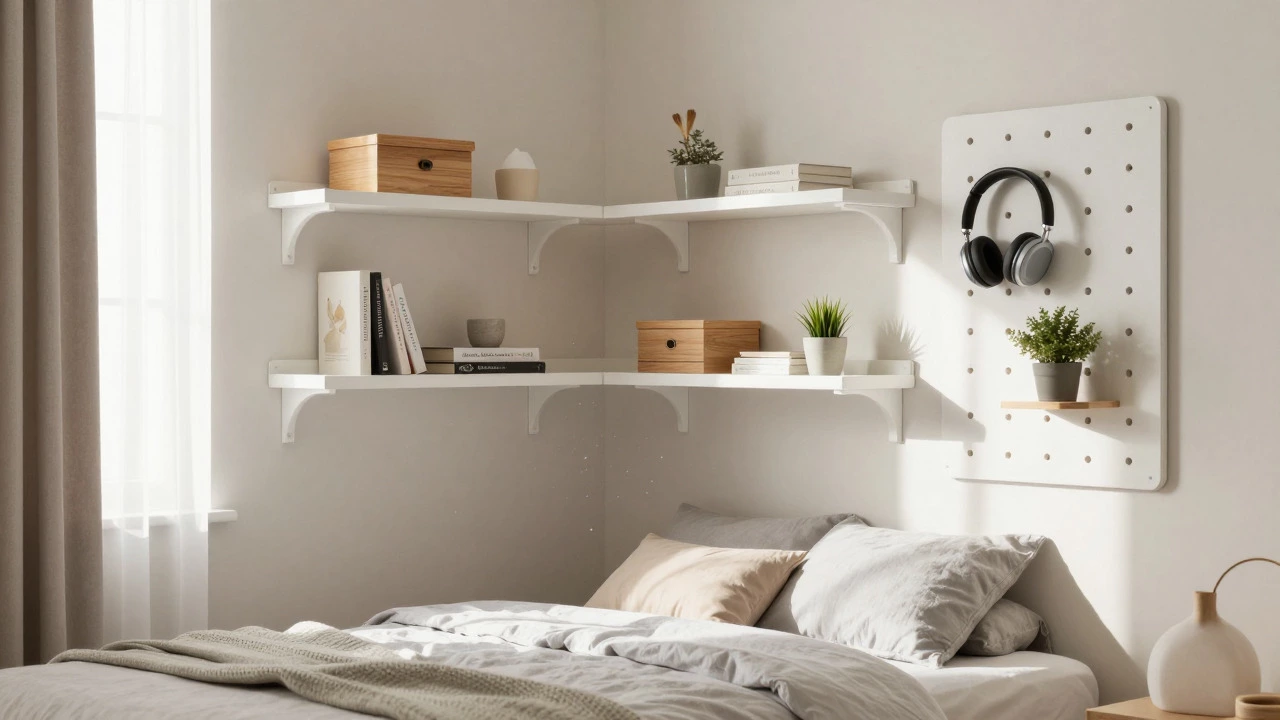
When floor space is at a premium, stop looking down and start looking up. Most people waste the upper third of their bedroom because they assume walls are just for art or mirrors. In a compact room, your walls are prime real estate for storage. Installing floating shelves above your bed or desk allows you to store books, decorative boxes, and daily essentials without consuming any floor area. These shelves create a sense of openness because they don’t have bulky sides like traditional bookcases do.
Consider adding a pegboard system on an empty wall. It might sound industrial, but with the right finish-like white or light wood-it looks sleek and modern. Pegboards let you hang headphones, jewelry, bags, and even small plants. Because items are suspended rather than sitting on surfaces, your desk or dresser stays clear. This method turns visible items into organized decor rather than chaotic piles. If drilling holes is off the table, tension rods placed between walls or inside closets can hold scarves, belts, and lightweight accessories without any permanent damage.
Furniture That Works Double Duty
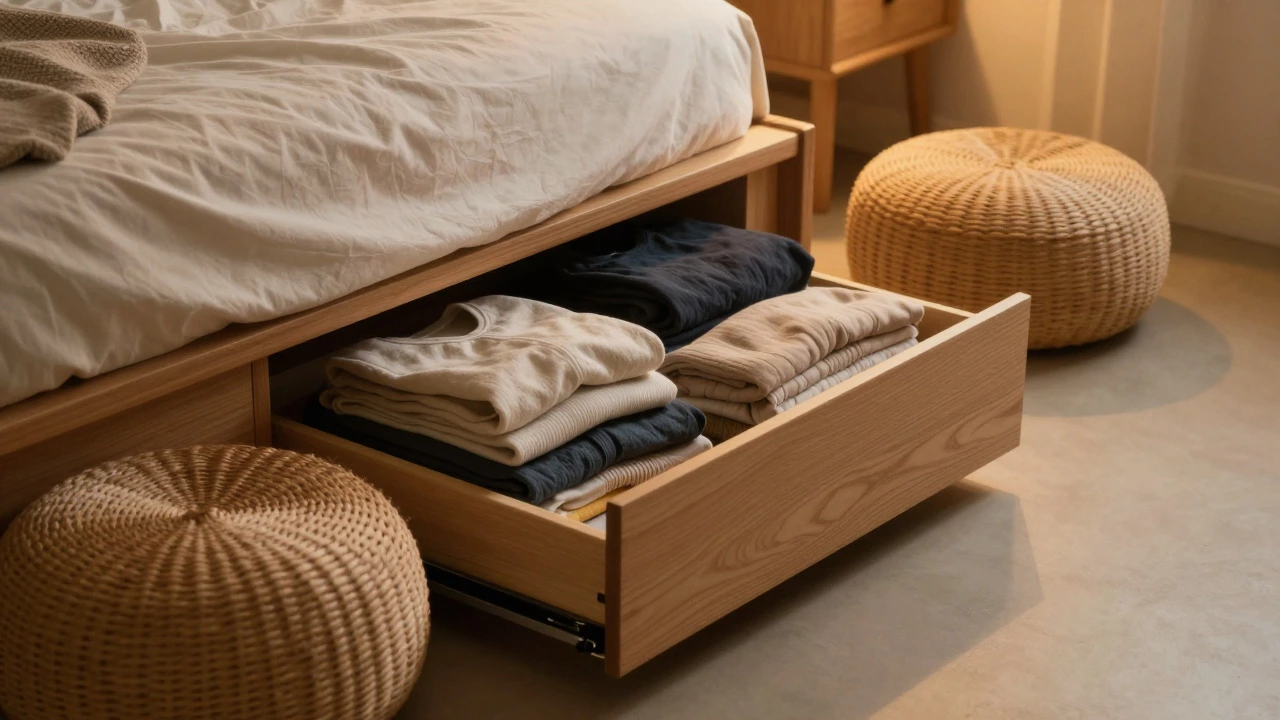
In a small bedroom, single-purpose furniture is often a luxury you can’t afford. Every piece should earn its keep by serving at least two functions. A bed frame with built-in drawers is the gold standard here. Instead of buying a separate chest of drawers that takes up valuable walking space, choose a platform bed with deep pull-out bins underneath. These hidden compartments are perfect for storing out-of-season clothing, extra bedding, or shoes. You essentially gain an entire wardrobe without expanding your footprint.
Look for ottomans or benches that open up to reveal storage inside. Place one at the foot of the bed to stash blankets or magazines. When guests visit, it doubles as extra seating. Even nightstands can be smarter; opt for models with drawers instead of open shelves. Open shelves show every crumb and tangled wire, while drawers hide them completely. If you need a desk, consider a wall-mounted drop-leaf table. Fold it up against the wall when not in use, and you reclaim that square footage for yoga, dancing, or just moving around freely.
Mastering the Closet: The Hidden Core
Your closet is the engine of a clutter-free small bedroom. If this space is disorganized, the rest of the room will feel chaotic no matter how tidy your surfaces are. Start by removing everything and sorting it into three piles: keep, donate, and trash. Be ruthless. If you haven’t worn it in a year, it’s probably not coming back. Once you’ve reduced the volume, focus on maximizing the interior layout.
Install double hanging rods. The top rod holds shorter items like shirts and blouses, while the bottom rod accommodates pants and skirts. This simple adjustment doubles your hanging capacity. Use uniform hangers-they take up less space and create a clean, streamlined look that makes the closet appear larger. For items that don’t hang well, such as sweaters or jeans, use cube organizers or vacuum-sealed bags. Vacuum bags are particularly effective for bulky winter coats or duvets, shrinking them to a fraction of their original size so they slide easily into high shelves or under-bed storage.
Visual Tricks to Minimize Chaos
Physical storage solves half the problem, but visual perception solves the other half. You can have plenty of storage, but if everything is different colors and shapes, the room will still feel messy. The key is to unify your storage containers. Swap clear plastic bins for matching fabric baskets or wooden boxes. When all your storage vessels look the same, they read as design elements rather than clutter. Place these uniform containers on open shelves or under tables to corral miscellaneous items like chargers, remote controls, and toiletries.
Color coordination plays a huge role too. Stick to a limited color palette for your textiles and decor. Neutral tones like beige, gray, or soft whites reflect light and make spaces feel airier. Darker, busier patterns can shrink a room visually. Keep surfaces bare except for one or two intentional decorative objects. A single vase with fresh flowers adds life without adding noise. Remember, empty space is not wasted space; it’s breathing room.
Taming the Digital Tangle
Cables are the silent killers of a tidy aesthetic. Phones, laptops, lamps, and fans all need power, resulting in a spiderweb of wires behind your nightstand or desk. This tangle not only looks messy but also collects dust and makes cleaning a nightmare. Invest in cable management sleeves or clips. These inexpensive tools bundle multiple cords together into a single, neat line that runs along the edge of furniture or baseboards.
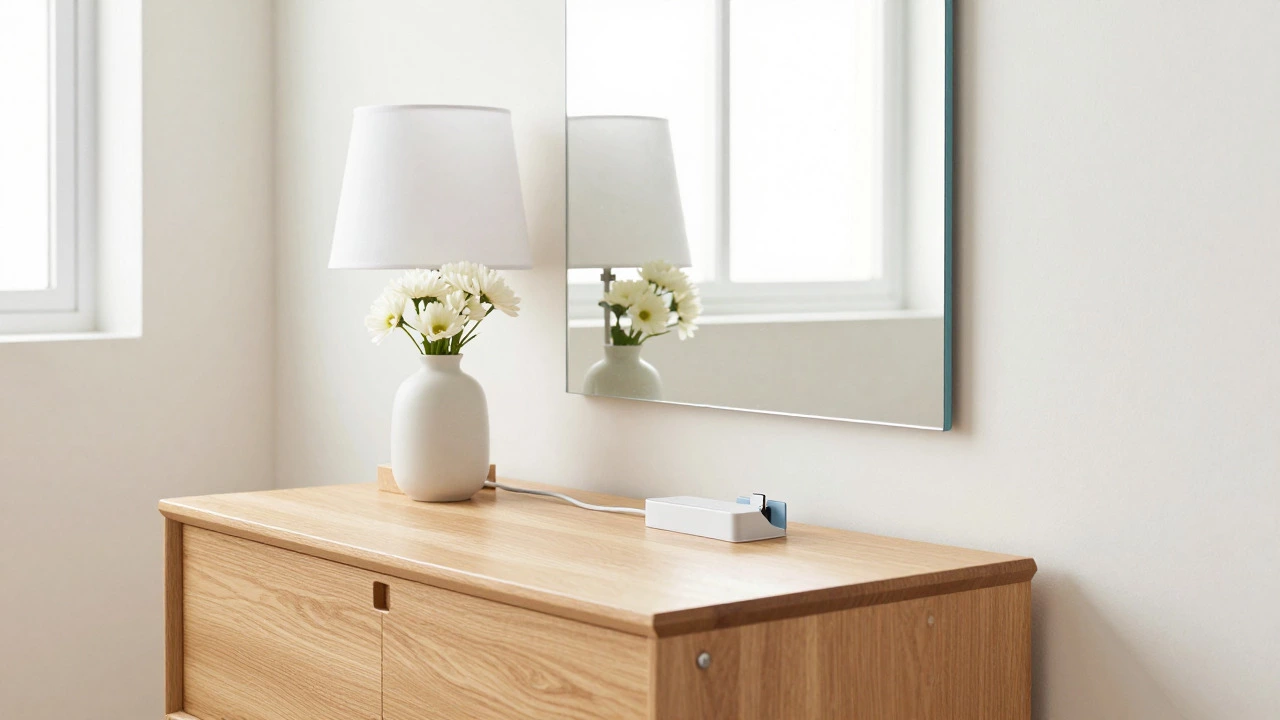
Use adhesive cord organizers to stick cables to the underside of desks or dressers. This keeps them completely out of sight. For charging stations, consider a dedicated box with holes cut for cords. Plug your devices in, then simply lift the lid or slide the box away. This hides the transformers and excess cord length. A tidy tech setup instantly elevates the sophistication of the room, making it feel curated rather than cramped.
Maintaining the Balance
Hiding clutter is easy; keeping it hidden is hard. The best systems fail if they aren’t sustainable for your lifestyle. Adopt the "one in, one out" rule. For every new item you bring into the bedroom, another must leave. This prevents accumulation from creeping back in. Spend five minutes each evening resetting the room. Put clothes in the hamper, return books to shelves, and wipe down surfaces. This small habit stops clutter from building up overnight.
Regularly audit your storage solutions. If a drawer is overflowing, redistribute items or find a new home for them elsewhere in the house. Don’t force things into the bedroom just because it’s convenient. A small bedroom thrives on intentionality. By combining clever storage furniture, vertical organization, and visual discipline, you can transform a cramped, chaotic space into a peaceful retreat that feels twice its size.
What is the best way to hide clutter under a low bed?
If your bed has low clearance, use flat, slim storage bins that slide easily on wheels or casters. These are ideal for storing seasonal clothing, extra linens, or shoes. Avoid deep boxes if the gap is narrow, as they can get stuck and become inaccessible. Label the bins clearly so you know what’s inside without having to pull them all out.
Can I use mirrors to hide clutter in a small bedroom?
Yes, mirrors are excellent for visual deception. Placing a large mirror opposite a window reflects light and creates the illusion of depth, making the room feel larger. You can also use mirrored cabinet doors or backing in shelving units to hide stored items while maintaining a bright, open feel. However, mirrors only work if the reflected area is tidy; avoid pointing them directly at messy corners.
How do I organize a small bedroom without a closet?
Without a built-in closet, rely on freestanding wardrobe cabinets or over-the-door hanging organizers. Tall, narrow armoires provide substantial storage for clothes and linens without taking up much floor space. Alternatively, install heavy-duty tension rods in doorways or corners to create makeshift hanging zones. Combine these with under-bed storage and wall-mounted shelves to maximize every available surface.
What types of baskets are best for hiding clutter?
Choose woven seagrass, cotton canvas, or felt baskets with lids. Lids are crucial because they conceal the contents, reducing visual noise. Wicker or seagrass adds texture and warmth, preventing the room from feeling sterile. Ensure the baskets are uniform in style and color to maintain a cohesive look. Place them on open shelves, under beds, or beside chairs to corral remotes, magazines, and craft supplies.
Is it better to buy new furniture or reorganize existing pieces?
Reorganizing existing pieces is usually more cost-effective and immediate. Before buying anything new, assess what you already own. Can you add hooks to the back of your door? Can you stack boxes vertically? Often, shifting furniture layouts or adding simple organizers like dividers and bins solves the problem. Only invest in new multi-functional furniture if your current pieces are genuinely ill-suited for the space’s dimensions.