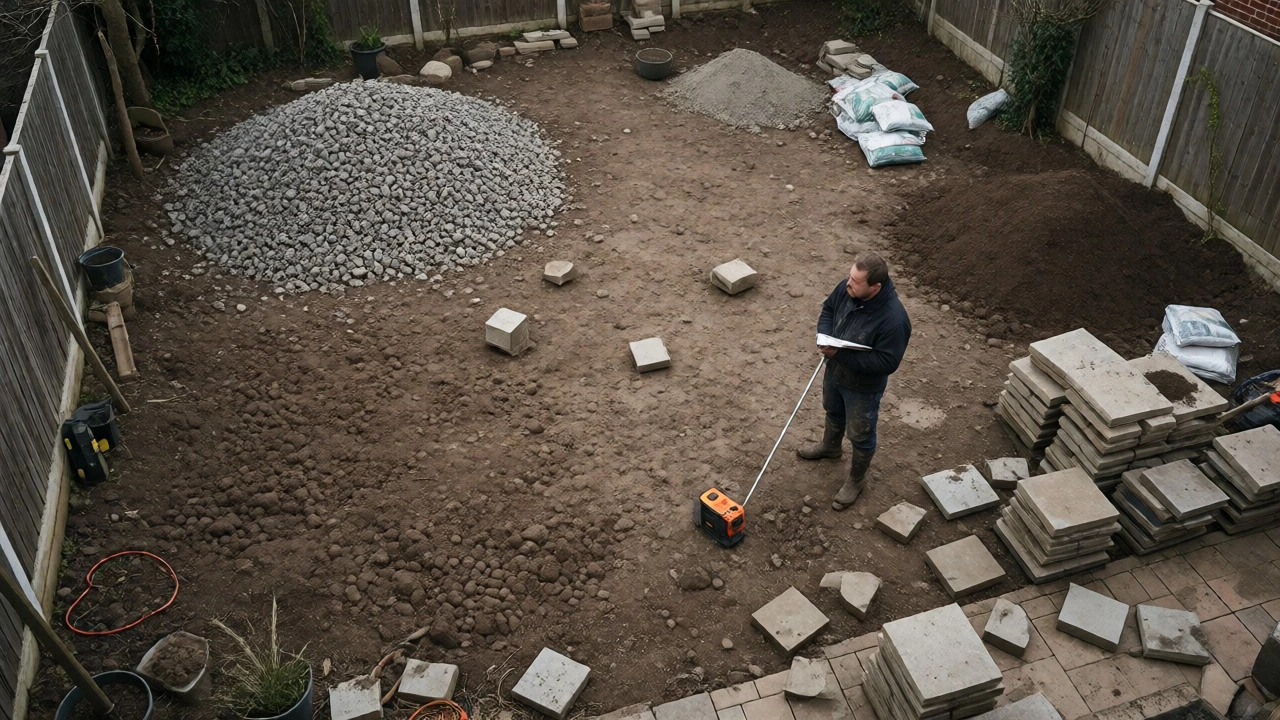
Landscaping Budget Estimator
Enter your garden details below to get a realistic cost estimate in GBP (£). This tool accounts for labour dominance, material tiers, and common hidden costs like waste removal.
Estimated Total Cost
£0You’ve got the vision. Maybe it’s a sleek patio for summer BBQs, a lush lawn that looks like a golf course green, or a low-maintenance haven with native plants. But when you try to put a number on it, your mind goes blank. Is £500 enough? Do you need £5,000? Or are we talking £20,000?
Here is the brutal truth: landscaping costs vary wildly because no two gardens are alike. A flat patch of dirt in Manchester costs differently than a sloping hillside in London. To stop guessing and start planning, you need to break the project down into its raw components. You don’t just buy "a garden." You buy labour, materials, design fees, and contingency funds. Let’s figure out exactly what yours will cost.
The Big Three: Labour, Materials, and Design
Most people obsess over the price of paving slabs or the cost of a rose bush. That’s a mistake. In professional landscaping, labour usually eats up 50-70% of your total budget. Why? Because moving soil, laying foundations, and installing drainage is physically demanding, skilled work. If you’re hiring a local contractor, expect them to charge either an hourly rate (often £30-£60 per hour per worker) or a day rate (£150-£300 per person/day). For a medium-sized job, this dwarfs the material bill.
Then there are materials. This is where you have control. You can choose porcelain pavers at £40 per square metre or concrete ones at £15. You can pick mature trees at £150 each or saplings at £20. The gap between "budget" and "premium" is massive. Finally, don’t forget design. A basic sketch from a landscaper might be free if you hire them for the build. A full landscape architect plan? That’s typically 10-15% of the construction cost. It sounds steep, but a bad plan costs more to fix later than to draw now.
| Project Scale | Estimated Total Cost | Labour Share | Material Share |
|---|---|---|---|
| Small Garden Refresh | £2,000 - £5,000 | 60% | 40% |
| Medium Renovation | £8,000 - £15,000 | 65% | 35% |
| Full Landscape Redesign | £20,000+ | 70% | 30% |
Hard Landscaping: The Expensive Bones
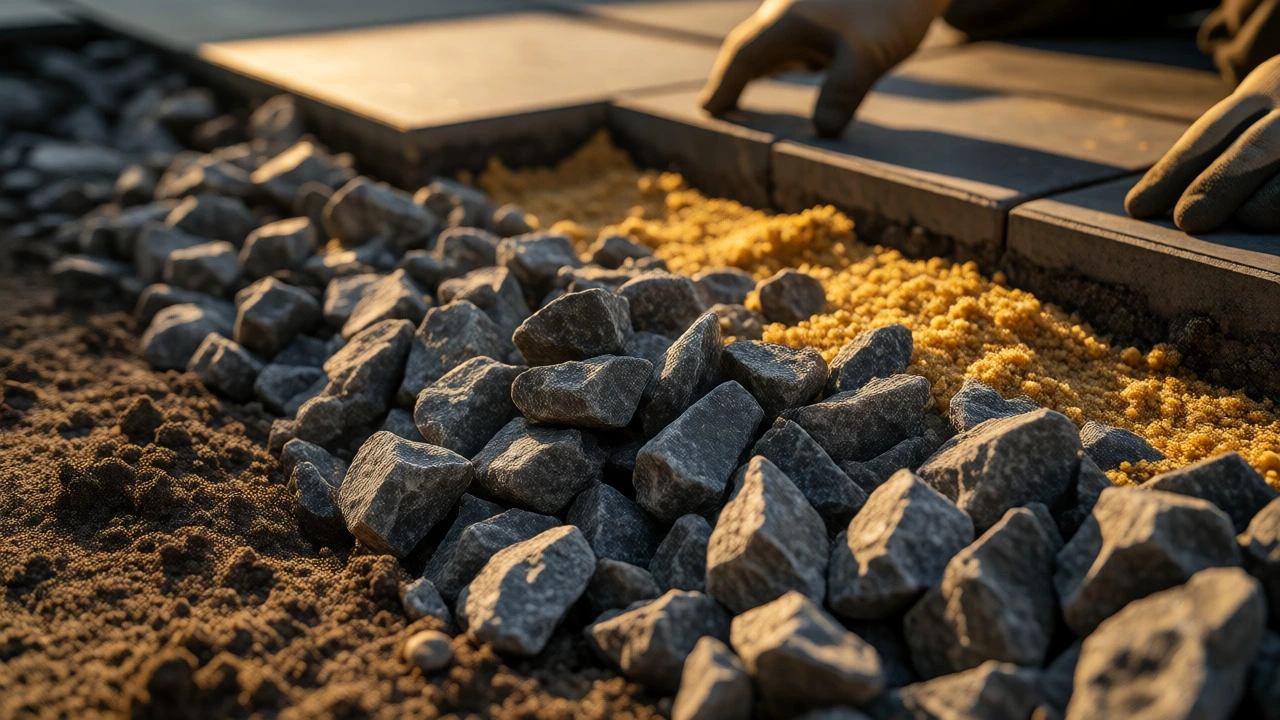
Hard landscaping refers to the non-living elements: patios, paths, walls, decking, and fences. These are the permanent structures, and they are the most expensive part of any quote. Why? Because they require groundwork. You can’t just lay slabs on grass. You need to dig out soil, add a sub-base of crushed stone, compact it, and then lay bedding sand. That’s three layers of labour before the first slab even touches the ground.
Let’s look at real numbers. A standard concrete block wall costs around £100-£150 per metre. But if you want natural stone? Double or triple that. Patios are priced per square metre. Basic block paving runs £40-£60/m² installed. High-end porcelain tiles can hit £100-£150/m² installed. And don’t ignore fencing. A simple panel fence is cheap (£15-£25 per metre), but hardwood feather-edge boards can cost £40+ per metre installed. If you’re calculating costs, measure every linear metre of walling and fencing carefully. It adds up fast.
Soft Landscaping: Plants, Soil, and Lawns
Once the hardscape is done, you fill the gaps with soft landscaping. This includes turf, plants, shrubs, trees, and topsoil. People often underestimate this. They think, "I’ll just pop some plants in." Wrong. Soil preparation is critical. Most new builds have poor-quality subsoil. You might need to import 5-10 tonnes of good topsoil. At £30-£50 per tonne delivered, that’s another £250-£500 gone before you plant a single daisy.
Turf is easier to calculate. Instant lawn rolls cost £2-£4 per m². Seeding is cheaper upfront (£1-£2/m²) but takes months to establish and requires maintenance. Plant costs depend entirely on maturity. A 1.8m tall privet hedge plant costs £5-£8. A mature 3m tree? £150-£300. If you want instant impact, you pay for size. If you can wait three years for a tree to grow, you save hundreds. Decide which trade-off suits your timeline.
Hidden Costs That Blow Budgets
Here is where DIY calculators fail. They miss the invisible stuff. First: waste removal. Digging up a garden creates mountains of spoil. Skip hire costs £200-£400 depending on size. Second: access issues. If your back garden has no side gate, workers can’t get a mini-dumper in. Everything must be wheelbarrowed by hand. That doubles the labour time. Third: drainage. If water pools on your site, you need French drains or soakaways. That’s extra digging, piping, and geotextile fabric. Add £500-£1,500 easily.
Also, consider utilities. Moving a gas meter or electrical supply for outdoor lighting isn’t cheap. An electrician might charge £100/hour. Running cables through trenching adds depth and complexity. Always ask: "Does this price include connecting to existing services?" Often, it doesn’t.
DIY vs. Hiring a Pro: The Math
Can you do it yourself? Yes, if you have weekends, tools, and tolerance for pain. But let’s run the numbers. Say you want a 20m² patio. Materials cost £800. If you hire a pro, they charge £1,200 for labour. Total: £2,000. If you DIY, you save £1,200. But how long does it take? Two weekends minimum. Plus, you need to rent a plate compactor (£50/day) and maybe hire a skip. Your "savings" drop to £900. Is two weekends of back-breaking labour worth £900? For many, no. For others, yes.
However, complex jobs like retaining walls or large earthworks are risky DIY projects. If a wall fails, it collapses. Repair costs exceed the original savings. Know your skill limit. Stick to planting and painting if you’re unsure; leave the heavy lifting to pros.
How to Get Accurate Quotes
Don’t just ask one contractor. Get three written quotes. Not emails-written, detailed breakdowns. Compare them line by line. Does Quote A include waste disposal? Does Quote B include the sub-base? If one is 20% cheaper, ask why. Usually, it’s cutting corners on prep work. Cheap quotes often mean "we’ll lay slabs on sand without a sub-base," which cracks within a year.
Ask for a fixed-price contract, not "estimate only." Fixed price protects you from surprise bills. Also, check payment terms. Never pay more than 10-20% upfront. Pay in stages as milestones are met. This keeps leverage on your side.
Quick Calculation Checklist
- Measure accurately: Use a laser measure for lengths and areas. Sketch your garden with dimensions.
- List every element: Separate hard (patio, walls) and soft (plants, lawn) items.
- Research local rates: Check material prices at local builders’ merchants, not just online.
- Add 15% contingency: Unexpected roots, rocks, or weather delays always happen.
- Factor in access: Can machinery reach the site? If not, labour costs rise.
Calculating landscaping costs isn’t about finding one magic number. It’s about understanding the inputs. Labour dominates. Hard structures drive the peak costs. Hidden extras like drainage and waste removal catch people off guard. By breaking your project into these buckets, you move from vague hope to realistic budgeting. Start measuring, get those three quotes, and compare them against the reality of your site’s access and soil conditions. Your dream garden is affordable-if you know exactly what you’re paying for.
How much does it cost to landscape a small garden?
For a typical urban courtyard or small rear garden (under 30m²), expect to spend between £2,000 and £5,000 for a basic refresh including turf, borders, and a small patio. If you add significant hard landscaping like a deck or wall, costs can rise to £8,000-£10,000.
Is it cheaper to lay artificial grass or real turf?
Artificial grass has a higher upfront cost (£30-£50 per m² installed) compared to real turf (£5-£10 per m² installed). However, artificial grass saves money on mowing, watering, and fertiliser over 5-10 years. If you hate maintenance, fake grass pays for itself faster.
Do I need planning permission for landscaping?
Usually, no. Simple gardening, planting, and laying patios don’t need permission. However, if you are building a raised terrace above 30cm, adding a high fence (over 2m), or altering a listed building, you may need approval. Check with your local council if your changes affect street visibility or neighbours' light.
How long does a landscaping project take?
A small garden refresh takes 3-5 days. A medium renovation with a patio and planting takes 1-2 weeks. Large projects involving earthmoving, drainage, and extensive hard landscaping can take 4-8 weeks. Weather delays can extend this timeline significantly.
What is the most expensive part of landscaping?
Hard landscaping structures like retaining walls, patios, and pergolas are the most expensive due to material costs and intensive labour. Earthmoving and drainage installation are also high-cost items because they require heavy machinery and skilled excavation.