Bedroom Layout Planner
Enter your room and furniture dimensions to check if you have enough walking space and clearance according to best practices.
Layout Analysis
Visual Simulation
Approximate floor plan representation (not to scale):
You walk into your bedroom after a long day, and instead of feeling relaxed, you feel cluttered. The bed dominates the room, nightstands are buried under piles of clothes, and there’s no clear path to the closet. You’re not alone. Most people struggle with bedroom arrangement because they treat it as decoration first and function second. But here’s the truth: beautiful bedrooms work because they flow. If you can’t move easily, you won’t enjoy the space, no matter how expensive your sheets are.
This guide skips the vague advice about "creating vibes." Instead, we’ll look at concrete steps to fix your layout, choose the right scale, and add layers that actually make sense for real life. Whether you have a tiny apartment studio or a sprawling master suite, the principles remain the same. Let’s get your room working for you.
Start With the Bed Placement
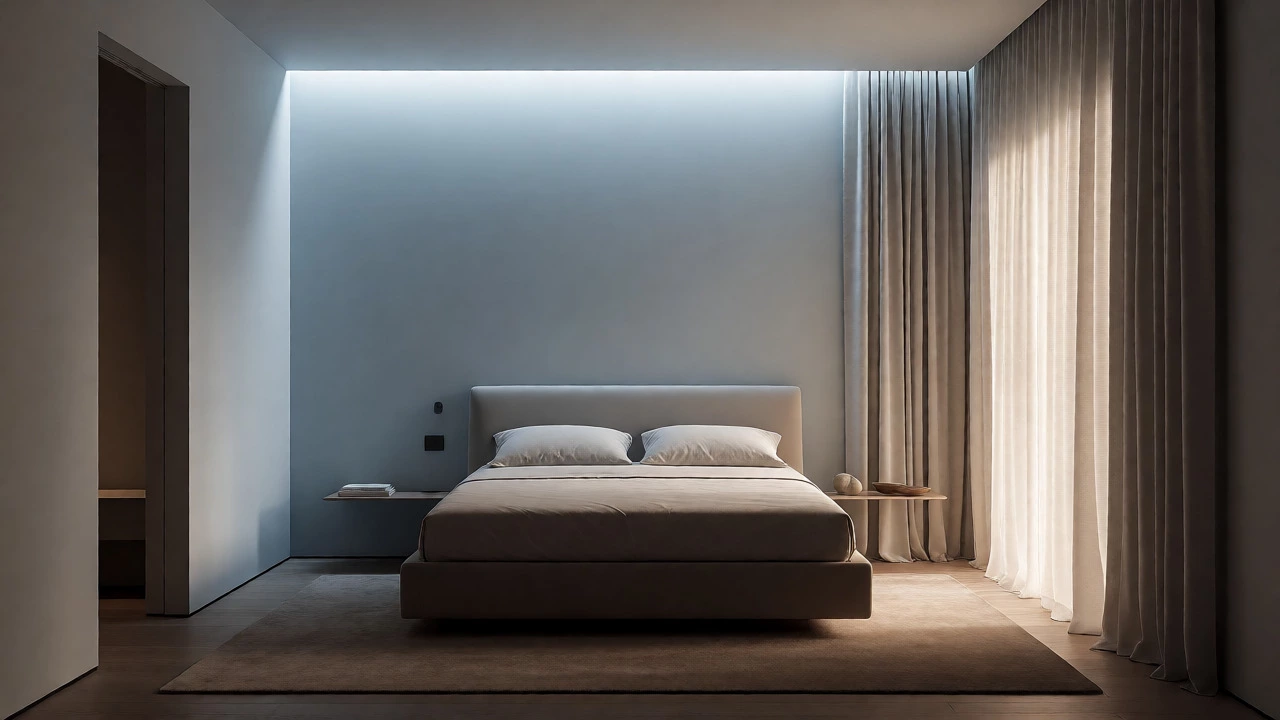
The bed is the anchor. Everything else revolves around it-literally. In most Western cultures, the headboard should sit against the longest solid wall. This isn’t just superstition; it’s psychology. Having a solid backing behind you reduces subconscious anxiety. If your room is small, pushing the bed into a corner might seem like the only option, but it often creates a dead zone in the center. Try pulling it out slightly if possible, even by six inches, to create a breathing gap on both sides.
Consider the clearance. You need at least 30 inches of walking space on each side of the bed if two people sleep there. For a single sleeper, one side can be tighter, but don’t sacrifice accessibility for extra storage unless you absolutely have to. If your door swings into the room, check the arc. Nothing ruins a morning routine faster than tripping over a nightstand every time you enter.
Scale Matters More Than Style
People buy furniture based on photos, not measurements. They see a sleek armchair in a magazine and assume it will fit next to their window. Then they bring it home, and it blocks the radiator or makes the room feel half its size. Before you buy anything, measure twice. Use painter’s tape to mark the footprint of potential furniture on your floor. Walk around those taped lines. Does it feel cramped? Do you bump into them?
Here is a quick reference for standard dimensions to help you plan:
| Furniture Item | Typical Width (inches) | Typical Depth (inches) | Recommended Clearance |
|---|---|---|---|
| Queen Bed | 60 | 80 | 30 inches on sides |
| Nightstand | 18-24 | 15-18 | None (flush to bed) |
| Dresser | 50-70 | 18-20 | 36 inches in front |
| Armchair | 30-35 | 30-35 | 24 inches for legroom |
| Wardrobe/Closet | Varies | 24 | Door swing radius |
If you have a small room, think vertically. A tall dresser holds more clothes than a wide one and takes up less floor space. Floating shelves are another great hack-they keep surfaces clear while displaying books or plants without eating into your walking area.
Zoning for Multi-Use Spaces
Your bedroom probably does more than just sleeping. Maybe you change clothes, do yoga, or work from home. Trying to cram all these activities into one open box leads to chaos. Zoning solves this. You don’t need walls to create zones; you can use rugs, lighting, or furniture orientation.
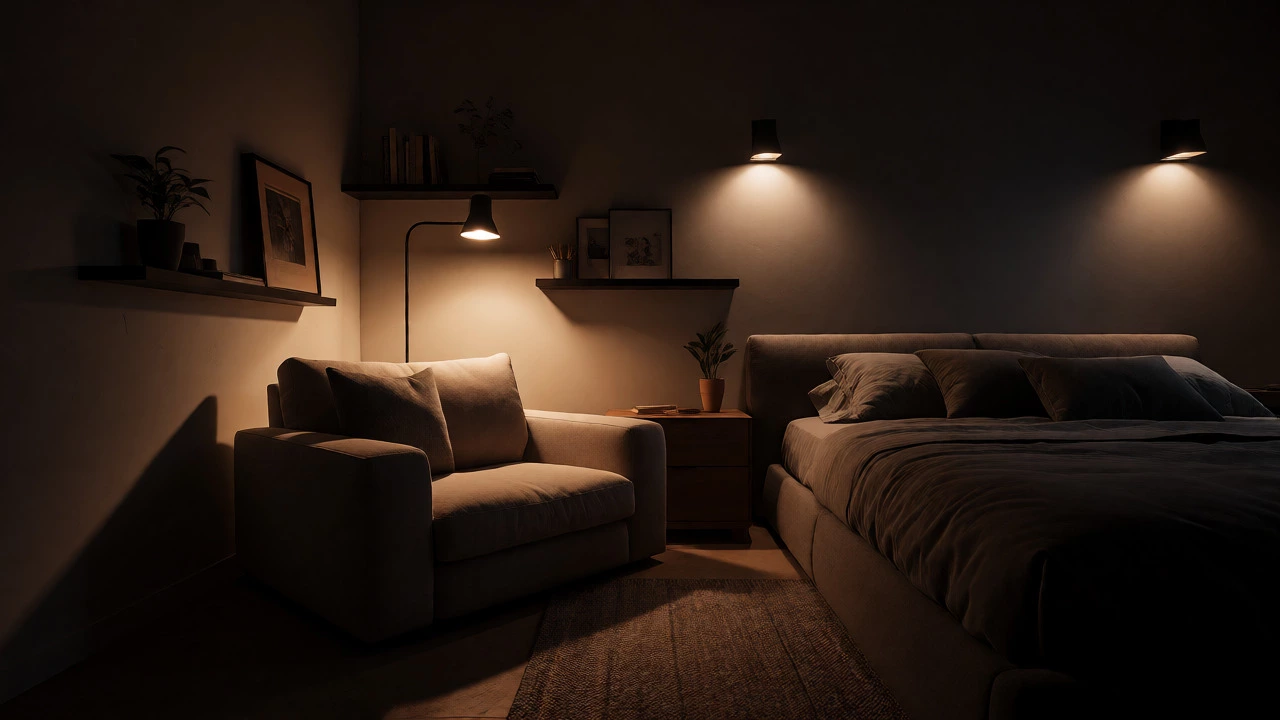
For example, place a small desk perpendicular to the bed rather than parallel. This visually separates the "work" area from the "rest" area. Add a rug under the bed to define the sleeping zone. If you have a reading chair, put it in a corner with a dedicated floor lamp. When you turn off the main overhead light and switch on the lamp, your brain knows it’s time to wind down. This separation helps mentally too-you stop associating your bed with email stress.
Lighting Is Not Just About Brightness
Most bedrooms rely on a single ceiling fixture. That’s fine for cleaning, but terrible for relaxing. Harsh, central lighting casts unflattering shadows and feels clinical. To arrange a bedroom beautifully, you need layered lighting. Think of three types: ambient, task, and accent.
Ambient lighting comes from dimmable overhead fixtures or soft sconces. Task lighting is specific: a bright lamp for reading, a focused light for applying makeup. Accent lighting highlights features, like a picture light above art or LED strips inside a wardrobe. Install dimmer switches if you haven’t already. Being able to lower the lights from 100% to 20% changes the entire mood of the room instantly. Warm bulbs (2700K-3000K) mimic sunset and signal your body to produce melatonin. Cool white bulbs (4000K+) are better for early morning wake-ups or detailed tasks.
Textiles and Texture Layers
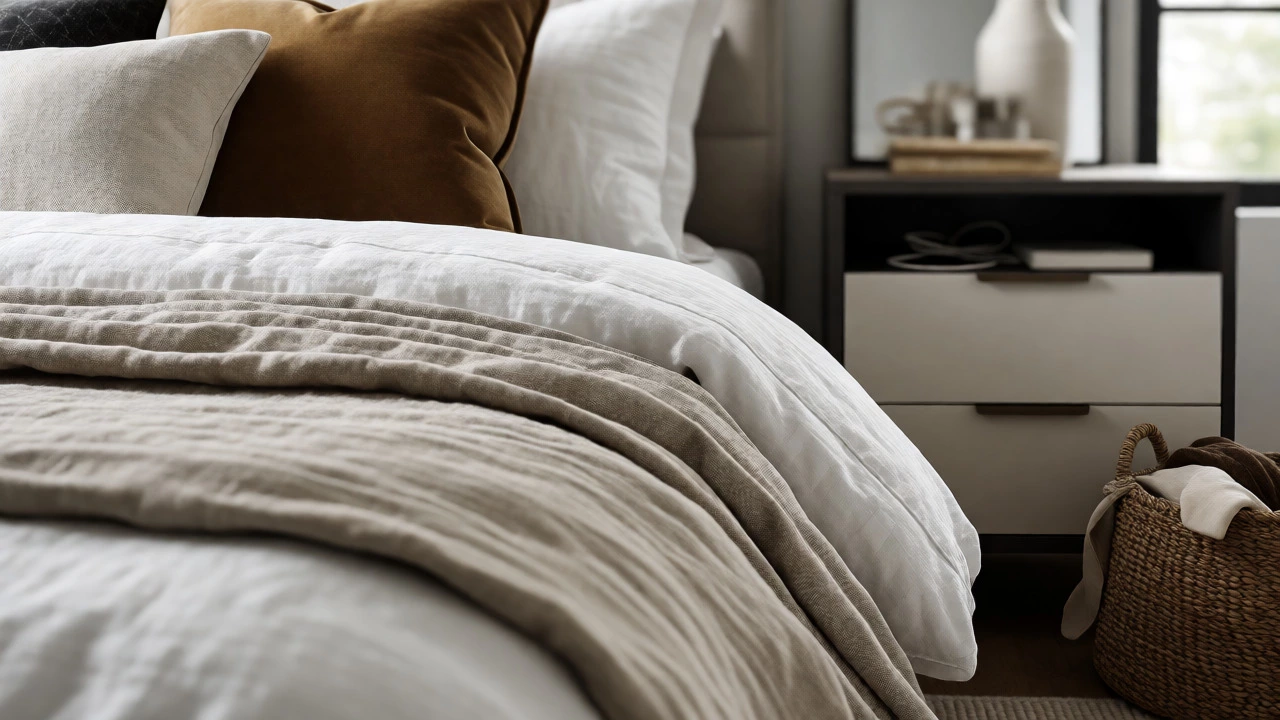
Once the layout is set, decoration begins. But don’t start with paint colors. Start with textiles. Bedding is the largest visual element in the room. A messy bed makes a whole room look chaotic, no matter how nice the curtains are. Invest in good sheets and a duvet cover that matches your style. Layering adds depth. A simple white duvet looks flat. Add a folded throw blanket at the foot of the bed, maybe two pillows in different sizes and fabrics (linen, velvet, cotton). This creates visual interest without clutter.
Rugs are crucial for warmth and sound absorption. Hardwood floors echo, which makes a bedroom feel cold. A large area rug under the bed, extending at least 18 inches beyond the sides, anchors the space. It also gives your feet something soft to touch when you step out of bed in the morning. Curtains should hang high and wide. Mount the rod close to the ceiling, not just above the window frame. This draws the eye upward and makes the room feel taller. Let the fabric pool slightly on the floor for a luxurious look, or hem it just above the floor for a cleaner, modern vibe.
Storage Solutions That Hide Clutter
Clutter kills beauty. You can have the most stylish furniture, but if there are piles of laundry on the chair, the room fails. Hidden storage is your best friend. Under-bed storage boxes are perfect for off-season clothes or shoes. Ottomans with lift-top lids store blankets. Nightstands with drawers keep phones, chargers, and books out of sight.
Open shelving works only if you curate it strictly. If you put random papers or cables on open shelves, it looks messy immediately. Stick to books, framed photos, or decorative objects. Use baskets or bins to hide ugly things like cords or toiletries. Label them if necessary. The goal is visual calm. If you see an object, ask yourself: "Does this belong here?" If the answer is no, move it. Every item in your bedroom should serve a purpose or bring genuine joy. Otherwise, it’s just noise.
Personal Touches Without Overcrowding
Finally, personalize the space. Art, plants, and mirrors add personality. Mirrors reflect light and make small rooms feel bigger. Place one opposite a window to bounce natural light deeper into the room. Plants improve air quality and add life. Snake plants and pothos are hardy and thrive in low-light conditions, making them ideal for bedrooms.
Art doesn’t have to be expensive. A gallery wall of family photos in matching frames looks cohesive. Or, go big with one statement piece above the bed. Avoid hanging art too high. The center of the artwork should be at eye level, roughly 57-60 inches from the floor. If it’s above furniture, leave 6-8 inches of space between the top of the furniture and the bottom of the frame. This connects the pieces visually.
Remember, arranging a bedroom beautifully isn’t about perfection. It’s about creating a sanctuary that supports your rest and daily routines. Start with the bed, check your scales, layer your lighting, and hide the clutter. You’ll notice the difference immediately-not just in how it looks, but in how it feels to live there.
Where should I place my bed in a small room?
In small rooms, placing the bed against the longest wall usually maximizes floor space. Ensure there is enough room to open closet doors and walk comfortably. If the room is very narrow, consider mounting the headboard to the wall to save depth.
Do I need a rug in my bedroom?
While not mandatory, rugs significantly improve comfort and acoustics. They soften footsteps, reduce echo, and provide warmth underfoot. Choose a rug large enough so that at least the front legs of the bed sit on it, or extend 18-24 inches beyond the bed sides.
What color scheme works best for a relaxing bedroom?
Soft, muted tones generally promote relaxation. Blues, greens, lavenders, and warm neutrals like beige or taupe are popular choices. Avoid overly bright or stimulating colors like neon reds or oranges, which can increase heart rate and alertness.
How many lamps do I need in a bedroom?
Aim for at least three light sources: overhead ambient lighting, bedside task lamps for reading, and perhaps an accent light or floor lamp for corners. Dimmers on the overhead light allow you to adjust brightness for different times of day.
Should curtains match the bedding?
They don’t need to match exactly. Coordinating tones or textures works well. For example, if your bedding has blue patterns, choose curtains in a solid neutral shade with a hint of blue. Matching too perfectly can look dated and staged.