Space-to-Storage Calculator
Calculate Your Storage Potential
Your Storage Solutions
If you live in an older home, a converted loft, or a property built without built-in closets, you know the struggle. Clothes pile up on chairs. Shoes crowd the hallway. Linens disappear into cardboard boxes under the bed. And yet, you still need to store things-every day. The good news? You don’t need closets to have smart, functional storage. Many homes built before 1970 in London, for example, never had walk-in closets. People lived just fine. They used clever, space-conscious solutions that still work today.
Use the walls-vertically
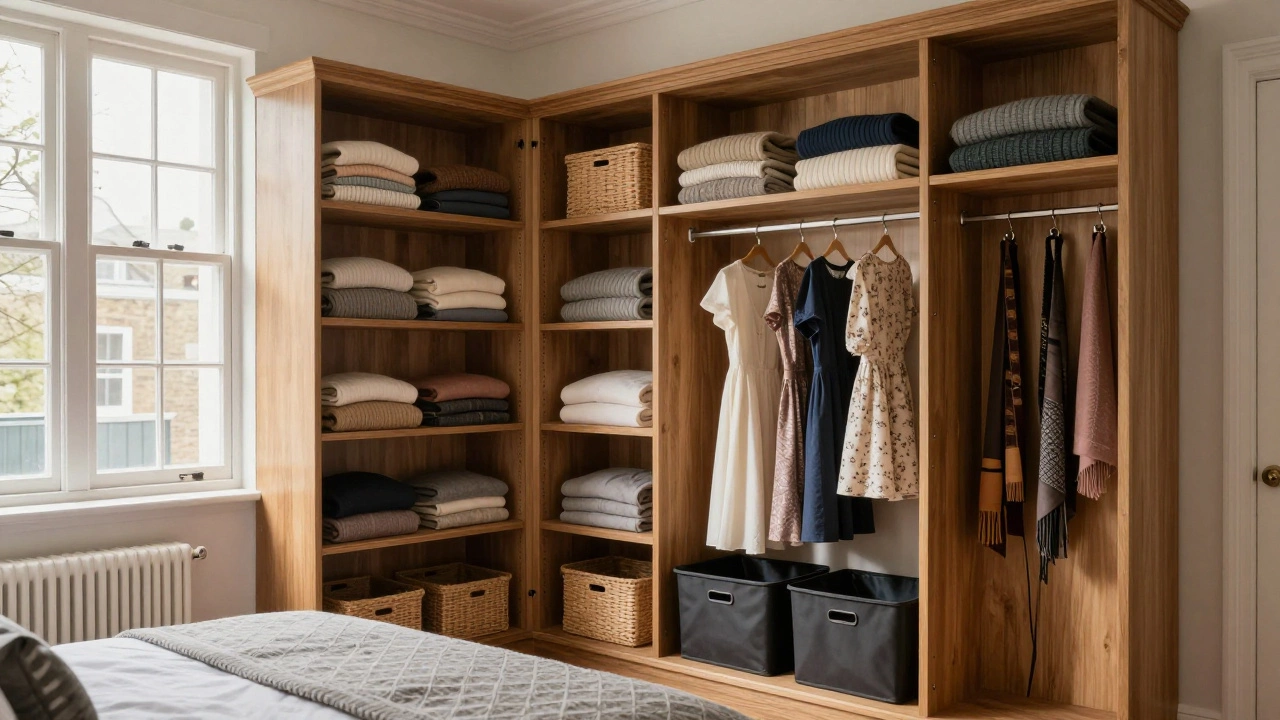
Your walls are your best friend when you have no closets. Most people only use the bottom 3 feet of wall space. The rest? Wasted. Start by installing tall, floor-to-ceiling shelving units. You don’t need fancy custom cabinetry. Look for simple, open shelving systems like those from IKEA’s KUNGSBACKA or BILLY lines. They’re affordable, modular, and come in white, oak, or black to match any style.
Mount them flush against the wall. Use the top shelves for seasonal items-winter coats, holiday decor, extra bedding. Middle shelves? Folded clothes, bins for socks and underwear, or labeled baskets for accessories. Bottom shelves can hold shoes, bags, or cleaning supplies. Add a pull-down rod at waist height if you want to hang a few dresses or jackets. It’s like a mini closet, but without the doors.
Don’t forget the space behind doors. Over-the-door hooks or organizers work wonders in hallways, bathrooms, or even bedrooms. You can hang robes, belts, scarves, or even small baskets for toiletries. A single door can add 10-15 cubic feet of storage without taking up floor space.
Under-bed storage is non-negotiable
If your bed is raised even slightly, you have a hidden storage zone. Most beds sit 8-12 inches off the ground. That’s enough room for under-bed drawers or rolling bins. Look for low-profile, wheeled containers with handles-these slide easily and don’t require lifting. You can fit 4-6 of them under a queen bed, storing off-season clothes, extra linens, or even shoes.
Some beds come with built-in drawers. If you’re replacing your bed, consider one with storage underneath. Even a simple platform bed with slats allows airflow and gives you room to slide in storage bins. Avoid bulky, solid bases. They block access. A little clearance is key.
Install floating shelves in every room
Forget the idea that shelves are just for books or decor. They’re storage. In the living room, use them for folded blankets, board games, or DVD cases. In the kitchen, store mugs, spices, or small appliances. In the entryway, keep gloves, hats, and mail sorted by category.
Use shallow shelves (8-10 inches deep) to avoid clutter. Deep shelves invite hoarding. Mount them in rows-three or four levels high-and label each with chalkboard paint or adhesive tags. This turns storage into a system, not a mess. You’ll know exactly where everything is.
Convert unused corners and niches
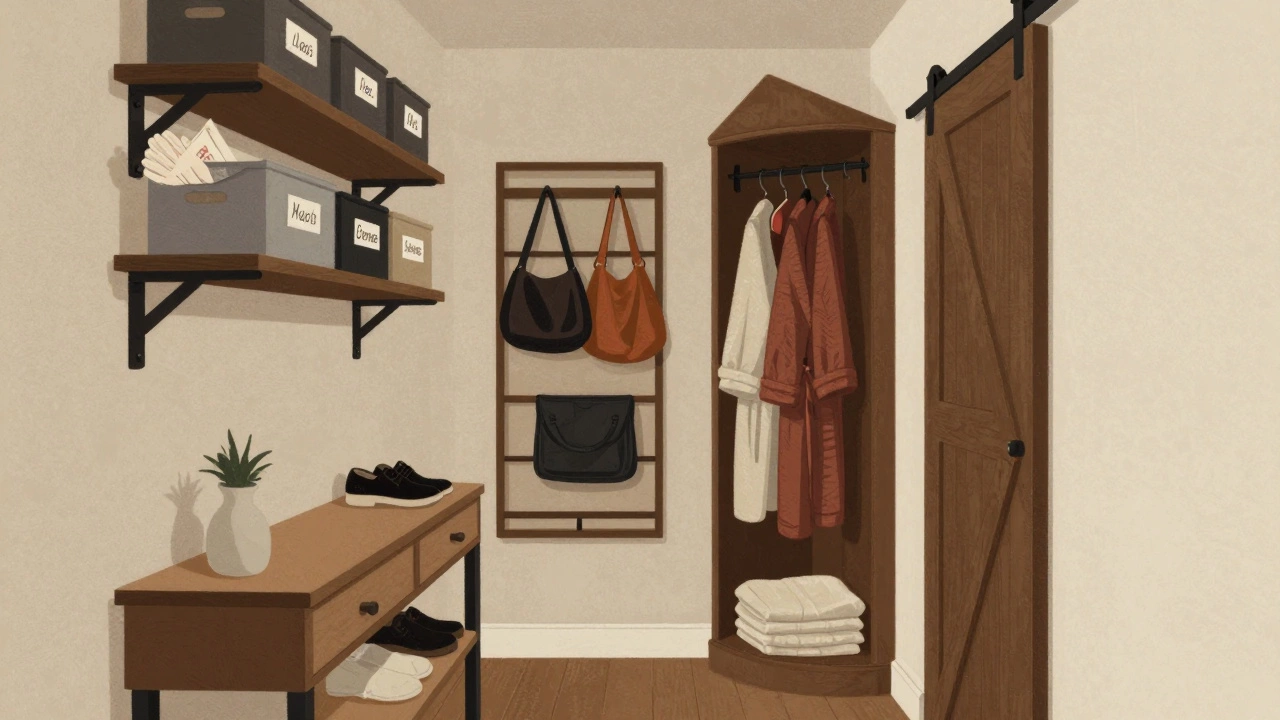
Every house has dead zones. That awkward corner by the stairs? The space above the toilet? The nook beside the window? These aren’t wasted space-they’re storage opportunities.
In a corner, install a triangular shelf unit or a corner cabinet with a swinging door. In a niche above the toilet, add a waterproof cabinet for towels and toiletries. Beside a window, build a bench with hidden storage underneath. You can even turn a small alcove into a narrow wardrobe by installing a rod and a curtain.
One homeowner in Peckham turned a 2-foot-wide space between two walls into a full-height linen closet. She used a sliding barn door and added three adjustable shelves. It holds 12 sets of sheets and four towels. No closet? No problem.
Use multi-functional furniture
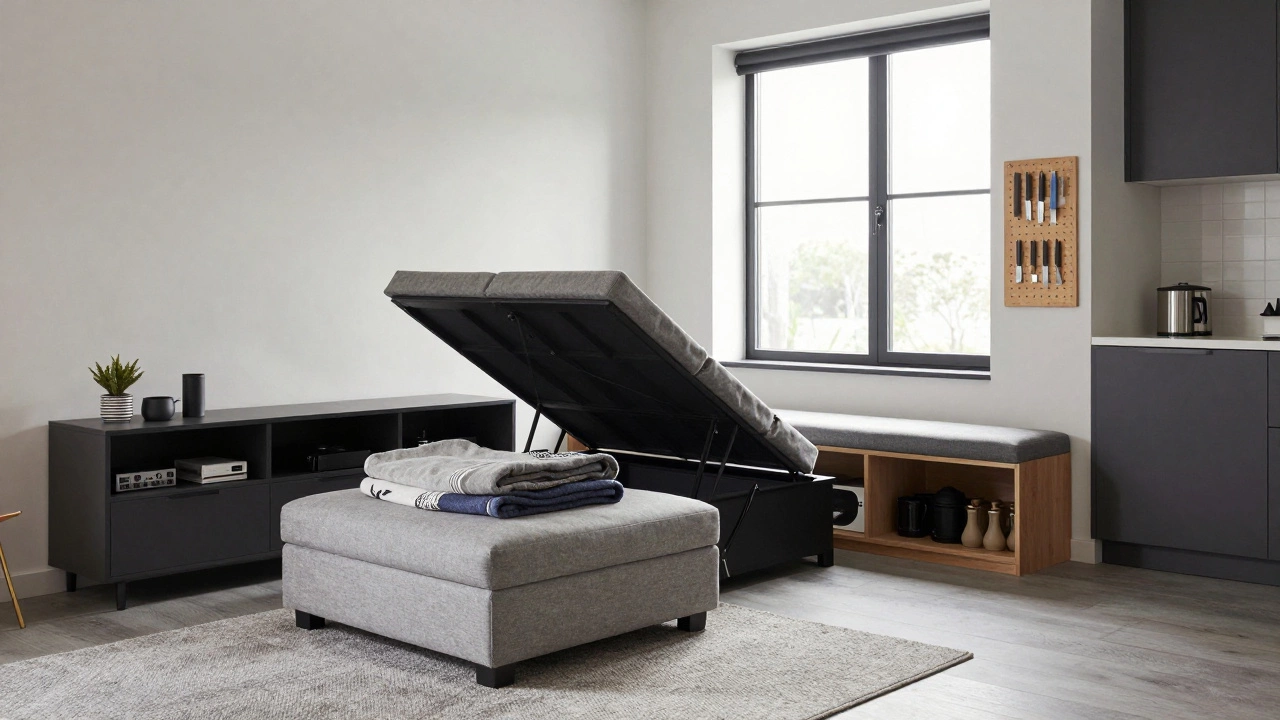
Every piece of furniture should earn its place. A coffee table that lifts to reveal storage? Yes. A bench with a hinged lid for blankets? Absolutely. A bed frame with drawers? Essential. A media console with hidden compartments? Smart.
Look for furniture designed for small spaces. Ottoman stools with lift-top lids store blankets or toys. Side tables with pull-out drawers hold chargers, remote controls, or stationery. Even a dining table with extendable leaves can have hidden shelves underneath for serving platters or table linens.
Don’t buy furniture just because it looks nice. Buy it because it works. A sofa with built-in storage under the seat can hold seasonal clothes, tools, or kids’ toys. It’s not just storage-it’s a lifestyle upgrade.
Think beyond the bedroom
Closets aren’t just for clothes. They’re for storage. So if you don’t have one, you need to replace the function elsewhere.
In the kitchen, use wall-mounted racks for pots, pans, and utensils. Magnetic strips hold knives. A pegboard behind the stove stores ladles and measuring cups. Install pull-out drawers inside cabinets for spices and canned goods. They’re easier to reach than stacking jars on high shelves.
In the bathroom, hang towel racks on the back of the door. Add a shelf above the toilet for toiletries. Use over-the-shower caddies for shampoo and conditioner. Even a simple tension rod in the shower corner can hold washcloths.
In the entryway, install a narrow console table with drawers. Put hooks above it for coats and bags. Add a shallow bin under the table for shoes. No closet? You still need a place to drop your keys and leave your boots.
Label everything
Storage only works if you can find things. Unlabeled bins are just mystery boxes. Use clear plastic bins with labels. Or use woven baskets with tags. Write on them with chalk, a label maker, or even masking tape and a marker.
Group items by use: "Work Clothes," "Winter Gear," "Laundry Supplies." Don’t just label them "Misc." That’s how clutter hides. A system with clear categories means you won’t buy duplicates. You’ll know what you have-and what you need.
Declutter first
Storage won’t fix a clutter problem. It’ll just hide it. Before you buy bins, shelves, or cabinets, go through everything. Ask: When was the last time I used this? Does it fit my life now? Does it bring me joy?
One woman in Camden cleared out 14 boxes of clothes she hadn’t worn in 7 years. She donated them. Suddenly, her storage solutions didn’t feel cramped-they felt perfect. You can’t store what you don’t need. Less stuff = less stress.
Start small, think big
You don’t need to overhaul your whole house in one weekend. Pick one room. One wall. One corner. Add one shelf. One bin. One hook. See how it changes the flow. Then move to the next.
Many people in London live in Victorian terraces with no closets. They didn’t wait for renovations. They started with a single over-the-door organizer. Then a bed with drawers. Then floating shelves in the hallway. Now, their homes feel organized. Not because they had closets-but because they made smart choices.
Storage isn’t about having more space. It’s about using what you have better. And that’s something anyone can do-no renovation required.