Refrigerator Overhang Calculator
Clearance Required: 1 inch minimum on sides and top for ventilation
Door Swing: Ensure 90-180 degree door clearance without obstruction
Recommendations
When you’re redesigning your kitchen, the fridge might seem like just another appliance-but how far it sticks out from your cabinets can make or break the whole look and function of the space. Too far out, and you’ll bump into it every time you walk by. Too far in, and the door won’t swing open properly, or worse-you’ll lose valuable counter space. So how far should a refrigerator stick out from cabinets? The short answer: refrigerator doors should align with or slightly extend beyond the front of your cabinets, usually by 1 to 2 inches. But there’s more to it than just a number.
Standard Cabinet Depth vs. Refrigerator Depth
Most kitchen cabinets are built to a standard depth of 24 inches. That’s the measurement from the wall to the front edge of the cabinet door. Refrigerators, on the other hand, aren’t that simple. A standard built-in fridge is designed to fit flush with cabinets and usually measures around 24 inches deep. But most standalone, full-size refrigerators you buy at a big-box store? They’re deeper-typically 30 to 36 inches, including the handles.That means if you install a regular fridge in a kitchen with 24-inch cabinets, it’s going to stick out by 6 to 12 inches. That’s not just awkward-it’s a safety hazard. Imagine turning around with a plate in your hands and smacking into the fridge. Or trying to open a cabinet next to it and having the fridge door block your path. That’s why people who care about clean lines and smooth workflow choose either a built-in fridge or adjust their cabinetry to match.
What’s the Ideal Overhang?
The sweet spot for most kitchens is a 1 to 2 inch overhang. That’s enough to make the fridge door easy to grab without being so far out that it looks like an afterthought. Why not flush? Because most fridge doors have handles that stick out 1 to 1.5 inches on their own. If you make the fridge perfectly flush with the cabinet, those handles will still protrude, making the front look uneven. A 1-inch overhang gives you room for the handle and still keeps the fridge from looking like it’s sticking out like a sore thumb.Some high-end kitchens go even further-they install fridge panels that match the cabinetry, so the fridge disappears into the wall. That’s called a panel-ready fridge. It’s expensive, but it creates a seamless look. In those cases, the fridge is built into the cabinetry and sits exactly at the same plane. But for most homeowners, the 1 to 2 inch rule is the practical standard.
Clearance Matters More Than You Think
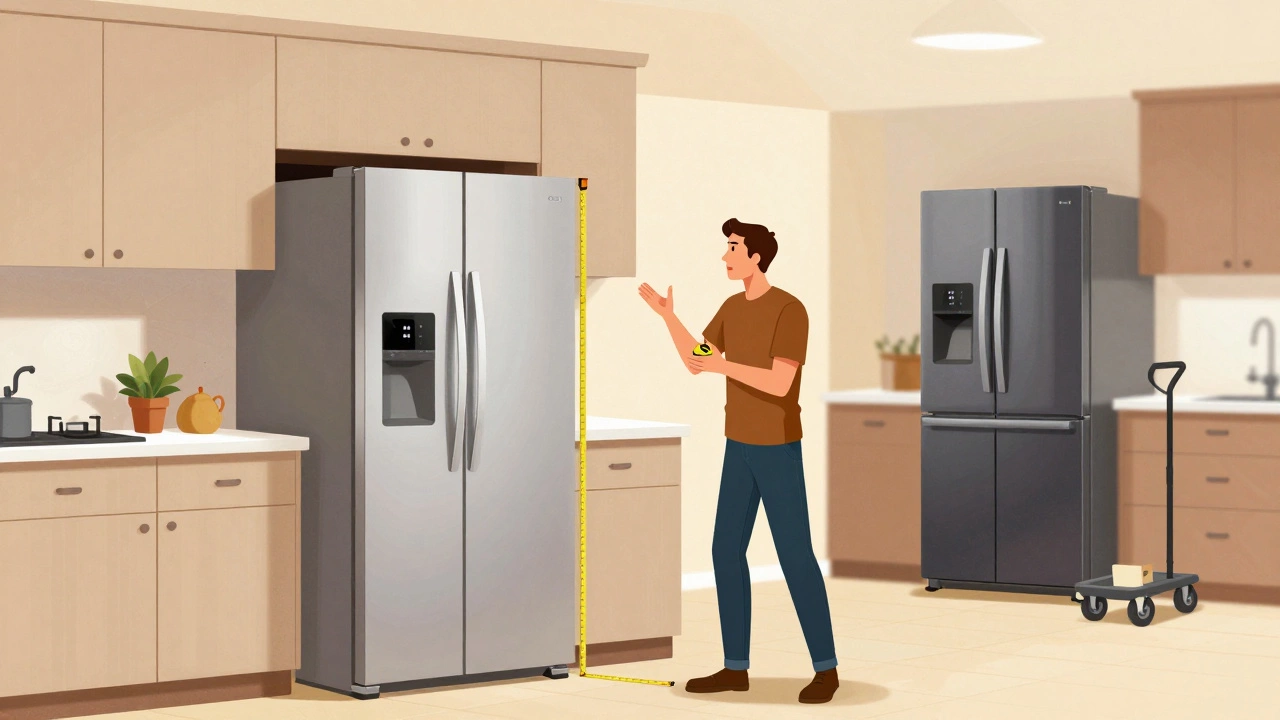
It’s not just about how far the fridge sticks out-it’s about how much space you need around it to work. Every fridge needs breathing room. Manufacturers usually recommend at least 1 inch of clearance on the sides and top for airflow. If you squeeze it too tight against cabinets or walls, the compressor has to work harder. That means higher electricity bills and a shorter lifespan.And don’t forget the door swing. A standard fridge door opens 90 degrees, sometimes even 180. If your fridge is next to a wall or another cabinet, you need to make sure the door can open fully without hitting anything. Measure the width of the fridge door when it’s open. Add a few extra inches for safety. If you’re planning a kitchen island or a breakfast bar nearby, leave at least 36 inches of walking space between the fridge and the counter. That’s the minimum for comfortable movement.
What About Built-In Fridges?
Built-in refrigerators are made to be installed into cabinetry. They’re usually 24 inches deep, same as the cabinets. They often come with custom panels that match your kitchen doors. These fridges are designed to sit flush, with the handle aligned or slightly recessed. But even built-ins need clearance. You still need 1 inch on the sides and top. And if you’re installing one, make sure the cabinet opening is exactly the size the manufacturer specifies. A half-inch too small, and you won’t be able to slide it in.Some people think built-ins are only for luxury homes. Not true. More affordable models are now available, and they’re becoming common in mid-range renovations. If you’re redoing your kitchen and want a clean, modern look, a built-in fridge is worth considering-even if you’re not going for a $20,000 appliance.
What If Your Fridge Sticks Out Too Far?
You already bought the fridge. The cabinets are installed. Now you’re stuck with a 10-inch overhang. What can you do?- Use the overhang as extra counter space. Add a narrow shelf or a pull-out cutting board that extends from the cabinet to the fridge edge.
- Install a decorative trim or molding along the front edge of the cabinet to visually tie the fridge into the cabinetry.
- Move the fridge to a different wall where it won’t interfere with traffic flow.
- Replace it with a slimline or counter-depth model. Many brands now make refrigerators that are 24 to 27 inches deep-close enough to standard cabinets that the overhang is minimal.
Counter-depth fridges are the best solution if you want to avoid the overhang problem altogether. They’re designed to sit flush with standard cabinets. You’ll lose a little storage space inside-maybe 10 to 15%-but you gain a much cleaner look and better flow in the kitchen. For families who cook often and value aesthetics, that trade-off is worth it.
Real-World Example: London Kitchen Renovation
In a recent renovation in Hackney, a couple replaced their old 36-inch-deep fridge with a 27-inch counter-depth model. Their cabinets were 24 inches deep. The new fridge stuck out just 3 inches. They added a 3-inch-wide wooden trim that matched their cabinets, creating a subtle visual bridge between the two. The result? A kitchen that looked custom-made, not assembled from off-the-shelf parts. They also gained 6 inches of usable floor space in front of the fridge-enough to open the door fully without bumping into the island.They didn’t spend more than they had to. The counter-depth fridge cost about £1,200-less than half the price of a full built-in. The trim cost £80. The improvement was immediate. Guests noticed the difference. They didn’t have to rearrange their entire kitchen layout. Just a smarter fridge and a little detail work made the space feel bigger and more intentional.
Common Mistakes to Avoid
- Assuming all fridges are the same depth. Always check the specs before buying.
- Forgetting to measure the door swing. A fridge that can’t open fully is useless.
- Blocking ventilation. Never tuck a fridge into a tight corner without clearance.
- Matching fridge depth to upper cabinets only. Lower cabinets are usually the same depth, but if you have a different setup, measure both.
- Thinking a bigger fridge is always better. Oversized models can ruin your kitchen flow.
One homeowner in Camden installed a 36-inch-wide fridge because they wanted more storage. But it was 34 inches deep. The cabinets were 24 inches. The fridge stuck out 10 inches. They couldn’t open the cabinet next to it without hitting the fridge door. They ended up removing the cabinet and turning that space into open shelving. It looked better, but they lost storage. Lesson: measure twice, buy once.
Final Rule of Thumb
If you’re building or renovating, here’s the simplest way to get it right:- Measure your cabinet depth (usually 24 inches).
- Find a fridge that’s 24 to 27 inches deep (counter-depth).
- Check the handle depth-add 1 inch to your cabinet depth if the handle sticks out.
- Ensure 1 inch of clearance on all sides and top.
- Test the door swing in your layout before finalizing.
Stick to that, and your fridge won’t stick out like a mistake. It’ll look intentional, feel functional, and last longer because it’s not overheating.
Should a refrigerator be flush with cabinets?
A refrigerator doesn’t need to be perfectly flush, but it should be close. For a clean look, aim for a 1 to 2 inch overhang. Built-in fridges are designed to be flush, but most standard models will stick out slightly. The key is to make sure the overhang is intentional and doesn’t interfere with cabinet doors or traffic flow.
How much space should be left around a refrigerator?
Leave at least 1 inch of clearance on the sides and top for airflow. Some manufacturers recommend up to 2 inches on the back for ventilation. Never block the vents. If the fridge is too tight, it will run hotter, use more electricity, and wear out faster.
Can I put a fridge next to a wall?
Yes, but only if there’s enough clearance. Check the manufacturer’s manual. Most fridges need at least 1 inch on the side and 2 inches at the back. If you’re placing it next to a wall, make sure the door can still open fully. A fridge stuck in a corner with no swing room is frustrating to use.
What’s the difference between standard and counter-depth fridges?
Standard fridges are 30 to 36 inches deep and stick out past 24-inch cabinets. Counter-depth fridges are 24 to 27 inches deep, so they sit nearly flush with cabinets. They offer slightly less storage but improve kitchen flow and aesthetics. They’re ideal for modern or renovated kitchens where design matters.
Do I need to buy a built-in fridge for a seamless look?
No. Built-in fridges are expensive and require custom cabinetry. You can get a similar look with a counter-depth fridge and matching trim or panels. Many brands offer fridge panels you can attach yourself. It’s a cheaper, DIY-friendly way to make your fridge blend in without replacing the whole appliance.
Next Steps for Your Kitchen
If you’re planning a kitchen remodel, start by measuring your cabinets. Write down the depth. Then visit a showroom and test different fridge models. Open the doors. Walk around them. Imagine cooking with them in place. Don’t just go by the specs-feel the space. A fridge that looks good on paper might feel awkward in real life.Don’t let the fridge dictate your kitchen layout. Design your kitchen first, then pick a fridge that fits-not the other way around. A well-placed fridge makes the kitchen feel organized. A poorly placed one makes everything feel cramped and messy.