Furniture Matchmaker
Confused about which piece of furniture fits your space? Answer the questions below to find your perfect match.
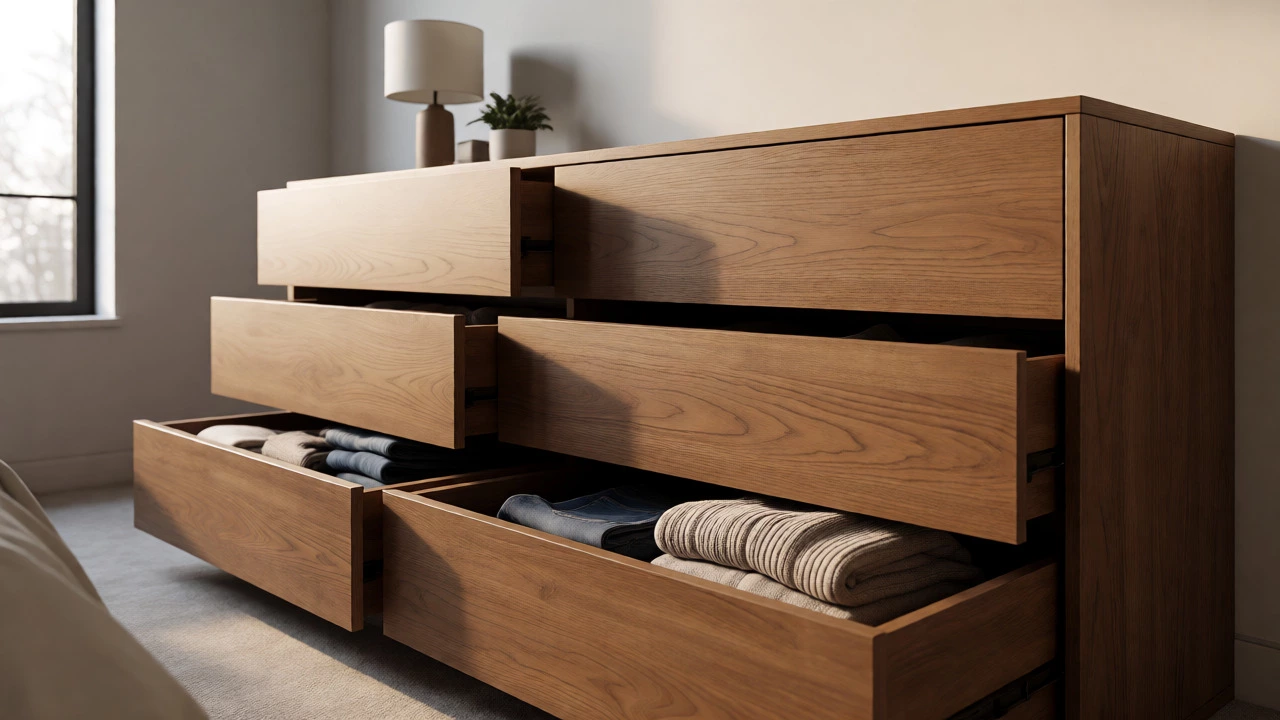
The Dresser (Chest of Drawers)
Why this is right for you:
- Primary Function: High-volume storage for folded clothes, socks, and linens.
- Design: Wide (30-60+ inches) with deep drawers.
- Mirror: Usually separate or wall-mounted; not integrated.
- Best For: Bedrooms with limited closet space where organization is key.
Dimensions to check:
Width: 30"–60"+ | Height: Low to Medium | Depth: Deep drawers
The Dressing Table (Vanity)
Why this is right for you:
- Primary Function: Dedicated grooming station for makeup, skincare, and hair.
- Design: Narrower (24-48 inches) with shallow, compartmentalized drawers.
- Mirror: Integrated, large, and often lighted.
- Best For: Daily beauty routines requiring seated comfort and good lighting.
Dimensions to check:
Width: 24"–48" | Height: ~30" | Features: LED Lights, Shallow Drawers
You walk into a furniture store or scroll through an online catalog, and you see two pieces of furniture that look suspiciously similar. Both have drawers. Both sit against a wall. Both are designed to hold your clothes. So why is one called a dresser and the other a dressing table? And does it actually matter which one you buy?
It matters more than you think. While these terms are often used interchangeably in casual conversation, they refer to distinct pieces of furniture with different functions, designs, and historical roots. Confusing them can lead to buying the wrong item for your space-like trying to apply makeup on a surface meant for stacking socks, or storing heavy winter coats in a delicate vanity built for jewelry.
The Core Difference: Storage vs. Grooming
At its simplest, the difference comes down to primary function. A dresser is a storage unit. Its job is to hold clothing, linens, and miscellaneous items in deep, wide drawers. It’s the workhorse of the bedroom closet system. A dressing table, also known as a vanity, is a grooming station. Its job is to provide a flat surface and a mirror for personal care tasks like applying makeup, shaving, or styling hair.
Think of it this way: You stand in front of a dresser to take things out or put them away. You sit at a dressing table to look at yourself while you get ready. The physical design reflects this purpose entirely.
Anatomy of a Dresser
A dresser is defined by volume and accessibility. Typically ranging from 30 to 60 inches in width, dressers feature multiple rows of drawers-usually between four and eight-that vary in depth. The top row might be shallow for socks and underwear, while the bottom rows are deep enough to accommodate folded jeans or sweaters.
Dressers rarely come with attached mirrors. If a mirror is present, it’s usually a separate piece placed on top or mounted on the wall above. This is because the top surface of a dresser is often used as display space for lamps, photos, or plants, rather than a workspace. The construction is sturdy, designed to support weight without wobbling, as people frequently lean on them while opening stiff drawers.
In the UK, where I live, you’ll often hear the term "chest of drawers" used instead of dresser. In American English, "dresser" is the standard term for this low, wide storage unit. However, in some older British contexts, a "dresser" referred to a kitchen sideboard with open shelves for displaying dishes. Context is key, but in modern bedroom furniture shopping, if it’s all drawers and no mirror, it’s likely what Americans call a dresser and Brits call a chest of drawers.
The Structure of a Dressing Table
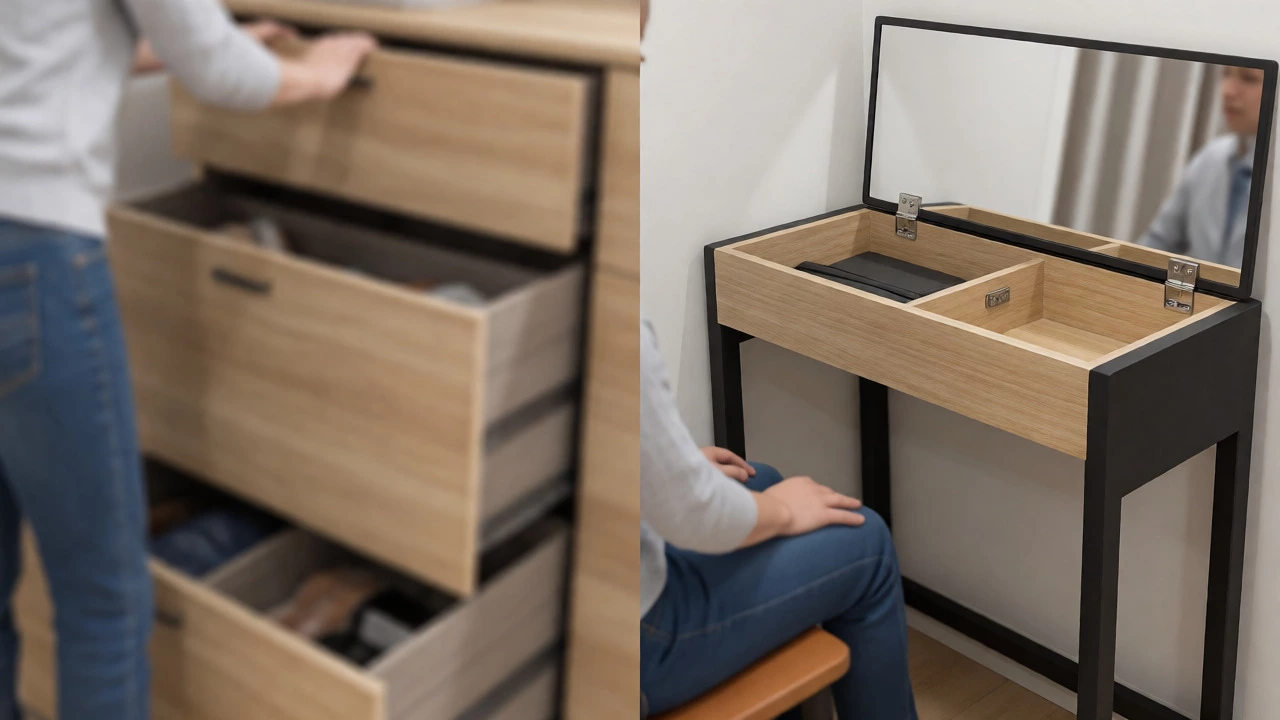
A dressing table looks completely different. It’s typically narrower, ranging from 24 to 48 inches wide, and features a large, integrated mirror. The mirror is non-negotiable; it’s the defining feature. Without it, you’re just looking at a small desk.
The drawer configuration on a dressing table is specialized. Instead of deep bins for clothes, you’ll find shallower drawers divided into compartments. These are sized for cosmetics, brushes, perfumes, and jewelry. Some models include pull-out trays or velvet-lined sections to keep rings and earrings organized. The legs are often taller and thinner than those of a dresser, creating legroom so you can tuck a stool underneath comfortably.
Lighting is another critical component. Many modern dressing tables come with built-in LED lights around the mirror to simulate natural daylight, which is essential for accurate makeup application. A dresser doesn’t need this kind of task lighting unless you happen to use it as a makeshift vanity.
Historical Context: Why Do We Have Two Names?
The distinction isn’t just modern marketing. Historically, these pieces served different social classes and routines. In the 18th and 19th centuries, wealthy households had dedicated "dressing rooms." Here, women (and increasingly men) would sit at ornate vanities equipped with candle holders, small cabinets, and polished glass mirrors. These were luxury items, often made of mahogany or walnut, and were considered private spaces for personal preparation.
Meanwhile, chests of drawers were utilitarian. They held linens and clothes for the household staff or the master bedroom. Over time, as homes got smaller and dedicated dressing rooms vanished, the functions merged slightly. People started using dressers for quick changes and kept vanities for detailed grooming. But the core design principles remained: one for hiding things away, one for showing yourself off.

Choosing the Right Piece for Your Space
So, which one do you actually need? That depends on your daily routine and your room layout.
| Feature | Dresser | Dressing Table |
|---|---|---|
| Primary Function | Storage of clothing and linens | Grooming, makeup, and skincare |
| Mirror | Rarely included; optional add-on | Integrated and central to design |
| Drawer Depth | Deep (for bulky items) | Shallow (for small accessories) |
| Seating | None required | Requires a stool or chair |
| Typical Width | Wide (30-60+ inches) | Narrow (24-48 inches) |
| Best For | Maximizing storage capacity | Daily beauty routines |
If you struggle with clutter and have limited closet space, prioritize the dresser. You need square footage for your clothes. You can always hang a full-length mirror on the back of your door or mount one on the wall above the dresser for a hybrid solution. This saves floor space and keeps the focus on storage.
Conversely, if you spend significant time doing your makeup, skincare, or hair styling, a dedicated dressing table is worth the investment. Trying to apply eyeliner while balancing on one foot in front of a high dresser is awkward and inefficient. A proper vanity provides stability, better lighting, and organized storage for your tools, making your morning routine smoother.
Can They Be Combined?
Yes, and many manufacturers now offer hybrid units. These are essentially dressers with a pull-down or flip-up mirror hidden in the top section. When closed, it looks like a standard dresser. When opened, it reveals a mirror and sometimes a small shelf for toiletries.
These hybrids are excellent for small apartments or studio flats where you can’t afford the footprint of both pieces. However, they often compromise on storage depth. The mechanism for the mirror takes up vertical space, reducing the size of the top drawers. If you have a lot of bulky items to store, test the drawer depth before buying. You don’t want to find out your sweaters won’t fit after assembly.
Placement and Ergonomics
Where you place these pieces affects how well they work. A dresser should be near your bed or closet for easy access during changing. Keep about 30 inches of clearance in front of it so you can fully extend the drawers without hitting the bed frame or rug.
A dressing table needs good light. Position it near a window if possible, facing the light source. Backlighting creates shadows on your face, making it hard to see details. If natural light isn’t an option, invest in a vanity with bright, color-corrected LEDs. Also, ensure there’s enough knee room. Standard stools are about 18 inches high, so the tabletop should be around 29-30 inches high to maintain comfortable posture.
Material Matters
Dressers take a beating. They’re loaded with heavy clothes, bumped by vacuum cleaners, and leaned on. Look for solid wood, plywood, or high-quality MDF with durable finishes. Cheap particleboard can sag under weight over time, especially in the middle drawers.
Dressing tables are lighter on load but higher on aesthetic demand. Since you’ll be staring at it every day, finish quality matters. Glass tops, lacquered surfaces, or polished metals are common. Just be aware that glass surfaces show fingerprints and dust quickly, requiring more frequent cleaning than a wooden dresser top.
Common Misconceptions
One big myth is that "vanity" and "dressing table" are different things. In the context of bedroom furniture, they are synonyms. "Vanity" is just a fancier word for dressing table. Another misconception is that you need a massive room for a dressing table. Modern minimalist designs are incredibly compact, fitting into corners or even hanging on walls as floating units.
Also, don’t assume a tallboy (a narrow, tall chest of drawers) is a dresser. While it stores clothes, its height makes it poor for sitting-at functionality. It’s strictly for storage, similar to a wardrobe but open-faced.
Frequently Asked Questions
Is a vanity the same as a dressing table?
Yes, in the context of bedroom furniture, a vanity and a dressing table are the same thing. Both refer to a small table with a mirror and drawers used for grooming and applying makeup. The term "vanity" is often considered more stylish or modern, while "dressing table" sounds more traditional, but their function is identical.
Can I use a dresser as a dressing table?
You can, but it’s not ideal. Dressers are usually too high for comfortable seating, and their deep drawers aren’t suited for organizing small cosmetics. To make it work, you’d need to add a separate mirror and perhaps a tray to organize items on top. However, you’ll lack the ergonomic comfort and specific storage features of a dedicated vanity.
What is the difference between a dresser and a chest of drawers?
In American English, a dresser is a wide, low chest of drawers, often used in bedrooms. A chest of drawers can be any height, including tall, narrow units. In British English, the terms are often swapped or used differently, with "chest of drawers" being the common term for what Americans call a dresser. Always check the dimensions rather than relying solely on the name.
Do dressing tables need special lighting?
While not mandatory, special lighting greatly improves usability. Natural light is best, but artificial lighting around the mirror helps eliminate shadows on your face. Many modern dressing tables come with integrated LED strips that mimic daylight, which is crucial for accurate makeup application and skin checks.
Which is better for small bedrooms?
A dresser is generally better for small bedrooms if storage is your priority, as it offers more capacity per square foot. However, a compact wall-mounted dressing table can save floor space if grooming is your main need. Hybrid units that combine both functions are also a smart choice for tight spaces.