New Build Crack Severity & Timeline Checker
Assess Your Crack
Enter details above and click Analyze to see if your crack is normal settling or needs attention.
Expected Cracking Timeline
Drying Phase. Hairline cracks common.
Seasonal Shift. Thermal movement.
Settling Completion. Monitor changes.
Maintenance Mode. Check external factors.
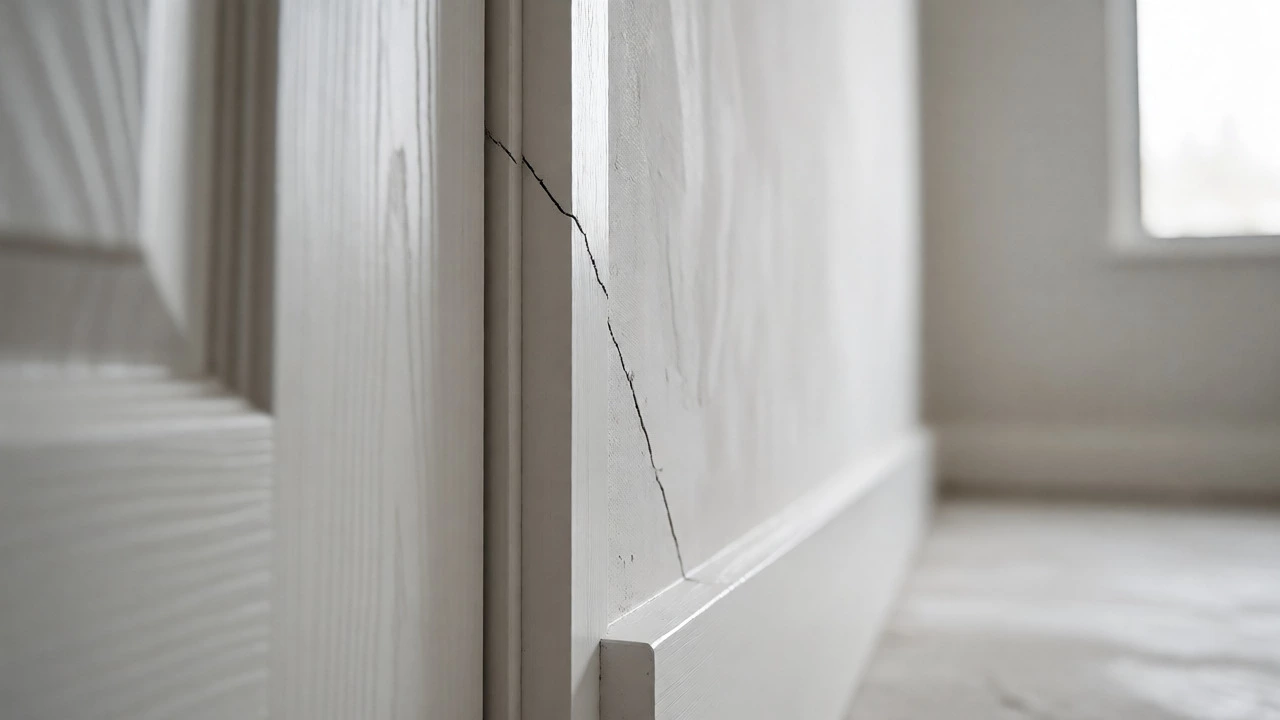
You just handed over a huge chunk of your savings for a brand-new house. The paint is fresh, the carpets are pristine, and everything smells like possibility. Then, three months later, you spot it: a hairline crack running diagonally from the top of your bedroom door frame down to the skirting board. Panic sets in. Did you buy a lemon? Is the foundation sinking? Should you call a lawyer or a builder?
Here is the blunt truth: Yes, new builds get cracks. In fact, it is almost guaranteed that your new home will develop some form of cosmetic cracking within the first two years. It doesn’t mean the structure is failing. It usually means the building is doing exactly what buildings do when they are wet, heavy, and adjusting to their environment. But knowing the difference between "normal settling" and "serious structural issue" can save you thousands in unnecessary repairs and a lot of sleepless nights.
Why Does a Brand-New House Crack at All?
Think of your new house as a giant sponge that has just been wrung out. During construction, massive amounts of water are used. Concrete foundations need water to cure. Plaster needs water to be mixed and applied. Brickwork requires mortar, which is water-based. Even the timber framing absorbs moisture from the air during storage on site.
When you move in, that water starts to leave. As the concrete dries, it shrinks slightly. As the timber dries, it twists and contracts. As the plaster dries, it pulls away from the lath or mesh. This process is called drying out, and it is the primary cause of most early-stage cracking. It is not a defect; it is physics.
Beyond drying, there is settling. No matter how well-engineered the foundation is, soil compresses under weight. A typical UK semi-detached house weighs around 100-150 tonnes. That weight presses into the ground. While engineers design foundations to spread this load, microscopic movements occur. These tiny shifts translate into visible stress lines in the brittle materials inside-plaster, drywall, and brick.
The Timeline: When Will You See Cracks?
Cracking isn’t random. It follows a predictable pattern based on the age of the property. Understanding this timeline helps you decide whether to worry or wait.
- Months 1-6 (The Drying Phase): This is peak cracking time. You will see fine, hairline cracks in plasterboard joints, above window frames, and around doors. These are almost always cosmetic. The house is losing its construction moisture.
- Months 6-12 (The Seasonal Shift): If you moved in during summer, winter brings cold and damp. Timber expands and contracts with temperature changes. You might notice doors sticking or slight gaps appearing in skirting boards. This is thermal movement, not structural failure.
- Years 1-2 (Settling Completion): By the end of year two, most initial settlement should have stabilized. Any major cracks that appear now are worth investigating more closely, but minor ones may still pop up due to seasonal changes.
- Year 2+ (Maintenance Mode): After two winters, the house is largely stable. New cracks at this stage are often due to external factors like tree roots, poor drainage, or extreme weather events rather than inherent construction issues.
Decoding the Crack: What Does the Shape Tell You?
Not all cracks are created equal. The shape, width, and location tell a story about what is happening behind the wall. Here is how to read them without being a surveyor.
| Crack Type | Appearance | Likely Cause | Seriousness |
|---|---|---|---|
| Hairline Vertical | Thin line, straight up/down, less than 1mm wide | Drying shrinkage of plaster or mortar | Cosmetic / Low |
| Diagonal at Corners | Starts at corner of window/door, runs diagonally | Stress concentration at openings | Cosmetic / Low |
| Horizontal | Runs across the wall, often near floor or ceiling | Structural movement or bowing | Moderate / Check |
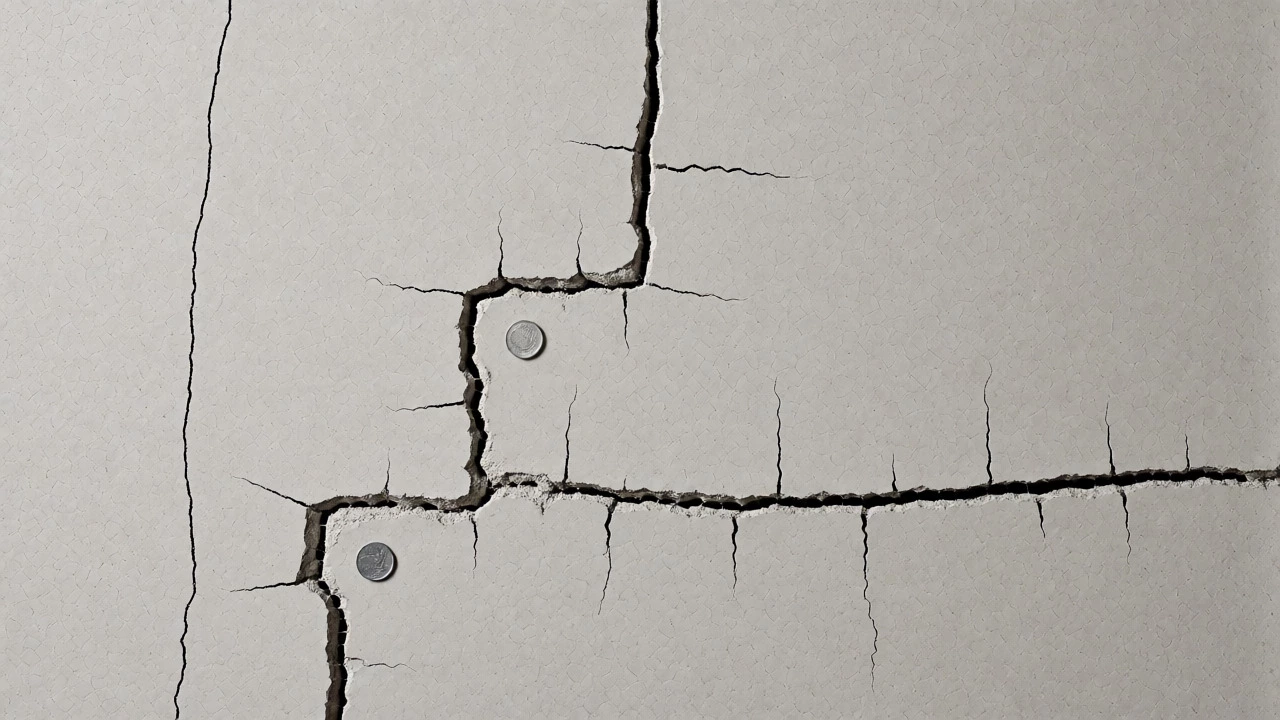
| Stepped | Zig-zag pattern following brick courses | Foundation settlement or lintel failure | Potentially Serious |
| Wide (>3mm) | Can fit a coin in it | Significant movement or poor workmanship | Serious / Investigate |
Vertical and diagonal cracks are the bread and butter of new builds. They happen because walls expand and contract at different rates. Horizontal cracks are trickier. If you see a horizontal crack running through a brick wall, it could indicate lateral pressure, perhaps from a retaining wall pushing against it or soil expansion. Stepped cracks in brickwork often point to differential settlement-one part of the house is sinking faster than another.
Is It Cosmetic or Structural? The 3mm Rule
Builders and surveyors use a simple heuristic to categorize damage. While not absolute, it’s a good starting point for homeowners.
Less than 1mm: Ignore it. Or rather, don’t panic. This is standard shrinkage. It will likely widen slightly over the next few months before stabilizing. Do not rush to fill it immediately if it’s still moving.
1mm to 3mm: This is the grey zone. Usually cosmetic, especially if it’s only in the plaster finish. However, keep an eye on it. Take a photo with a ruler in the frame. Mark the ends with tape. If it grows beyond 3mm, call your warranty provider.
Greater than 3mm: Pay attention. A crack wider than a matchstick head suggests significant movement. If you can feel a step when you run your hand across it (one side higher than the other), that’s displacement. This warrants professional assessment.
Over 15mm: This is severe. It often indicates structural compromise. Immediate inspection by a structural engineer is recommended.
The Role of Materials: Why Plaster Cracks More Than Paint
In modern UK new builds, we mostly use gypsum plaster on plasterboard. This system is fast and smooth but brittle. Unlike traditional lime plaster, which had some flexibility and self-healing properties, gypsum is rigid. When the substrate moves even a millimeter, the gypsum cracks.
Paint, conversely, is elastic. High-quality emulsion paints can stretch up to 10-15% without breaking. This is why painters often recommend waiting until the second year to apply final decorative coats. If you paint over a crack that is still active, the paint might bridge the gap temporarily, hiding the problem. Then, six months later, the paint tears open, revealing the crack again. Patience pays off here. Wait for the movement to stop before decorating.

Warranty Coverage: What Does NHBC Actually Cover?
If you bought a new build in the UK, you likely have an NHBC Warranty. Many homeowners misunderstand what this covers regarding cracks.
The first two years are the "defects liability period." During this time, the builder is responsible for fixing any defects arising from faulty workmanship or materials. Most cosmetic cracks fall under this umbrella. If a crack appears in month 8, your builder should come back and patch it. Note: They will likely patch it once. If it re-cracks because the house is still settling, they might argue it’s normal movement, not a defect.
From year 2 to year 10, the warranty switches to structural cover. This covers serious defects affecting the integrity of the main structure-foundations, load-bearing walls, roof structure. Cosmetic plaster cracks generally aren’t covered in this phase unless they are symptomatic of a larger structural issue. So, while the builder fixes the plaster in year one, you’re on your own for repainting in year three unless the underlying structure failed.
How to Manage Cracks Without Losing Your Mind
Don’t let perfectionism ruin your enjoyment of the new home. Here is a practical strategy for managing the inevitable.
- Document Everything: From day one, take photos of any cracks. Use a coin or ruler for scale. Date-stamp them. This log is crucial if you need to make a warranty claim later.
- Wait Out the First Winter: Try not to repair anything in the first 12 months. Let the house go through a full cycle of heating and cooling. Repairs made too early often fail as the material continues to move.
- Control Humidity: Keep your heating on a low setting continuously during the first winter rather than blasting it on and off. Sudden temperature spikes cause rapid expansion and contraction, worsening cracks. Aim for a steady 18°C.
- Check External Factors: Ensure rainwater goods (gutters and downpipes) are clear. Water pooling near the foundation causes soil swelling and shrinking, which drives movement. Also, check if large trees are close to the house. Roots can extract moisture from clay soils, causing subsidence.
- Repair Strategically: When you do repair, use flexible fillers. Standard multi-purpose filler is too rigid. Look for products labeled "flexible" or "elastic" that can accommodate slight movement without re-cracking.
When to Call a Professional
You don’t need a structural engineer for every spiderweb line. But certain signs demand expert eyes.
- Door and Window Misalignment: If doors suddenly won’t latch or windows jam shut, the frame has shifted. This often correlates with structural movement.
- Separation from Extensions: If your house has a rear extension and you see a widening gap where the old meets the new, this is common but should be monitored. Rapid widening suggests the extension is settling differently.
- Cracks Inside and Outside: If you see a crack in the internal plaster that aligns perfectly with a crack in the external brickwork, the movement is penetrating the whole wall. This is more concerning than an internal-only crack.
- Rapid Growth: If a crack widens significantly in a matter of weeks, don’t wait. Something is actively moving.
Remember, a small amount of character comes with the territory. A completely crack-free new build is rare and often suspiciously expensive or built with excessive reinforcement that hides other issues. Embrace the imperfections. They are proof your house is alive, breathing, and settling into its place in the landscape.
Are cracks in a new build normal?
Yes, absolutely. Most new builds experience some degree of cracking within the first two years due to the drying out of construction materials (concrete, plaster, timber) and natural settlement into the ground. Hairline cracks are considered standard and not indicative of poor quality.
How wide can a crack be before I worry?
Generally, cracks under 1mm are purely cosmetic. Cracks between 1mm and 3mm are usually non-structural but should be monitored. Cracks wider than 3mm, or those that show vertical displacement (one side higher than the other), require professional assessment to rule out structural issues.
Does the builder have to fix new build cracks?
Under the NHBC warranty (and similar schemes), the builder is responsible for fixing defects during the first two years. This includes repairing cosmetic cracks caused by faulty workmanship or materials. However, they may classify ongoing minor movement as 'normal' after the initial repair, leaving you to handle future touch-ups.
Should I repaint my new house immediately?
It is advisable to wait at least 12 months, ideally through one full heating season, before applying final decorative finishes. Early painting can hide active cracks that will tear the paint layer shortly after application. Waiting allows the house to stabilize, ensuring a longer-lasting finish.
What is the difference between settling and subsidence?
Settling is the downward movement of the entire building as it compresses the soil beneath it, typically occurring in the first few years. Subsidence is the downward movement of part of the building due to the loss of support from the ground (e.g., soil shrinkage from drought or tree roots). Subsidence is uneven and more likely to cause significant structural damage than uniform settling.