Credenza vs. Sideboard Fit Checker
Enter your room's measurements and primary usage goals to get a personalized recommendation.
Walking into a furniture store or scrolling through online catalogs, you’ve probably hit the wall of similar-looking cabinets and felt completely confused. Is that a sideboard? Or is it actually a credenza? The terms are used interchangeably in marketing copy, but if you’re trying to match your decor or maximize storage space, the distinction matters more than you might think.
Getting this wrong can lead to buying a piece that’s too short for your table, lacks the right type of storage for your dishware, or clashes with the era of your home. Understanding the historical roots and functional differences helps you make a choice that fits both your aesthetic and your daily life. Let’s clear up the fog so you can pick the right piece without second-guessing yourself.
Quick Summary / Key Takeaways
- Credenzas are typically taller (34-40 inches), wider, and often feature doors on the front, designed for formal dining settings.
- Sideboards are generally lower (28-32 inches), narrower, and often have drawers or open shelving, suiting casual dining or living rooms.
- The term "credenza" comes from Italian, meaning "to believe," referring to its original use in displaying fine china to signal trustworthiness.
- Modern manufacturers often blur these lines, so focus on dimensions and storage configuration rather than just the label.
- Choose based on your room's height and how you plan to use the unit: display vs. practical storage.
Historical Roots: Where the Names Come From
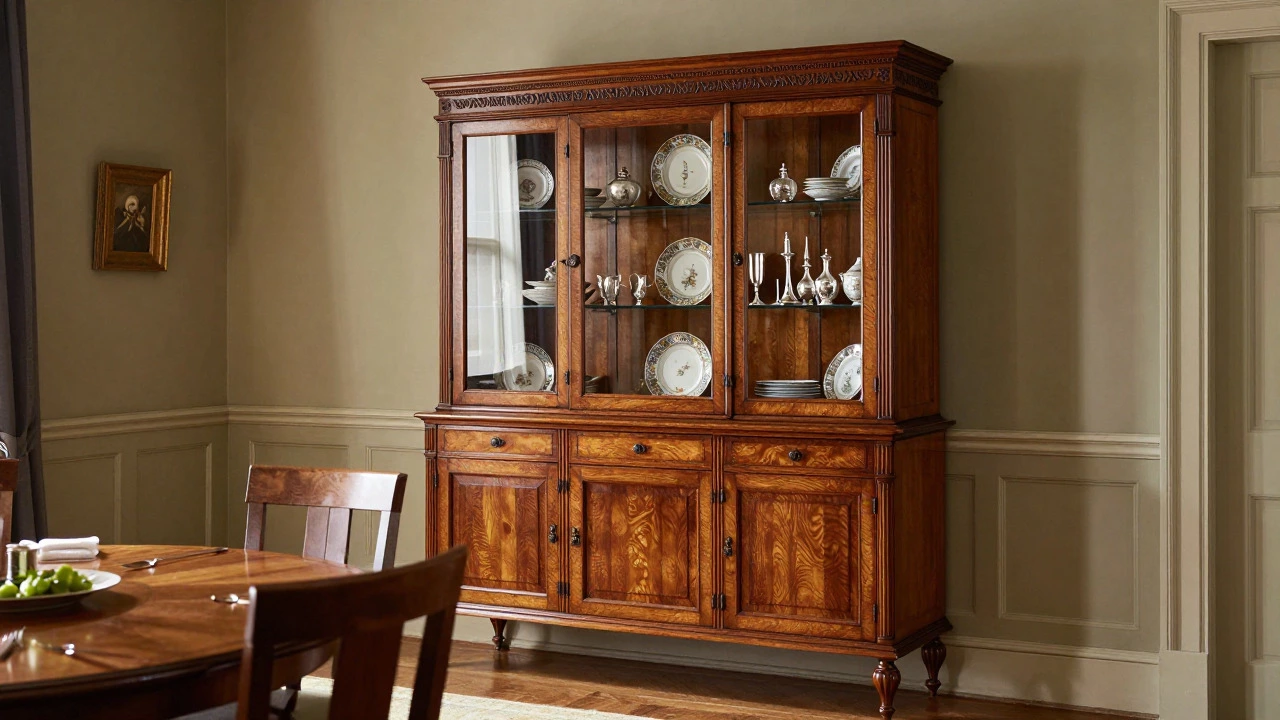
To understand the difference, we have to look at where these words started. A Credenza is a low cabinet or buffet originally used in Italian homes to display valuable dishes and silverware. The word derives from the Italian verb credere, which means "to believe." In medieval times, placing expensive tableware out in the open was a way to show guests that the host was wealthy and trustworthy-essentially proving their credibility. This piece was usually placed against a wall in a formal dining hall.
A Sideboard, on the other hand, is an English term that literally describes its position: it sits to the side of the main seating area or table. Historically, sideboards were simpler, more utilitarian pieces used for serving food and storing linens. They didn’t carry the same prestige as the credenza; they were workhorses rather than status symbols.
This historical context explains why credenzas tend to be more ornate and substantial. They were built to impress. Sideboards were built to function. Even today, if you look at antique markets, you’ll see this divide clearly. Credenzas often have intricate woodwork, glass-fronted upper sections, and a solid, heavy presence. Sideboards are cleaner, lighter, and often include features like wine racks or drawer banks for cutlery.
Physical Dimensions and Design Features
When you stand in front of two similar pieces, the physical specs are the most reliable way to tell them apart. While modern design has blurred the lines, certain dimensional standards still hold true.
| Attribute | Credenza | Sideboard |
|---|---|---|
| Typical Height | 34-40 inches | 28-32 inches |
| Typical Width | 60-72+ inches | 48-60 inches |
| Depth | 18-22 inches | 16-18 inches |
| Primary Storage Type | Doors (often with glass) | Drawers and/or Open Shelves |
| Intended Use | Formal Display & Serving | Casual Storage & Media Console |
| Leg Style | Tapered, decorative, or pedestal | Straight, blocky, or floating |
Notice the height difference. A standard dining table is about 30 inches high. If you place a 40-inch credenza behind it, the top surface sits well above the tabletop, making it perfect for displaying vases, art, or a large centerpiece. A 30-inch sideboard, however, sits almost level with the table. This makes it less suitable for tall displays but excellent for keeping serving platters within easy reach.
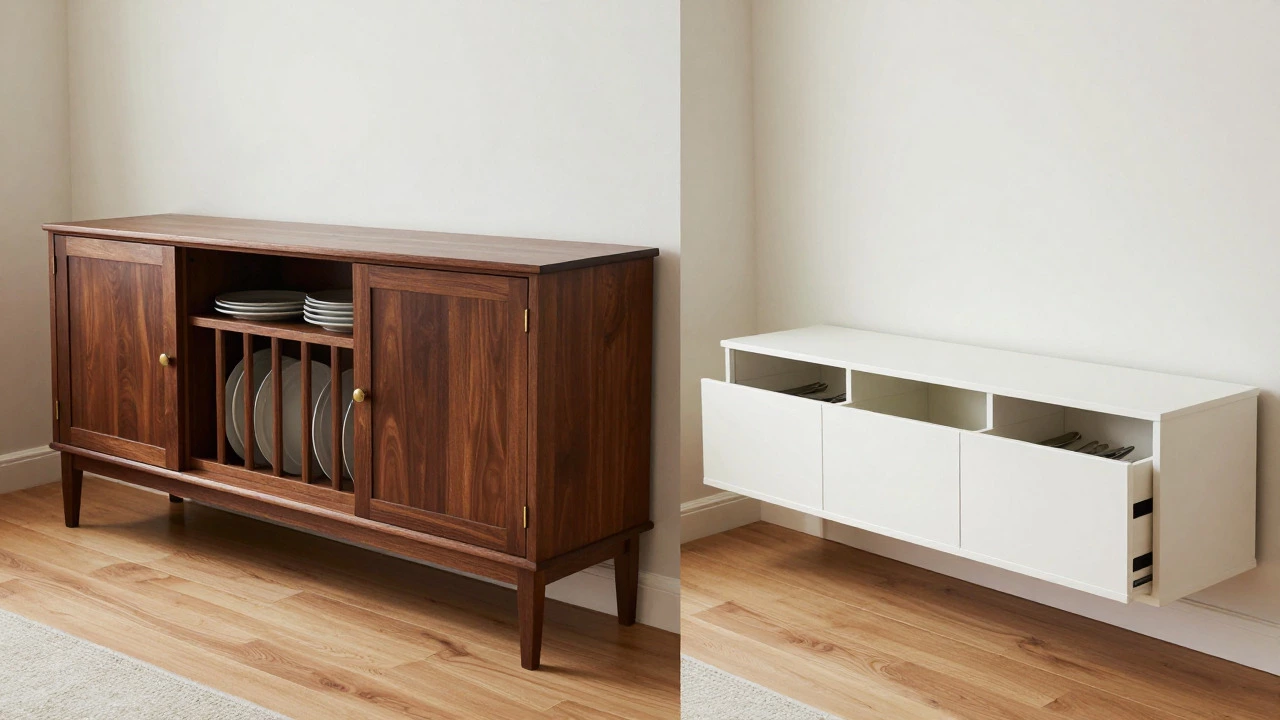
Storage configuration is another major differentiator. Credenzas traditionally rely on large cabinet doors. This allows you to store bulky items like oversized platters, cake stands, or stacked dinner sets. Sideboards, conversely, often feature a mix of drawers and open compartments. Drawers are ideal for flatware, napkins, and smaller accessories, while open shelves provide quick access to wine bottles or glasses.
Functional Differences in Modern Homes
In a contemporary home, the strict historical rules don’t always apply, but the functional implications remain. How do you actually use the piece? That question dictates which one you need.
If your dining room is also your main entertaining space, you likely need a credenza. Think about holiday dinners or large gatherings. You need somewhere to stage drinks, appetizers, and dessert before they go to the table. A credenza’s larger footprint and door-based storage give you the vertical space to organize these items neatly. You can hide the clutter inside and keep the top surface clean for a polished look.
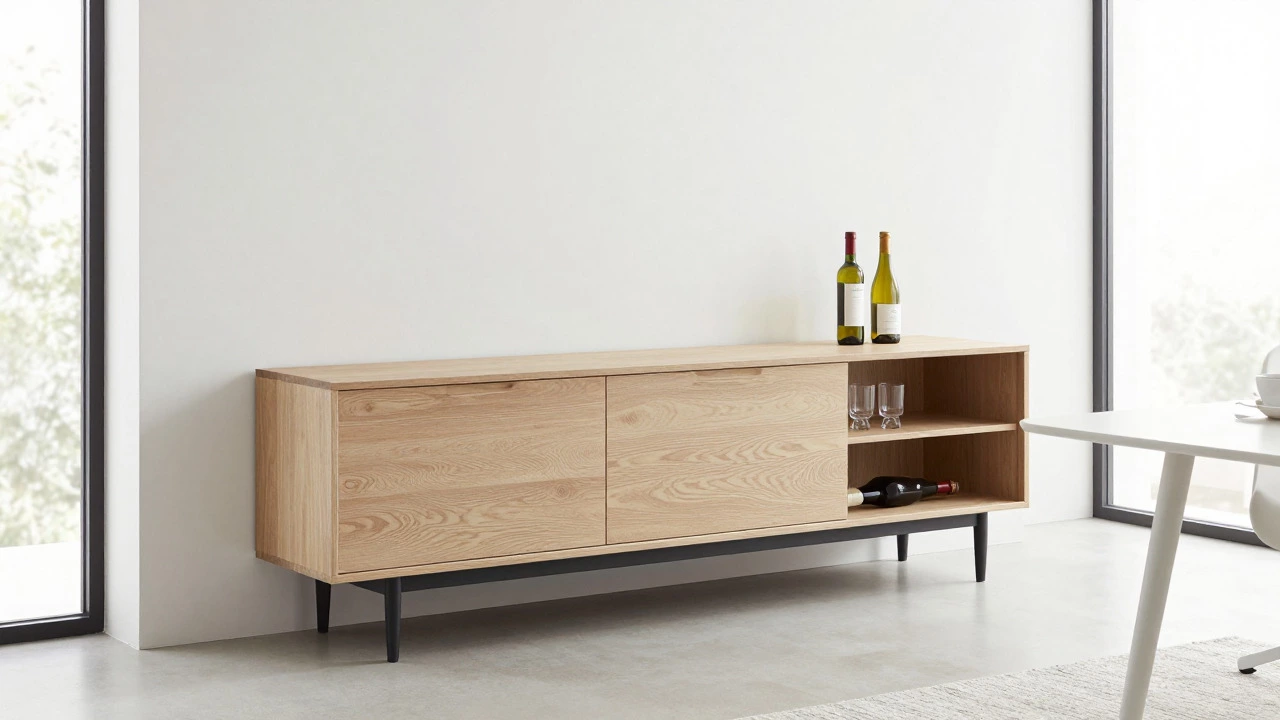
However, if your dining room is small or serves a dual purpose, a sideboard might be the smarter choice. Many people use sideboards as media consoles in living rooms because of their lower profile and drawer-based storage. In a dining room, a sideboard works well if you prioritize accessibility over display. For example, if you want to keep your wine collection visible and accessible, a sideboard with open shelving or a dedicated wine rack is far more convenient than digging through cabinet doors.
Consider the traffic flow in your room. A deep, wide credenza can feel imposing in a narrow dining nook. It might block light or make the space feel cramped. A slimmer sideboard leaves more floor space and feels less heavy. On the flip side, if you have a large, open-plan dining area, a low sideboard might look lost against a high ceiling. A taller credenza adds visual weight and anchors the room.
Material and Style Considerations
Beyond dimensions, the materials and style of the piece reflect its intended vibe. Credenzas often lean toward traditional or transitional styles. You’ll frequently see them in rich woods like walnut, mahogany, or cherry. These materials complement formal dining settings and pair well with classic table settings. The construction is usually robust, with thick panels and sturdy hardware.
Sideboards, especially in modern contexts, embrace a wider range of materials. You might find them in light oak, white-painted wood, metal, or even laminate finishes. This versatility makes them easier to integrate into minimalist, Scandinavian, or industrial interiors. A sleek, handle-less sideboard in matte black fits perfectly in a contemporary kitchen-diner, whereas a carved wooden credenza would clash.
Also consider the hardware. Credenzas often feature decorative knobs or pulls that add character. Sideboards increasingly use push-to-open mechanisms or integrated handles for a cleaner look. If you have children or pets, the durability of the material matters. Solid wood holds up better to scratches and dents than particle board, regardless of whether it’s labeled a credenza or sideboard.
How to Choose the Right Piece for Your Space
So, how do you decide? Start by measuring your wall space and your table. Leave at least 6 inches of clearance between the back of the table and the cabinet to allow chairs to pull out comfortably. Then, check the height. If you want to display items, aim for a piece that is at least 4 inches taller than your table. If you want seamless serving, match the height closely.
Next, audit your storage needs. Do you have a lot of flatware? Drawers are essential. Do you have large platters? Doors are necessary. Do you want to show off your wine? Open shelves or glass fronts are key. Don’t buy a piece just because it looks pretty in a catalog; buy it because it solves a specific problem in your home.
Finally, consider the long-term value. A well-made credenza or sideboard can last decades. Look for dovetail joints in drawers, solid wood frames, and quality hinges. Avoid pieces with flimsy MDF construction if you plan to use them heavily. Investing in a durable piece means you won’t have to replace it every few years when trends change.
Frequently Asked Questions
Can I use a sideboard as a media console?
Yes, absolutely. Because sideboards are typically lower and have drawer storage, they work very well under TVs. Just ensure the width matches your TV size and that there is enough ventilation for electronics if needed.
Are credenzas only for dining rooms?
No. While traditionally associated with dining areas, credenzas are popular in offices, entryways, and living rooms. Their height makes them great for creating a focal point in larger spaces.
What is the average cost difference between a credenza and a sideboard?
There is no fixed price difference, but credenzas often cost slightly more due to their larger size and complex construction. However, a high-end sideboard can easily exceed the price of a basic credenza. Focus on material quality rather than the label.
Which is better for small apartments?
A sideboard is generally better for small spaces. Its lower profile and narrower width take up less visual and physical space. Look for models with slim legs to create an illusion of openness.
Do I need to match my credenza with my dining table?
Not necessarily. Mixing woods and styles can create a layered, curated look. However, ensure the colors harmonize. A dark walnut credenza pairs well with a light oak table, for example, as long as the undertones are compatible.