Residential vs. Commercial Real Estate Suitability Calculator
Your Profile
Recommendation
Subtitle goes here
Suitability Score
Est. Entry Cost
Yield Potential
Why this path?
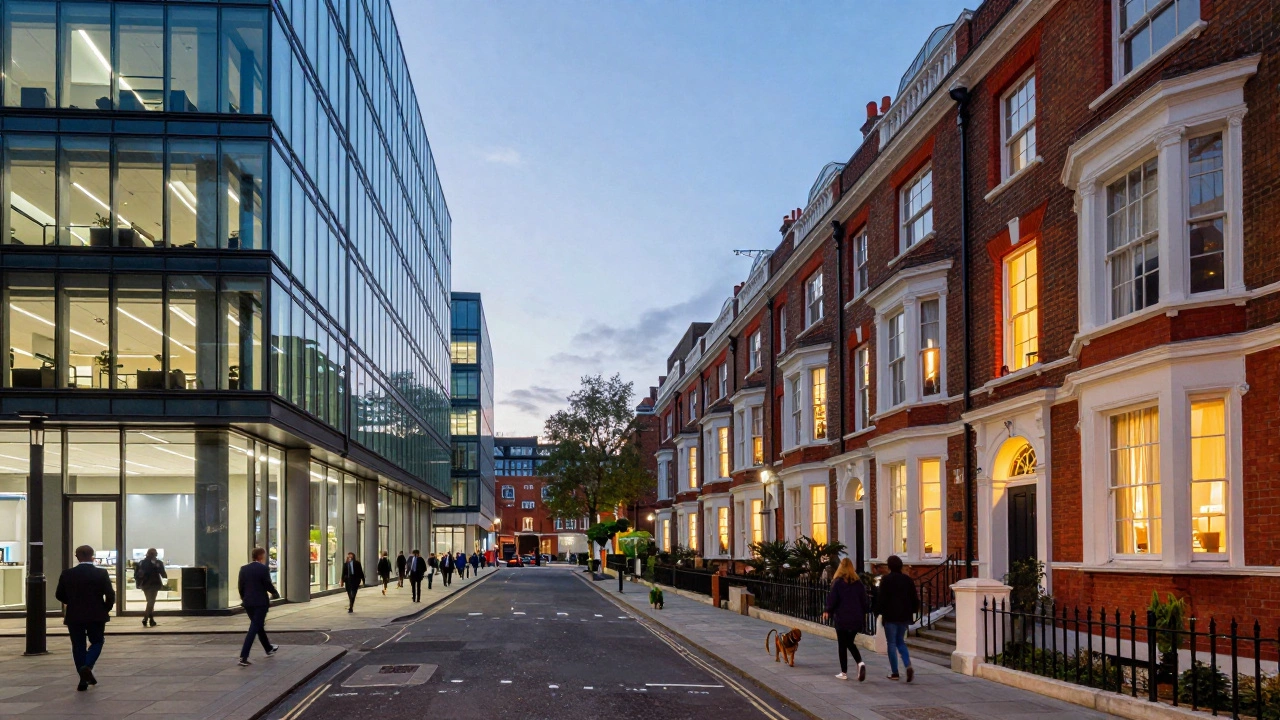
Standing on the corner of a busy London high street, you see two very different worlds. On one side, there’s a sleek office building housing tech startups and law firms. On the other, a row of Victorian terraced houses where families live, grow, and eventually sell. Both represent real estate. Both can make money. But they operate on completely different rules, timelines, and risk profiles.
If you are wondering whether to start your career or investment portfolio in commercial or residential real estate, you are asking the right question at the right time. The market landscape in 2026 has shifted significantly from previous years. Interest rates have stabilized but remain higher than the historic lows of the early 2020s, and tenant expectations have evolved post-pandemic. Choosing the wrong path isn’t just about missing out on profits; it’s about mismatching your skills, capital, and patience with the asset class.
This guide breaks down the raw mechanics of both sectors so you can decide which fits your life right now. We will look at cash flow, entry barriers, legal structures, and the day-to-day reality of owning these assets.
The Core Difference: Who Pays the Rent?
At its simplest, Residential real estate is property designed for people to live in, such as single-family homes, apartments, and condos. Housing market dynamics are driven by demographics, family formation, and emotional needs. People need a place to sleep. That demand is relatively inelastic.
Commercial real estate is property used for business purposes, including offices, retail stores, warehouses, and industrial facilities. Here, the tenant is a business. Their ability to pay rent depends on their profitability. If a retail store fails, they stop paying rent. If a warehouse owner loses a logistics contract, they might sublet or leave.
This fundamental difference changes everything. In residential, you are dealing with humans who have rights, emotions, and local protections. In commercial, you are dealing with contracts, businesses, and economic cycles.
Entry Barriers: Cash, Credit, and Complexity
Let’s talk about the money required to get started. This is often the biggest filter for new investors or agents.
| Feature | Residential Real Estate | Commercial Real Estate |
|---|---|---|
| Down Payment | 3% - 20% (depending on loan type) | 25% - 40% standard |
| Loan Underwriting | Based on borrower’s personal income & credit | Based on property’s Net Operating Income (NOI) |
| Minimum Asset Size | £200,000+ (London average) | £1M+ for institutional-grade; £500k+ for small retail/office |
| Due Diligence | Home inspection, appraisal | Environmental reports, zoning analysis, lease audits |
Residential lending is consumer-friendly. Banks want to sell mortgages because they earn fees and interest over decades. You can buy a flat in South London with a modest deposit if your income supports the monthly payment. The underwriting looks at your salary, tax returns, and credit score.
Commercial lending is cold and calculated. Lenders don’t care about your job title. They care about the Net Operating Income (NOI) is the annual profit generated by a property after operating expenses but before taxes and financing costs. If the building doesn’t make enough money to cover the debt service plus a buffer, you won’t get the loan. This means you need significant skin in the game upfront-often 30% or more of the purchase price in cash.
Cash Flow and Returns: Volume vs. Velocity
How do you actually make money? In residential, you typically rely on two levers: appreciation and leverage. You buy a house, rent it out, and hope the value goes up over ten years. The monthly cash flow might be thin-sometimes even negative in high-cost areas like Central London-but the long-term equity build is powerful.
Commercial real estate offers higher yields. A well-located industrial park or a multi-tenant office building might yield 6% to 8% annually in cash-on-cash return, compared to 3% to 5% for residential. Why? Because commercial tenants sign longer leases. A five-year triple-net lease means you know exactly what you’ll earn for half a decade. There’s no surprise move-out notice next month.
However, commercial vacancies hurt more. If one residential unit sits empty for a month, it’s an annoyance. If a 50,000-square-foot warehouse sits empty for six months, your entire deal structure can collapse. Commercial requires active management of tenant relationships and lease renewals.
Legal Structures and Tenant Rights
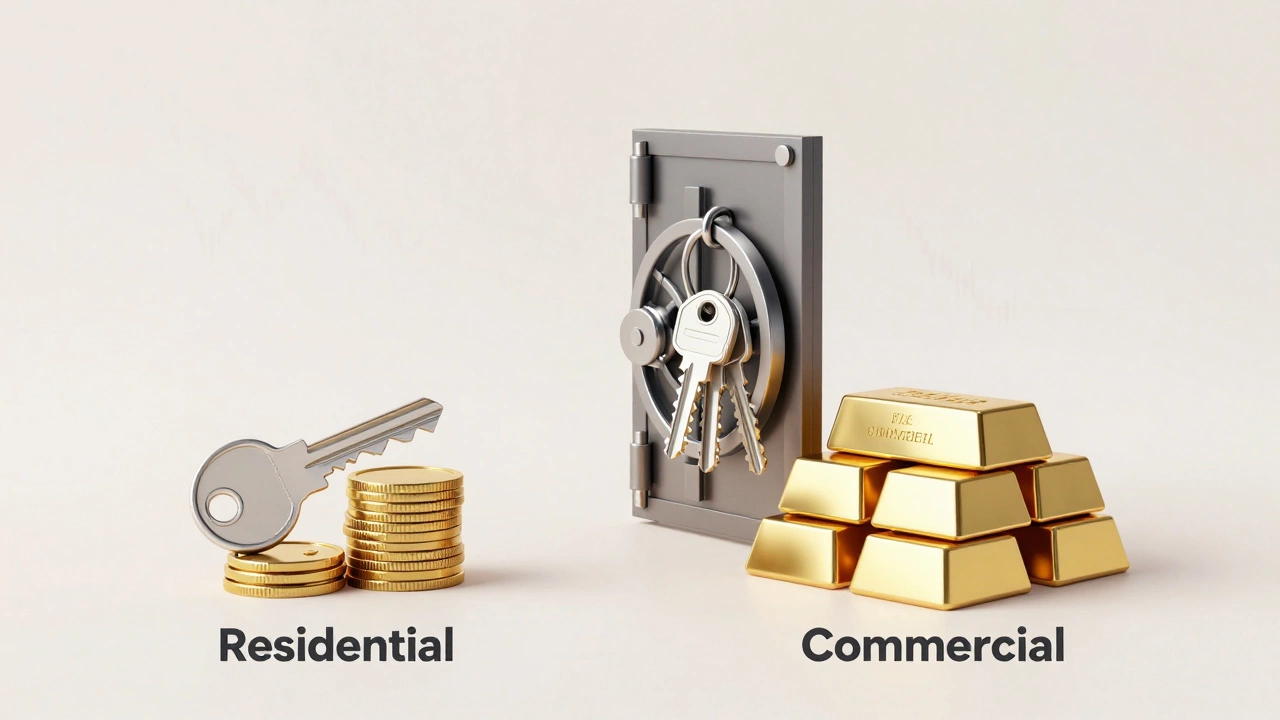
In the UK, residential tenancy law is heavily weighted toward protecting tenants. Evicting a non-paying tenant can take months and require strict adherence to Section 21 or Section 8 notices. You cannot simply change the locks. You must go through court proceedings. This makes residential investing less about control and more about selection-choosing the right tenant is critical.
Commercial leases are contractual agreements between businesses. They are governed by common law and specific clauses written into the lease. Most commercial leases are "net leases," meaning the tenant pays not only rent but also property taxes, insurance, and maintenance. This shifts the burden of upkeep away from you, the owner. If the roof leaks, the tenant fixes it. If the HVAC system breaks, the tenant replaces it. This reduces your operational headache significantly.
Market Cycles and Economic Sensitivity
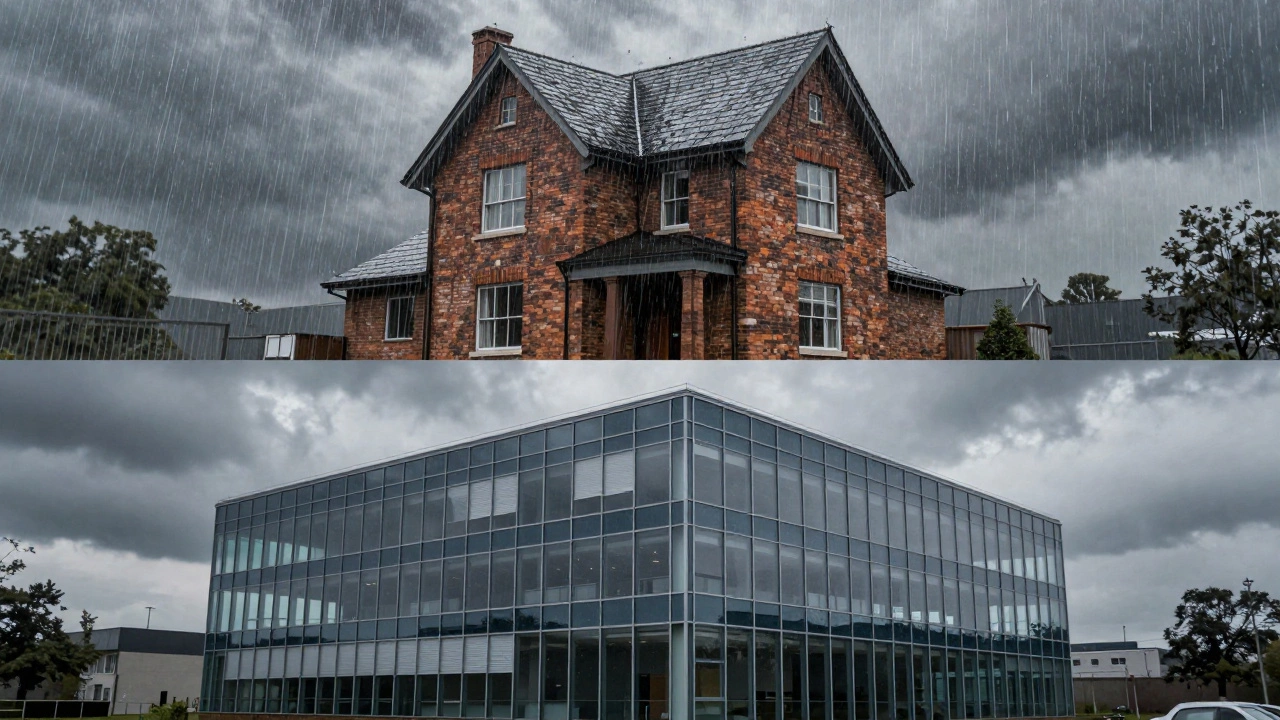
Residential real estate is resilient. Even during recessions, people need places to live. Prices may dip, but they rarely crash to zero unless there’s a systemic banking crisis. The housing market moves slowly. It takes time to build new homes, and zoning laws restrict supply. This scarcity supports long-term value.
Commercial real estate is cyclical and sensitive to macroeconomic trends. Office space suffered in 2020-2023 due to remote work adoption. Retail struggled against e-commerce. Industrial boomed due to online delivery demands. Now, in 2026, we see a correction in office values and a stabilization in industrial rents. If you invest in commercial, you must understand sector-specific trends. Buying an office building today carries different risks than buying a data center or a medical facility.
Which Path Fits Your Profile?
Ask yourself these questions:
- Do you have significant liquid capital? If yes, commercial allows you to scale faster with fewer units. If no, residential lets you start smaller and add properties gradually.
- Are you hands-on or passive? Residential requires more frequent interaction-handling repairs, tenant complaints, and turnover. Commercial is more transactional, especially with net leases.
- Do you prefer stability or growth? Residential offers steady, predictable growth with lower volatility. Commercial offers higher potential returns but with greater risk of vacancy and economic downturns.
- What is your expertise? If you understand construction, zoning, and business finance, commercial suits you. If you understand home staging, neighborhood trends, and customer service, residential may be easier.
Hybrid Strategies: Starting Small, Thinking Big
You don’t have to choose forever. Many successful investors start in residential to build capital and learn property management basics. Then, they transition to small commercial assets like mixed-use buildings (shops below, flats above) or small office suites. This hybrid approach lets you test commercial waters without committing millions upfront.
In London, mixed-use properties are particularly attractive. They combine residential stability with commercial yield. Ground-floor retail provides foot traffic and visibility, while upper-floor residences provide consistent occupancy. These assets bridge the gap between the two worlds.
Final Thoughts: Match the Asset to Your Life
There is no universally "better" choice. Residential real estate is accessible, emotionally intuitive, and stable. Commercial real estate is sophisticated, lucrative, and demanding. Your decision should hinge on your current resources, risk tolerance, and career goals.
If you are starting from scratch, residential is the gentler learning curve. You can buy one property, manage it yourself, and learn the ropes. If you already have experience in business, finance, or construction, and you have access to larger capital pools, commercial real estate offers a faster path to significant wealth creation.
Whichever path you choose, remember that real estate is a marathon, not a sprint. Success comes from discipline, continuous learning, and adapting to market changes. Whether you’re fixing a leaky tap in a Camden flat or negotiating a five-year lease for a Shoreditch warehouse, the principles of good stewardship remain the same.
Can I invest in commercial real estate with little money?
Directly buying commercial property usually requires 25-40% down payment, making it difficult for beginners with limited capital. However, you can participate indirectly through Real Estate Investment Trusts (REITs), crowdfunding platforms, or syndications where you pool money with other investors. These options allow smaller initial investments but offer less control over the asset.
Is commercial real estate safer than residential?
Not necessarily. Commercial real estate is more volatile because it ties directly to business health and economic cycles. A recession can lead to widespread vacancies in office or retail spaces. Residential real estate is generally more stable because housing demand remains constant regardless of economic conditions. However, commercial leases are longer, providing income predictability if tenants stay.
What is a triple-net lease in commercial real estate?
A triple-net (NNN) lease requires the tenant to pay base rent plus all property operating expenses: property taxes, insurance, and maintenance. This makes it highly attractive to investors because it minimizes their ongoing responsibilities and maximizes predictable cash flow. Common in retail and industrial properties, NNN leases shift most operational burdens to the tenant.
How long do commercial leases typically last?
Commercial leases usually range from 3 to 10 years, sometimes longer for anchor tenants in large centers. This contrasts sharply with residential leases, which are often month-to-month or fixed at one year. Longer commercial leases reduce turnover costs and provide stable income streams, though they lock you into potentially below-market rents if inflation rises.
Should I hire a broker for my first commercial purchase?
Yes, absolutely. Commercial transactions involve complex legal documents, environmental assessments, and financial modeling that differ greatly from residential deals. An experienced commercial broker helps navigate zoning laws, evaluate tenant creditworthiness, and negotiate favorable terms. Their fee is typically paid by the seller, so you gain expert guidance without additional cost.