Commercial vs. Non-Residential Project Classifier
Project Details
Classification Result
Enter your project details to see how it is classified in the industry.
Walk into any office building, retail store, or warehouse, and you are standing inside what the industry calls a commercial property designed for business activities rather than living. Now, look at the same building through the eyes of a tax assessor or an insurance agent, and they might call it non-residential. It sounds like wordplay, but in the world of construction and real estate, these labels carry heavy weight. If you are planning a build, buying a property, or navigating local regulations, understanding the difference-or lack thereof-is crucial.
The short answer? Yes, for almost all practical purposes in construction, zoning, and finance, "commercial" and "non-residential" are treated as the same thing. However, there is a subtle nuance that can trip up beginners. Let’s break down why these terms overlap, where they diverge, and what this means for your project.
Defining the Terms: Commercial vs. Non-Residential
To understand the relationship, we first need to define each term clearly. In the construction industry, residential construction refers to buildings intended for people to live in, such as single-family homes, apartments, and townhouses. Anything that does not fit this definition falls under the umbrella of non-residential.
Commercial construction specifically refers to projects built for profit-generating activities, including offices, shops, hotels, and restaurants. So, while all commercial properties are non-residential, not all non-residential properties are strictly "commercial" in the traditional sense. This is where the confusion starts.
Think of "non-residential" as the broad category (the parent entity) and "commercial" as a major subset within it. Other subsets of non-residential include industrial facilities (factories, warehouses), institutional buildings (schools, hospitals, government centers), and agricultural structures. When contractors say "commercial," they usually mean the business-focused side of non-residential, but legally and structurally, they share the same DNA.
Why the Distinction Matters in Construction
If you are hiring a builder, the label on the blueprint changes everything. Residential builders follow different rules, timelines, and cost structures than those working on non-residential projects. Here is how the shift from residential to commercial/non-residential impacts the job:
- Building Codes: Non-residential buildings must meet stricter safety standards. Think fire suppression systems, wider hallways, and more robust electrical wiring. The International Building Code (IBC) a model code used across many jurisdictions for non-residential structures governs these requirements, whereas residential builds often follow the International Residential Code (IRC).
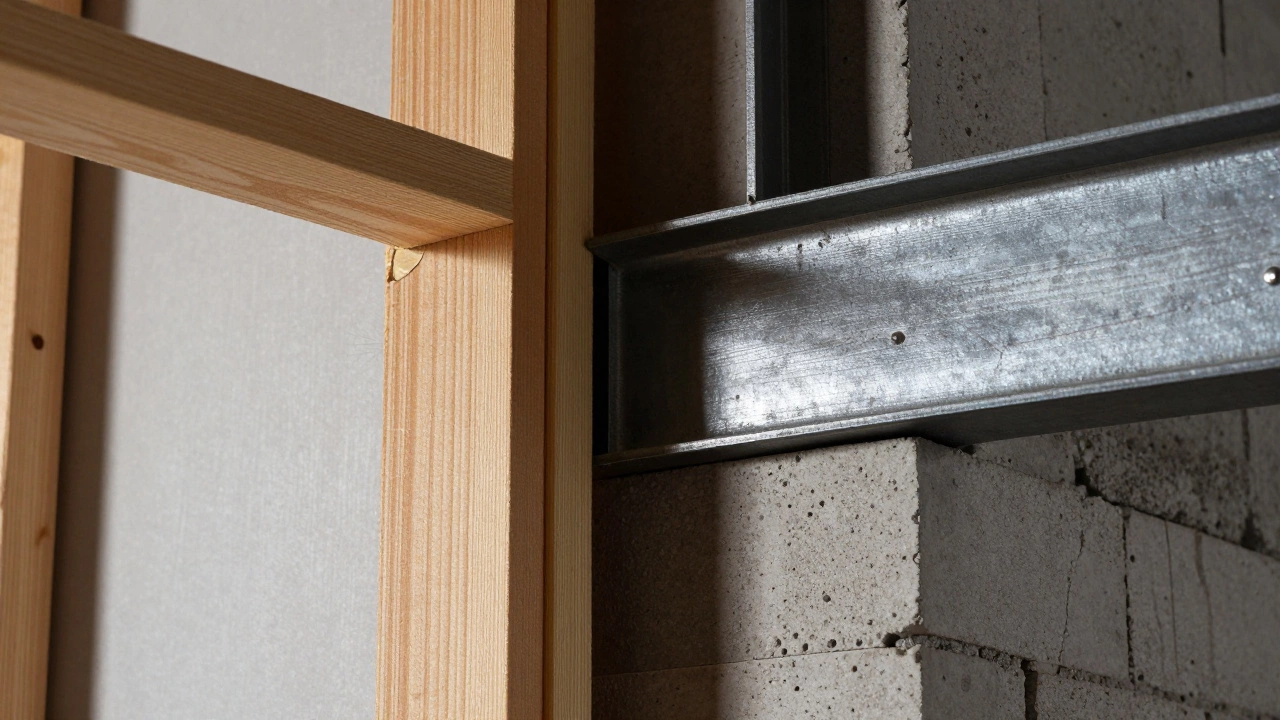
- Materials: You won’t find drywall and wood framing dominating a high-traffic commercial space. Non-residential construction relies heavily on steel, concrete, and masonry to withstand higher loads and wear-and-tear.
- Permitting: Getting permits for a non-residential project is more complex. It involves environmental impact assessments, traffic studies, and strict adherence to zoning laws that dictate exactly what can be built where.
If you try to use a residential contractor for a small office conversion, you might run into legal trouble because they may not be licensed for commercial work. Conversely, a large commercial firm might quote you a premium price for a simple home renovation because their overhead is structured differently.
The Gray Area: Mixed-Use and Institutional Buildings
This is where the "same but different" debate gets interesting. Consider a school or a hospital. These are definitely non-residential-people don’t live there permanently. But are they commercial? Not always. Many schools and hospitals are non-profit or government-run, so they don’t generate profit in the traditional commercial sense.
However, from a construction standpoint, a hospital is built using the same commercial methods as a shopping mall. They both require:
- Heavy structural engineering.
- Complex HVAC systems for climate control.
- Specialized plumbing and electrical infrastructure.
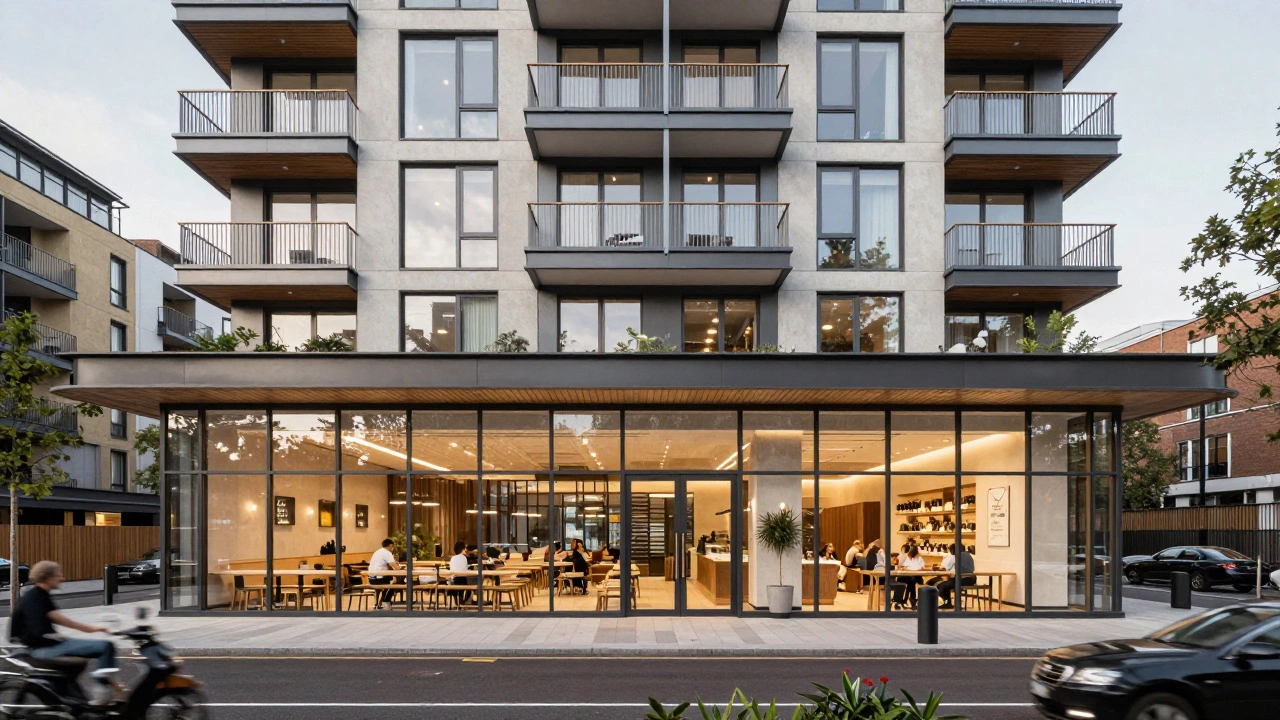
In London, for example, you might see mixed-use developments where the ground floor is a café (commercial) and the upper floors are apartments (residential). This hybrid model requires builders who understand both worlds. The non-residential portion dictates the overall structural integrity, while the residential portion has its own specific insulation and soundproofing needs.
Zoning Laws: The Legal Divider
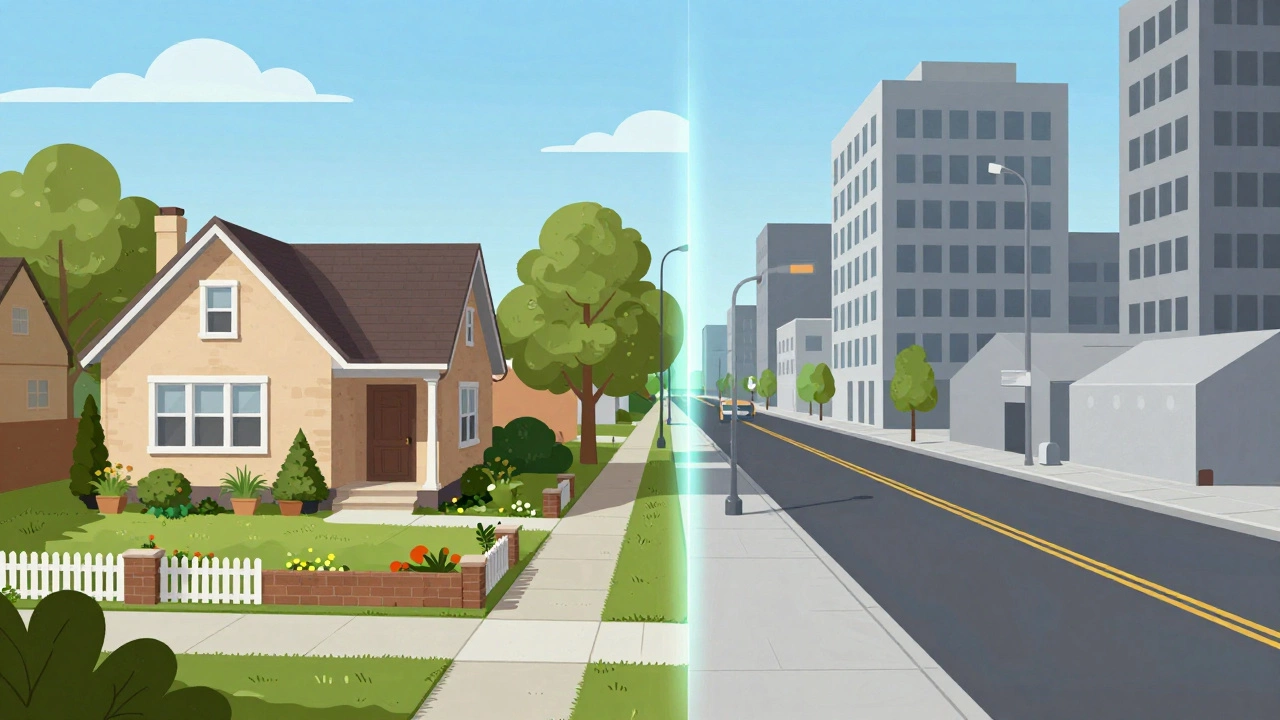
Local councils and planning authorities use zoning maps to separate land uses. In most UK and US jurisdictions, you will see zones labeled C1, C2, or C3 for commercial use, and R1, R2 for residential. These zones determine what you can do with a piece of land.
If you buy a non-residential building in a commercial zone, you generally cannot convert it into a house without a special permit. This is known as a change of use. The reason? Infrastructure. Commercial areas are designed for high foot traffic, parking, and waste management. Residential areas prioritize quiet, green space, and lower density.
Understanding your local zoning is critical. A building might look like a home, but if it’s zoned non-residential, you could face fines or forced demolition if you treat it as a residence. Always check the council’s planning portal before purchasing or renovating.
| Feature | Residential | Non-Residential / Commercial |
|---|---|---|
| Purpose | Living/Dwelling | Business/Work/Public Use |
| Governing Code | International Residential Code (IRC) | International Building Code (IBC) |
| Primary Materials | Wood, Drywall, Vinyl | Steel, Concrete, Masonry |
| Occupancy Load | Low (Family-sized) | High (Public crowds) |
| Fire Safety | Smoke detectors, basic exits | Sprinklers, fire alarms, multiple egress points |
| Cost per Square Foot | Lower ($150-$250 approx.) | Higher ($200-$400+ approx.) |
Financial Implications: Loans and Insurance
Banks and insurers also draw a hard line between residential and non-residential. A mortgage for a home is different from a commercial loan for a shop. Commercial loans typically require larger down payments (often 20-30%) and have shorter terms. Why? Because non-residential properties are tied to business performance. If the business fails, the property value can drop significantly.
Insurance premiums are another factor. Non-residential policies cover liability for customers and employees, which is much riskier than insuring a private home. If you slip in my kitchen, I’m liable. If you slip in a supermarket, the company faces massive lawsuits. This risk is baked into the cost of owning and maintaining non-residential real estate.
Common Misconceptions
One common myth is that "small" equals "residential." Just because you are building a tiny studio apartment above a garage doesn’t make it residential if it’s rented out as a separate unit in some jurisdictions. Local laws vary wildly. In London, an Annex might be considered part of the main dwelling, but in other cities, it triggers commercial zoning rules.
Another misconception is that all non-residential buildings are tall skyscrapers. A single-story warehouse is non-residential. A two-room barber shop is non-residential. The scale doesn’t matter; the function does.
What Should You Do Next?
If you are starting a project, ask yourself: Who will occupy this space? If the answer is "people sleeping and living," it’s residential. If the answer is "people working, shopping, or visiting," it’s non-residential/commercial.
From there, hire professionals who specialize in that sector. Don’t let a residential handyman wire your office. Don’t let a massive commercial general contractor over-engineer your backyard shed. Matching the expertise to the classification saves money and headaches.
Finally, consult your local planning authority. Zoning laws are local, and exceptions exist. A historic building might have different rules than a new build. Understanding the label on your property is the first step to a successful project.
Is a warehouse considered commercial or non-residential?
A warehouse is technically industrial, which is a subset of non-residential. While it shares many construction traits with commercial buildings (like steel frames), it is distinct from traditional "commercial" spaces like offices or retail stores. However, for most permitting and financing purposes, it is grouped under the broader non-residential umbrella.
Can I convert a non-residential building into a home?
Yes, but it requires a "change of use" permit from your local council. This process can be expensive and time-consuming because you must upgrade the building to meet residential codes (insulation, plumbing, etc.) and potentially pay development charges. It is not as simple as moving furniture in.
Are schools and hospitals considered commercial properties?
They are classified as institutional or public assembly non-residential properties. While they are not "commercial" in the profit-driven sense, they are built using commercial construction standards due to their size, occupancy load, and safety requirements.
Why are commercial loans harder to get than mortgages?
Commercial loans are riskier for banks because the property's value is tied to the business's income. If the business fails, the collateral value drops. Mortgages are backed by the primary residence, which borrowers are less likely to default on. Therefore, commercial loans require higher down payments and stricter credit checks.
Does the building code differ significantly between residential and non-residential?
Yes. Non-residential buildings must adhere to the International Building Code (IBC), which mandates stricter fire safety, accessibility (ADA compliance in the US, Equality Act in the UK), and structural integrity standards compared to the International Residential Code (IRC) used for homes.