Commercial vs Residential Budget Estimator
Cost Gap Analyzer
Estimate the impact of commercial requirements on your project budget- Structural Steel & Concrete
- ADA Compliance & Fire Suppression
- Industrial HVAC & 3-Phase Power
- Commercial Permitting & Zoning
$0
Based on Wood Frame$0
Based on Industrial Specs*Estimates are simplified for educational purposes to illustrate the cost divide described in the article.
Quick Takeaways: The Cost Divide
- Commercial builds cost more due to stricter building codes and higher safety requirements.
- Materials like steel and reinforced concrete replace the wood frames common in homes.
- Zoning laws and permits for businesses are more complex and expensive than residential ones.
- Infrastructure needs, such as heavy-duty HVAC and industrial plumbing, drive prices up.
The Material Gap: Steel vs. Wood
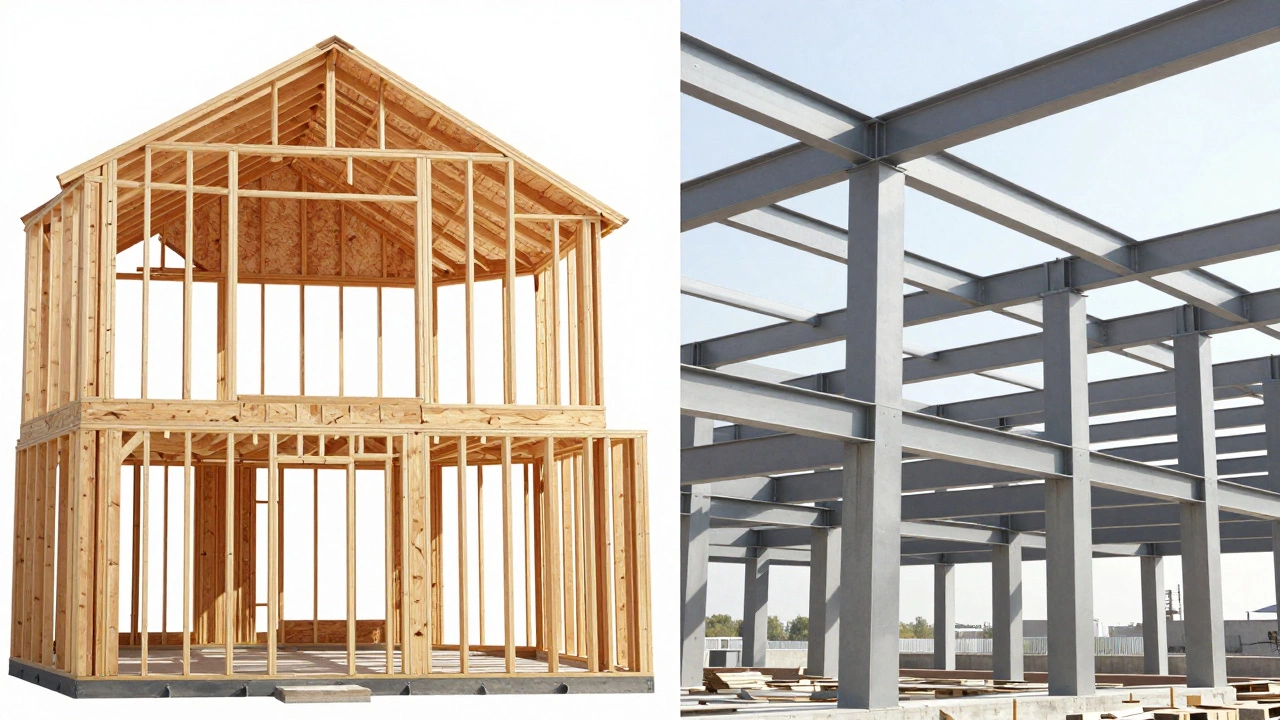
When you build a house, you're likely using Stick Framing, which is basically a skeleton of 2x4 or 2x6 wooden studs. It's fast, cheap, and keeps the heat in. But you can't do that for a retail store or a medical clinic. Why? Because a business needs to withstand a different kind of wear and tear. Commercial buildings rely heavily on Structural Steel and reinforced concrete. Steel doesn't burn down as easily as wood, and it can support massive open spans without needing a pillar every ten feet. If you've ever walked into a big-box store and wondered why there aren't a thousand walls blocking your view, it's because of the steel beams. However, steel is significantly more expensive to buy and requires specialized labor to weld and bolt into place. Concrete is another big cost driver. While a home has a concrete slab for a foundation, a commercial building might have a 12-inch thick reinforced slab throughout the entire floor to support heavy equipment or thousands of customers. The raw cost of the material is higher, and the labor to pour and cure it correctly takes more time and money.Building Codes and the Safety Tax
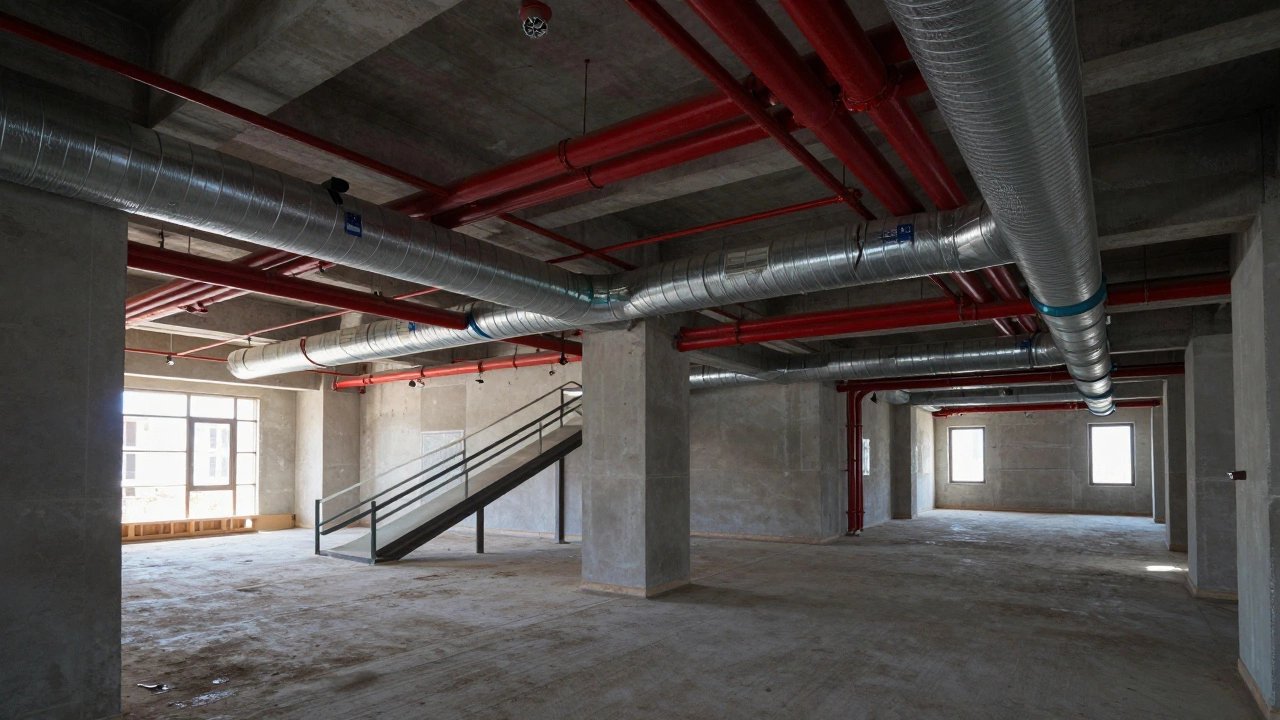
If you're building a home, your local building department wants to make sure your electrical is safe and your stairs aren't a tripping hazard. When you switch to commercial, the rulebook gets a lot thicker. This is where the "hidden" costs of commercial work really show up. One of the biggest factors is ADA Compliance. The Americans with Disabilities Act requires that business spaces be accessible to everyone. This means wider hallways, specific ramp slopes, and specialized bathrooms. Adding a single ADA-compliant restroom can cost thousands more than a standard residential half-bath because of the required fixtures and space requirements. Then there's the fire safety aspect. Residential homes usually have a few smoke detectors and maybe a fire extinguisher. Commercial buildings require complex Fire Suppression Systems, including industrial sprinklers, fire-rated doors, and integrated alarm systems that connect directly to the local fire department. These aren't optional; they are mandated by law, and the installation costs are steep.Industrial-Grade Infrastructure
Think about your home's HVAC system. It's designed to keep a few people comfortable. Now, imagine an office building with 50 employees, computers generating heat, and a constant flow of air needed for health codes. You can't just put in a bigger version of a home AC unit. Commercial spaces use HVAC Rooftop Units (RTUs and complex ductwork that can regulate temperature in different zones. The electricity needs are also totally different. While a home uses a standard electrical panel, a commercial site might need a 3-phase power system to run heavy machinery or server racks. This requires specialized electrical engineers and heavy-duty cabling that would be overkill-and wildly expensive-in a residential setting. Plumbing follows the same pattern. A residential kitchen has a sink and a dishwasher. A commercial kitchen in a restaurant needs grease traps, high-pressure water lines, and industrial drainage systems to prevent clogs and meet health department standards. Every single utility in a commercial build is scaled up for durability and volume.| Feature | Residential | Commercial |
|---|---|---|
| Primary Materials | Wood, Drywall, Shingles | Steel, Concrete, Glass, Brick |
| Regulatory Body | Local Building Dept | Zoning Boards, Fire Marshal, ADA |
| Electrical Load | Single Phase (Standard) | Three Phase (Industrial) |
| Expected Lifespan | 50-100 years (variable) | Long-term durability/High traffic |
| Permit Complexity | Moderate | High / Multiple Layers |
The Complexity of Zoning and Permitting
Getting a permit to build a backyard shed or a new home is a straightforward process. You submit your plans, pay a fee, and wait for approval. In the commercial world, it's a marathon. Before you even break ground, you have to deal with Zoning Laws. You can't just build a car wash in a neighborhood zoned for single-family homes. Negotiating a zoning change or applying for a special use permit can take months and often requires hiring consultants or lawyers. Environmental impact studies are another commercial-only headache. If you're building a large warehouse, the city might require a study on how your parking lot will affect local drainage or how your traffic will impact the surrounding streets. These reports cost money and can lead to required changes in your design that add even more to the final bill.Labor and Professional Expertise
When you build a house, you might have a general contractor and a few subcontractors. For a commercial project, the team expands significantly. You aren't just hiring a builder; you're hiring a suite of professionals.- Architects: While some homeowners use architects, commercial builds require them to ensure the layout meets complex occupancy codes.
- Civil Engineers: They handle the land grading, sewage/water main connections, and structural integrity of the site.
- Project Managers: Commercial timelines are strict. A delay in a retail opening can cost a business thousands in lost revenue every day, so high-paid managers are hired to keep everything on track.
- Specialized Trades: You need certified welders, industrial electricians, and HVAC technicians who are licensed for commercial work. Their hourly rates are higher than those of residential contractors.
When is Commercial Actually Cheaper?
It sounds crazy, but there are a few times when the "commercial" approach saves money. This usually happens through economies of scale. If you are building a 200-unit apartment complex, the cost per unit can actually drop because you're buying materials in massive bulk. Buying 5,000 windows is much cheaper per unit than buying 15 windows for one house. Additionally, using prefabricated components-like pre-cast concrete walls-can speed up a commercial build significantly. While the initial cost of the prefab plant is high, the reduction in on-site labor hours can shave a surprising amount off the total budget.Managing the Budget Gap
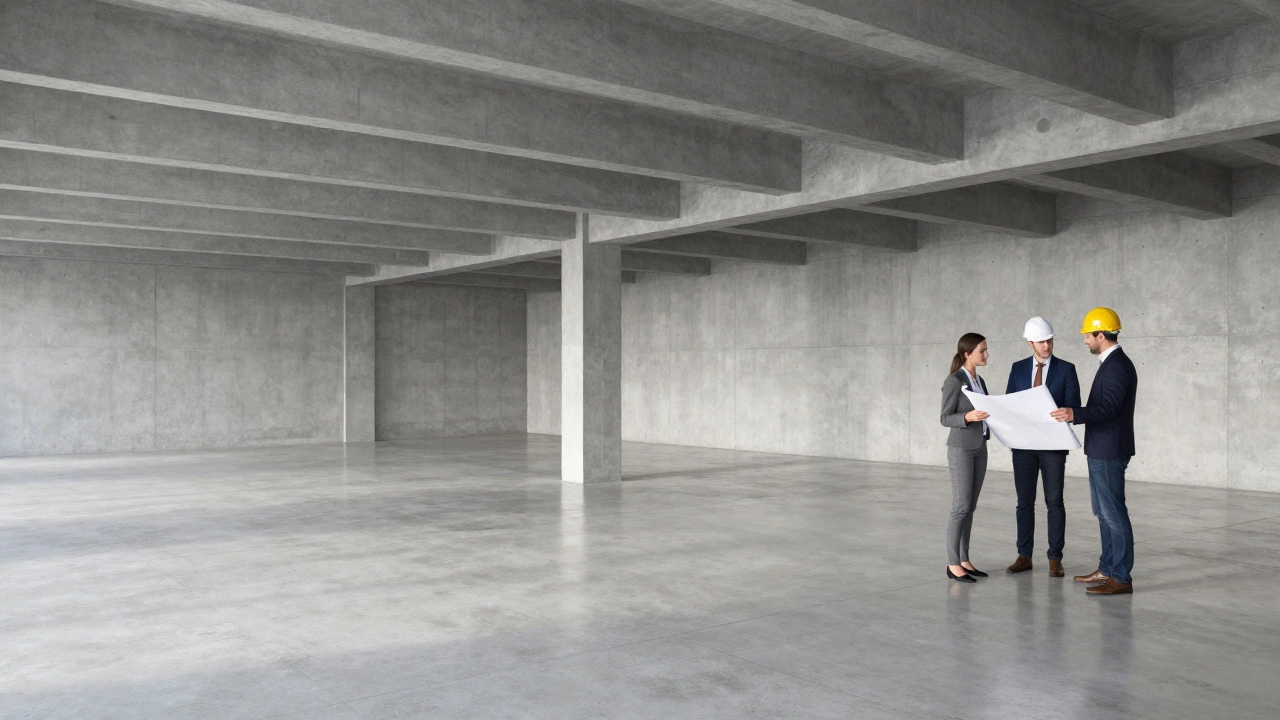
If you're transitioning from residential to commercial development, you need to change how you think about your budget. In residential, you might have a 10% contingency fund. In commercial, 15% to 20% is safer. Why? Because the variables are higher. A sudden change in fire code or a failed soil test can add six figures to your cost overnight. To keep costs down, many businesses opt for a "shell" build. This is where the developer builds the exterior walls, roof, and basic utilities, but leaves the interior unfinished. The tenant then does a "tenant improvement" (TI) build-out, customizing the inside to their specific needs. This splits the cost and allows the business owner to control the interior spending.Why does commercial construction cost more per square foot?
The higher cost is primarily due to the use of more expensive, durable materials like steel and concrete instead of wood. Additionally, commercial buildings must adhere to much stricter safety codes, fire regulations, and ADA accessibility requirements, all of which increase labor and material costs.
Is a commercial building more durable than a residential one?
Generally, yes. Commercial buildings are engineered for "high-occupancy," meaning they can handle thousands of people and heavy equipment daily without structural failure. They use materials that resist fire and wear much better than the materials used in most homes.
What are tenant improvements (TI) in commercial construction?
Tenant improvements are the customized changes a business makes to an interior space to suit their specific needs. This includes adding walls, specialized lighting, plumbing for a coffee station, or custom flooring. These are often negotiated between the landlord and the tenant.
Do commercial buildings require different insurance?
Yes. Commercial construction requires much higher liability insurance due to the scale of the projects and the risk involved. Builders must have general liability, workers' compensation, and often specialized professional liability insurance that covers the architects and engineers.
How do zoning laws affect the cost of commercial building?
Zoning laws dictate what can be built and where. If a plot isn't zoned for your specific business, you have to pay for legal fees and city applications to change the zoning. Zoning can also mandate expensive additions, like a certain number of parking spaces or specific landscaping buffers.