Kitchen Safety Distance Checker
Measure the counter space between your sink and stove and move the slider to see if your layout meets professional safety standards.
Quick Safety Takeaways
- The gold standard is to have at least 12 to 15 inches of counter space between your sink and stove.
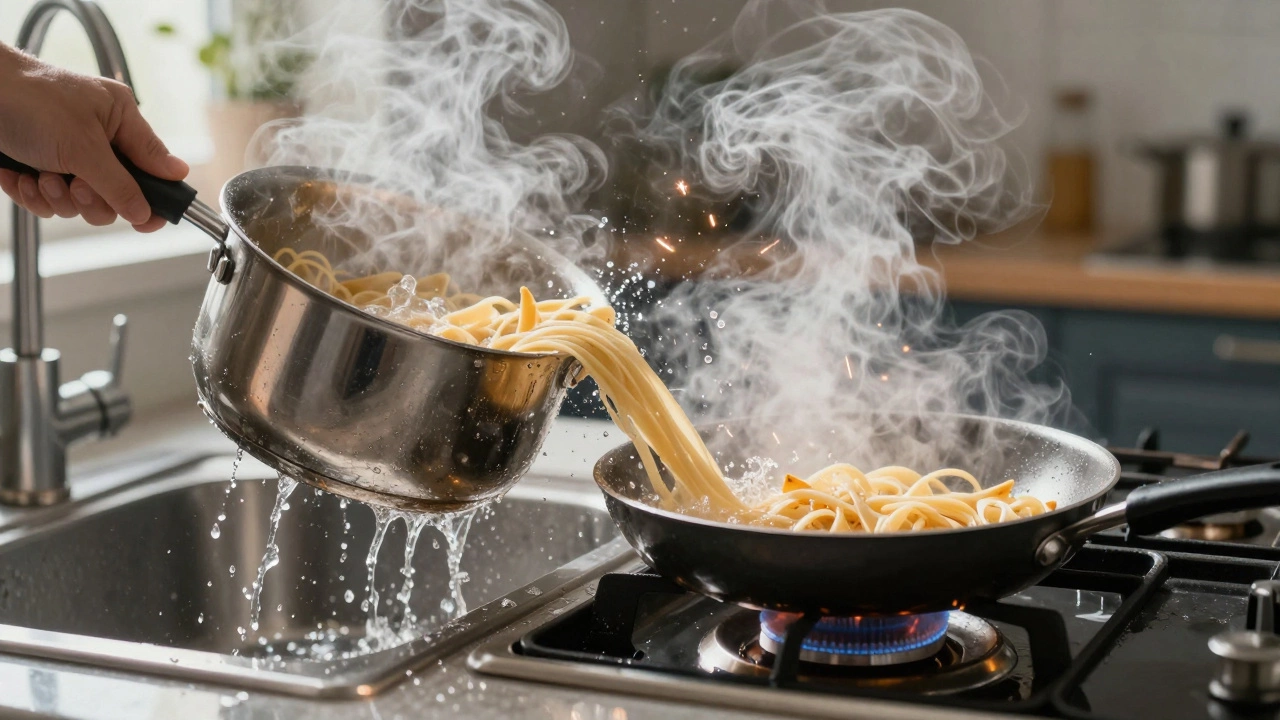
- Placing them side-by-side increases the risk of water splashes hitting hot oil, which can cause dangerous grease fires.
- It disrupts the "work triangle," making your kitchen feel cramped and less efficient.
- If you have no choice, a physical barrier or a wide landing area is non-negotiable.
The Danger of the Splash Zone
The biggest issue with placing a Stove (whether it's gas or electric) immediately next to a Kitchen Sink is the "splash zone." When you wash vegetables or rinse dishes, water doesn't just stay in the basin; it bounces. If that water hits a hot skillet filled with oil, you get an immediate eruption of hot grease. This isn't just a mess; it's a serious fire hazard.
Beyond the fire risk, there's the matter of basic ergonomics. Have you ever tried to stir a heavy pot while someone else is trying to wash a dish right next to you? You'll be bumping elbows constantly. When the stove and sink are too close, you lose your "landing zone"-that critical bit of counter where you set down a hot pot after draining it or prep ingredients before they hit the pan. Without that gap, you're forced to turn around or walk across the room with a heavy, dripping pot, which is how most kitchen spills and burns happen.
What the Pros Say: NKBA Guidelines
If you want to do this right, look at the NKBA (National Kitchen & Bath Association). They don't just make suggestions; they set industry standards based on thousands of hours of human movement data. According to their guidelines, you should avoid placing the cooktop directly adjacent to the sink. They recommend a minimum of 12 inches of clear counter space between the two. In a perfect world, 15 to 24 inches is even better.
Why 12 inches? Because that's enough room to set a cutting board or a bowl of prepped ingredients without them being in the way of the sink's spray. It also provides a psychological and physical buffer. If you're frying something at 375°F, you don't want a wet sponge or a dripping dishcloth sitting three inches away. Moisture and extreme heat are a volatile mix in a high-traffic area.
| Distance | Safety Level | Usability | Verdict |
|---|---|---|---|
| 0-6 inches | Low | Poor (Cramped) | Avoid at all costs |
| 12-15 inches | Moderate | Functional | Acceptable minimum |
| 24+ inches | High | Excellent | Ideal layout |
Breaking Down the Kitchen Work Triangle
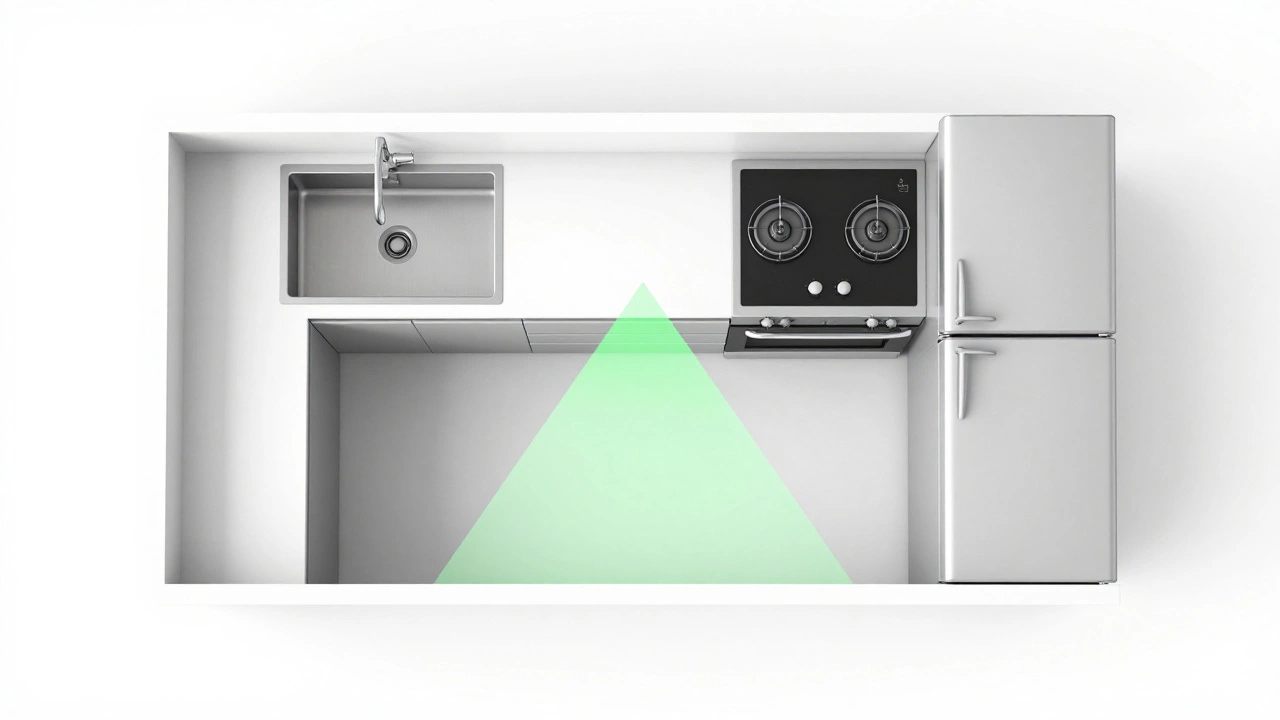
You've probably heard of the Kitchen Work Triangle. This is the imaginary line connecting your sink, your stove, and your refrigerator. The goal is to minimize the number of steps you take while cooking. When you place the stove and sink right next to each other, you effectively collapse one side of that triangle into a single point.
While it might seem like a "shortcut" to have them together, it actually creates a bottleneck. Only one person can realistically work in that zone at a time. If you have a partner or a child helping out, they'll be fighting for the same square foot of space. A proper triangle ensures that the person prepping at the sink isn't blocking the person stirring the pot on the stove. When you stretch those points out, the kitchen breathes, and the workflow becomes a circle rather than a collision course.
What to Do If You Have No Other Choice
Let's be real: not everyone has a massive suburban kitchen. If you're in a tiny studio or a narrow galley kitchen and the plumbing and gas lines are already fixed in place, you might be stuck with a tight squeeze. If you absolutely must have your stove near your sink, you need to implement some damage control to keep things safe.
First, consider a physical barrier. A small, high-sided spice rack or a sturdy cutting board that sits permanently between the two can act as a "splash guard." This prevents water from migrating directly into your pans. Second, be mindful of your Countertop Materials. If you have porous stone, the constant proximity of water and heat can lead to faster cracking or staining in that specific area. Using a silicone mat can help protect the surface and give you a more secure grip on pots.
Another trick is to adjust your habits. Avoid using the spray attachment on your faucet when the stove is on. Also, keep your towels and sponges far away from the burners. It sounds simple, but in the heat of a dinner rush, it's easy to toss a damp cloth onto a counter that happens to be right next to a hot burner, leading to a scorched towel or a small fire.
Alternative Layout Ideas for Small Spaces
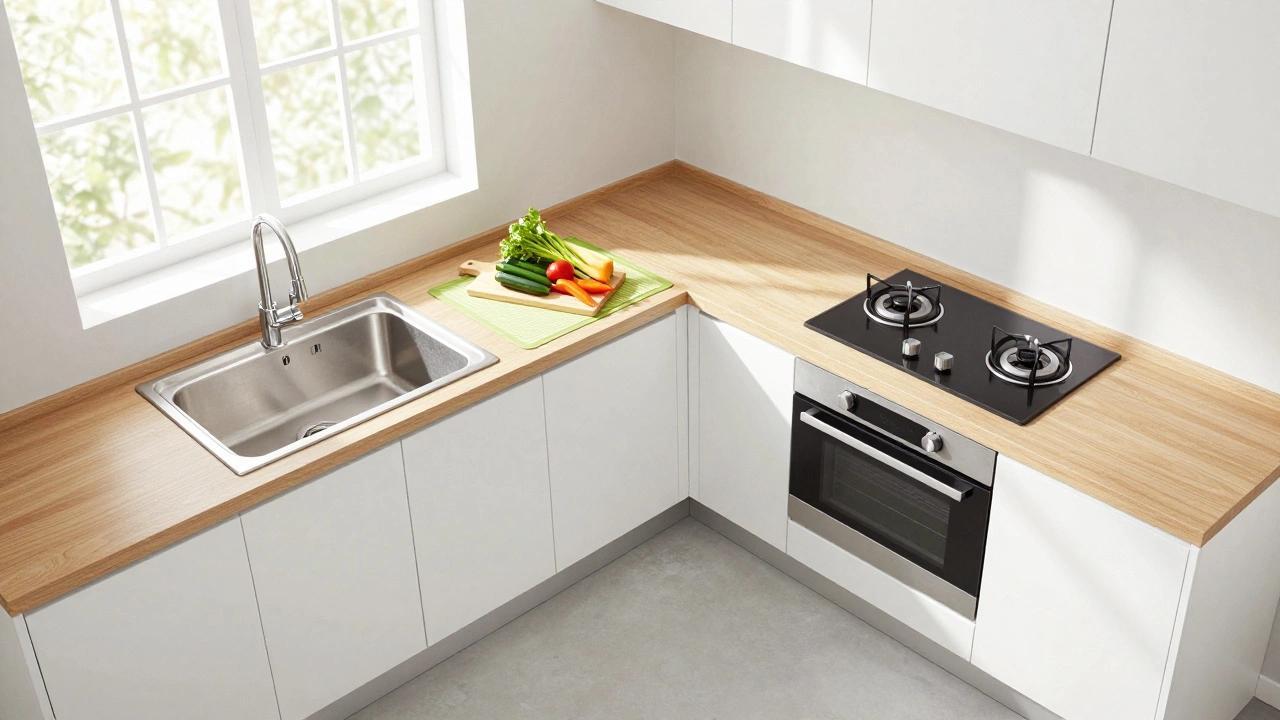
If you're in the planning phase and worried about space, don't just default to putting the stove next to the sink. There are smarter ways to organize a small footprint. Have you thought about an L-Shaped Kitchen? This allows you to keep the sink on one wall and the stove on the other, maintaining a clear corner of counter space between them. It keeps the work triangle intact without requiring a massive amount of square footage.
Alternatively, consider a Galley Kitchen layout where the sink and stove are on opposite walls. This creates a "corridor" of efficiency. You can pivot from the sink to the stove in one movement, but you have the entire width of the room as a safety buffer. It prevents the "splash zone" issue entirely while still keeping the distance between the two appliances very short.
Common Mistakes to Avoid During Installation
When people try to cram these two together, they often forget about the kitchen layout details that actually matter. One common error is ignoring the door swing of the dishwasher. If your dishwasher is next to the sink, and the sink is next to the stove, you might find that when the dishwasher door is open, you can't even reach the oven. Always map out the "dynamic space"-not just where the appliances sit, but where the doors, drawers, and people move.
Another mistake is neglecting the ventilation. If your stove is crammed next to a sink, you might be tempted to put it in a corner where a Range Hood doesn't fit perfectly. Without proper ventilation, the steam from your sink and the grease from your stove will combine to create a sticky film on your ceiling and cabinets. Make sure your exhaust system is centered over the burners, regardless of how close the sink is.
Is it illegal to have a stove next to a sink?
It is not generally "illegal" in terms of law, but it may violate local building codes or safety standards in some jurisdictions. Most inspectors look for a minimum amount of clearance to prevent fire hazards. Always check your local residential building codes before finalizing a layout.
Can I put a small gap between them?
Yes, and you should. Even a 6-inch gap is better than no gap. It provides a place to set a pot handle or a tasting spoon and reduces the immediate risk of water splashing directly into a hot pan.
Does it matter if it's an induction stove instead of gas?
Induction is slightly safer because the surface doesn't get as hot as a gas flame, and there's no open fire. However, the risk of water hitting hot oil in a pan remains exactly the same. The physical layout risks are the same regardless of the heating technology.
What is the best distance between a sink and a stove?
For maximum efficiency and safety, aim for 24 to 36 inches of counter space. This allows two people to work in the kitchen simultaneously and provides ample room for food preparation.
How do I fix a kitchen where the stove and sink are already too close?
If you can't move the appliances, add a physical barrier like a heavy-duty silicone mat or a small shelving unit. Be extremely careful with the faucet spray and keep all flammable cleaning supplies away from the stove area.
Next Steps for Your Kitchen Remodel
If you're currently sketching out a new floor plan, start by marking your "wet" and "hot" zones. If you find they are overlapping, try shifting your refrigerator or dishwasher first to see if that opens up a few extra inches of counter space. If you're working with a professional designer, ask them specifically about "landing areas"-these are the flat surfaces where you put things down. A kitchen without landing areas is a kitchen where accidents happen.
For those in a pinch, consider looking into portable induction burners. If your main stove is too close to the sink and it's making you nervous, you can move some of your cooking to a separate prep table or island using a portable burner, effectively creating a second, safer cooking station.