Dining Room Relevance Calculator
How to Use This Tool
Answer a few quick questions to determine if your dining room is still serving you or could be repurposed for better space efficiency.
Your Results
Answer the questions above to see your result
Dining Room Assessment
Five years ago, if you walked into a new home, you’d almost always find a formal dining room-big table, six chairs, maybe a hutch full of china nobody used. Today? You’re more likely to see a kitchen island with bar stools, a small table tucked beside the window, or nothing at all where the dining room used to be. People aren’t just moving furniture around. They’re rewriting how homes work.
What’s Really Happening to the Dining Room?
The traditional dining room isn’t dying because people stopped eating. It’s disappearing because eating isn’t the only thing happening there anymore. Families don’t sit down for a three-course meal every night. Work-from-home schedules mean meals are grabbed between Zoom calls. Kids eat snacks on the couch while scrolling TikTok. And for many, the idea of a separate room just for dining feels like a relic from a time when people had more time and less stuff.
According to a 2025 survey by the National Association of Home Builders, 68% of new home buyers under 40 said they’d prefer a flexible space over a dedicated dining room. That’s up from 42% in 2020. Why? Because they want rooms that multitask. A space that can be a home office one day, a game night zone the next, and a place to eat when needed-not a room that sits empty 90% of the time.
The Rise of the Kitchen Island
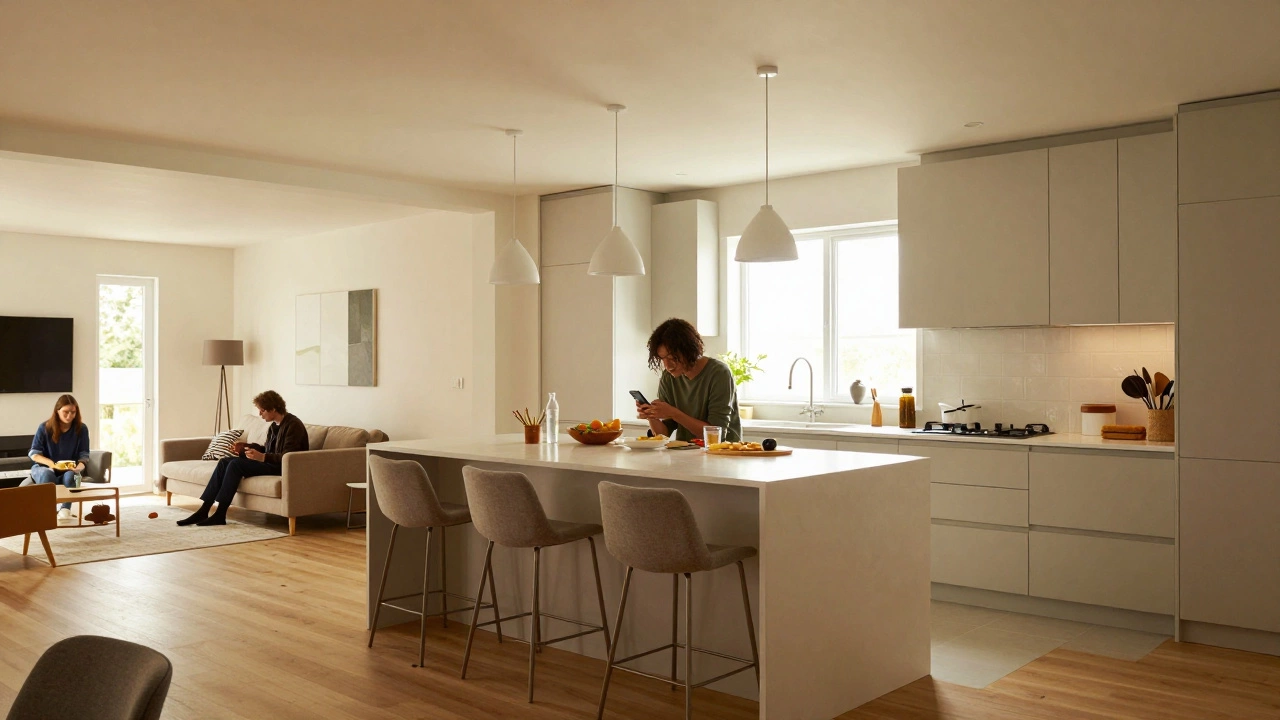
If the dining room is vanishing, where are people eating? Mostly, it’s at the kitchen island. Modern kitchens aren’t just for cooking anymore. They’re the heart of the home. And that heart has expanded. Islands now come with built-in seating, charging ports, under-counter refrigerators, and even sink zones. Some are 10 feet long. Others double as homework stations or craft tables.
Take the average new build in Austin or Denver. The kitchen opens straight into the living area. No walls. No doors. Just one big, flowing space. The island? It’s where breakfast happens, where dinner gets eaten, where friends gather after work. No need for a separate room. The table is right where the action is.
Who’s Still Keeping the Dining Room?
It’s not gone everywhere. People over 55 are more likely to keep a formal dining room-34% of homeowners in that group still use it weekly. They host holiday dinners, have family traditions, or just like the quiet of a room meant for one thing. And in luxury homes, you’ll still find dining rooms with crystal chandeliers and linen napkins. But those are exceptions now, not the norm.
Urban apartments? Forget it. A 600-square-foot studio doesn’t have room for a dining table that’s only used twice a month. Even in suburban homes, if the square footage is tight, the dining room gets turned into a reading nook, a craft room, or a second living area. The furniture? It’s often sold off. A 10-foot mahogany table with eight chairs doesn’t fit in a modern lifestyle. It’s heavy, expensive to move, and takes up space that could be used for something else.
Furniture Sales Are Changing
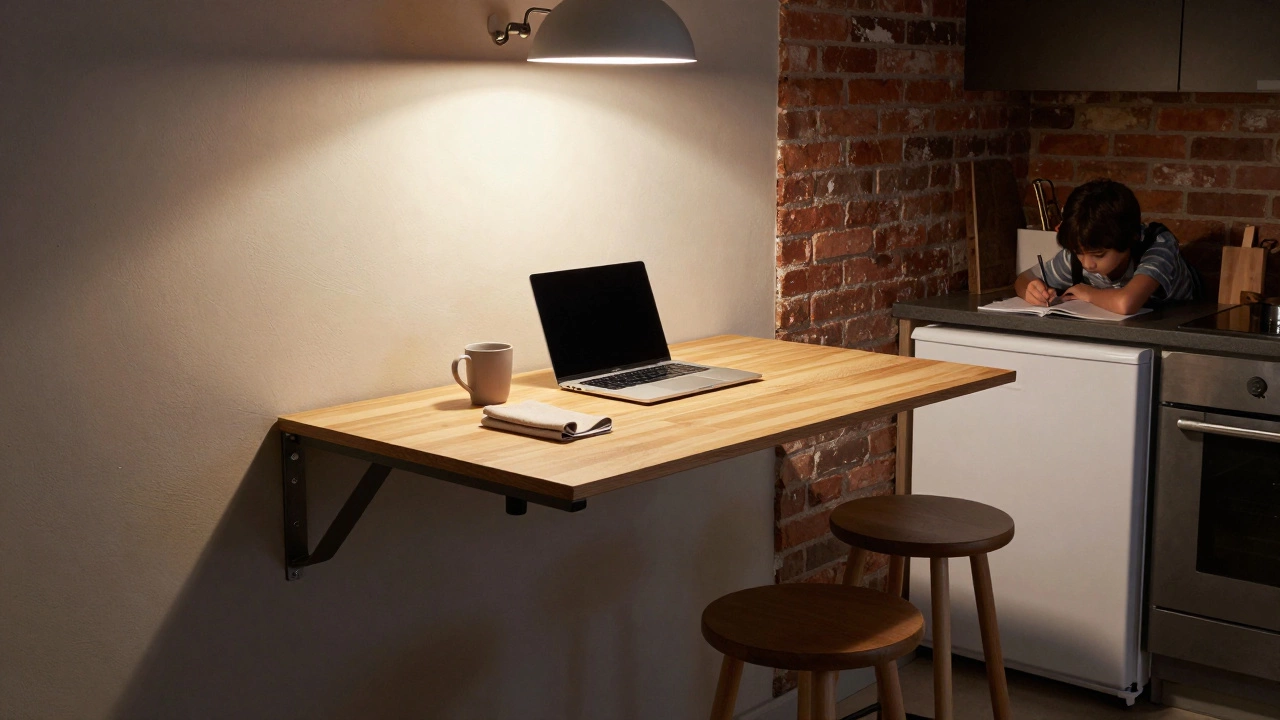
The market is reacting fast. In 2023, dining room sets made up 18% of furniture sales. By 2025, that number dropped to 9%. Meanwhile, bar stools, counter-height tables, and foldable dining solutions jumped 47%. Companies like IKEA and Crate & Barrel now sell more compact, modular dining pieces than full sets. You can buy a 48-inch table that expands to 72 inches with a leaf, or a wall-mounted drop-leaf table that disappears when not in use.
And it’s not just about size. People want versatility. A dining table that doubles as a desk. A bench that stores linens underneath. A set of nesting stools that tuck under the counter. The old idea of a dining room set-matching chairs, a solid table, a sideboard-is becoming a niche product. Like a record player. Some people love it. Most don’t need it.
What Does This Mean for Home Design?
Architects and builders are ditching the dining room blueprint. In new home plans from 2025, fewer than 15% include a formal dining room as a standard feature. Instead, you’ll see labeled spaces like "flex zone," "gathering area," or "dining nook." These aren’t just names-they’re design choices. A corner of the kitchen with a window seat. A nook beside the pantry with a small table. A raised platform near the living room with built-in benches.
Even renovations are shifting. Homeowners are knocking down walls between the kitchen and dining room to create one open space. Some are converting old dining rooms into mudrooms, pet zones, or home gyms. One couple in Portland turned theirs into a recording studio. Another in Atlanta made it a greenhouse. The furniture? Gone. The space? Repurposed.
Is the Dining Room Really Dead?
Not dead. Just transformed. The dining room as a formal, separate room is fading. But eating together? That’s not going anywhere. People still want to share meals. They just don’t need a room with four walls and a chandelier to do it. The future of dining isn’t about where you sit. It’s about how you live.
Think of it this way: You don’t need a separate room to talk on the phone. You do it anywhere-with your laptop, on your couch, while walking the dog. The same is true for meals. The table doesn’t have to be in a dining room. It just has to be where you are.
What Should You Do If You Have a Dining Room?
If you own a home with a dining room, here’s what to ask yourself:
- Do you use it at least once a week? If not, why keep it?
- Is the furniture just taking up space? Could it be sold or repurposed?
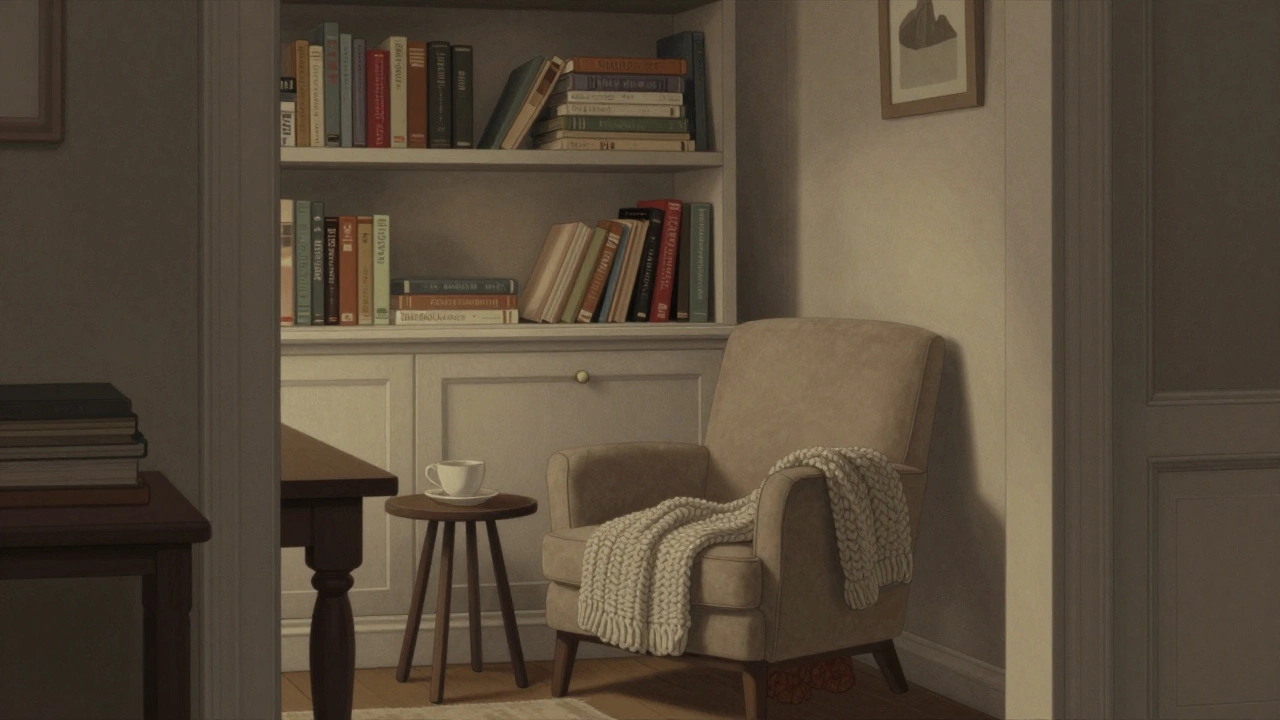
- Could this room work better as a home office, a playroom, or a reading corner?
- Are you keeping it for resale value? Or because you think you’re supposed to?
Real estate agents say homes with flexible spaces sell faster than those with unused formal rooms. A dining room that’s been turned into a cozy library or a quiet workspace adds more value than one that sits empty.
The Bigger Picture
This isn’t just about furniture. It’s about how we live now. We’re busy. We’re mobile. We want spaces that adapt, not ones that trap us into old habits. The dining room was built for a time when meals were rituals and homes were static. Today, meals are quick, homes are dynamic, and spaces need to keep up.
The next time you walk into a new house, don’t look for the dining room. Look for the spot where people actually gather. That’s where the real dining room is now.
Is it a bad idea to remove a dining room during a renovation?
Not at all-if you don’t use it. Removing a dining room to create a more open, functional space often increases a home’s appeal and value. Buyers today prefer flexible layouts over rigid, unused rooms. Just make sure the new space still has a clear place to eat, like a kitchen island or dining nook.
What’s the best alternative to a formal dining room?
A kitchen island with bar stools is the top choice for most households. It’s central, easy to clean, and doubles as a prep or homework spot. If space is tight, a wall-mounted drop-leaf table or a fold-down counter with built-in seating works great. For larger homes, a breakfast nook with a window seat offers comfort without taking up much room.
Do I need to buy new dining furniture if I’m removing my dining room?
Not necessarily. You can repurpose what you have. A large dining table can become a desk. Chairs can be moved to the living room. If you’re downsizing, consider modular pieces like nesting tables or extendable benches. Many people sell their old dining sets and buy smaller, more versatile options instead.
Are homes without dining rooms harder to sell?
No-actually, the opposite. Homes with open, flexible layouts are selling faster and for higher prices. Buyers today care more about how spaces are used than how they were designed 30 years ago. A dining room that’s been converted into a useful room adds value. One that’s empty? That’s a red flag.
Can I still have a formal dinner in a home without a dining room?
Absolutely. You don’t need a separate room to host a nice dinner. Use your kitchen island, extend your table with leaves, or set up a temporary table in the living room. People still enjoy formal meals-they just don’t need a room designed for it. The atmosphere comes from the food, the company, and the effort-not the walls around you.